avg —
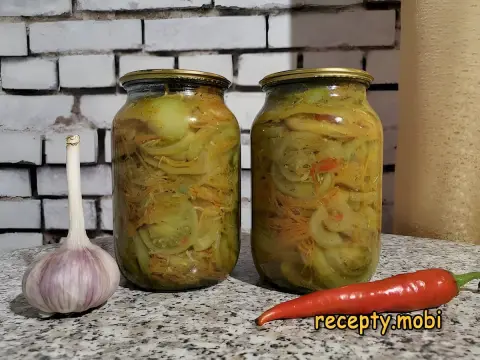
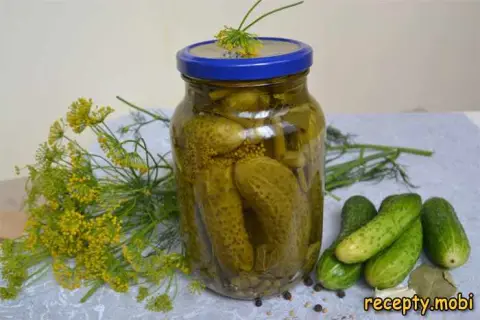
Winter King Salad of Cucumbers for Winter

Instructions
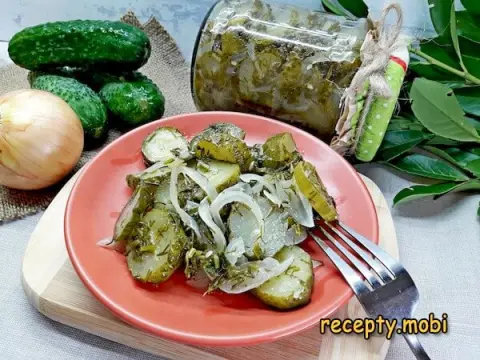
I prepare the ingredients. It is best to keep the cucumbers in cold water for at least half an hour – they will drink up the moisture they have lost since being picked and will be juicier in the finished salad. The jars and lids for this recipe do not need to be sterilised: they just have to be clean and dry, as the main sterilisation happens later with the salad already inside.
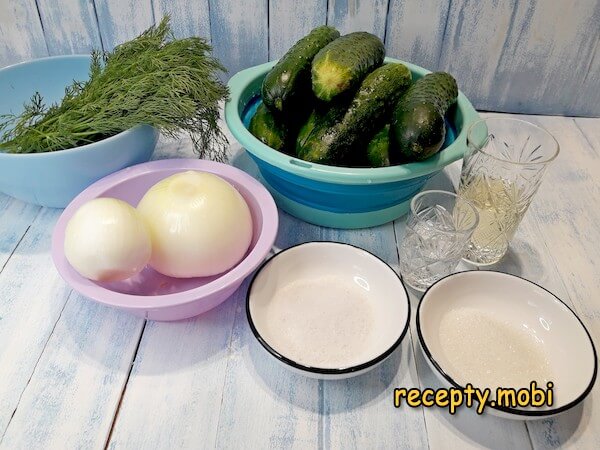
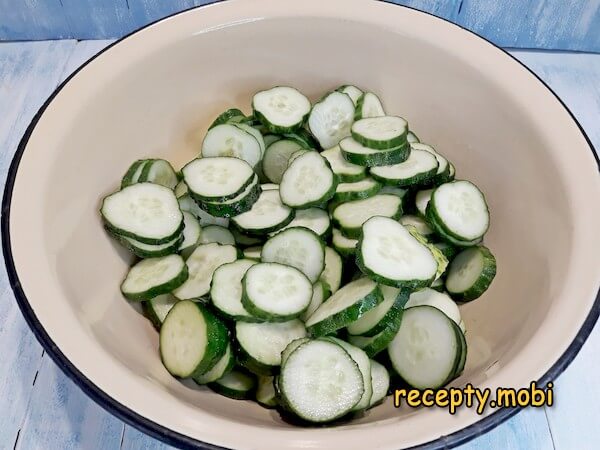
I cut the washed cucumbers into rounds about 3–4 millimetres thick – any thinner and they fall apart while being stirred, any thicker and they will not give up their juice in the allotted 2 hours.
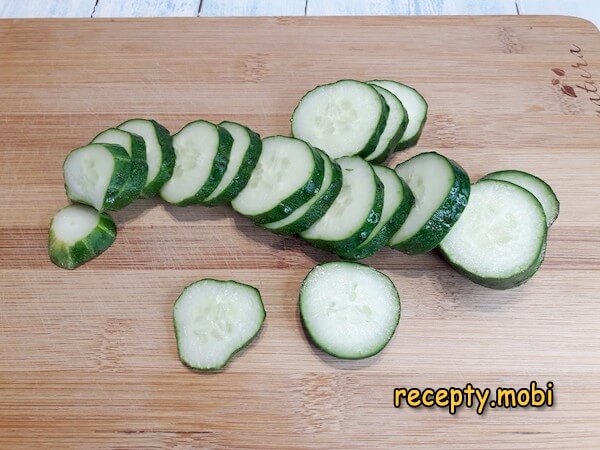
I put the slices into a large bowl – a small one will not do, because the volume will almost double after the juice is released.
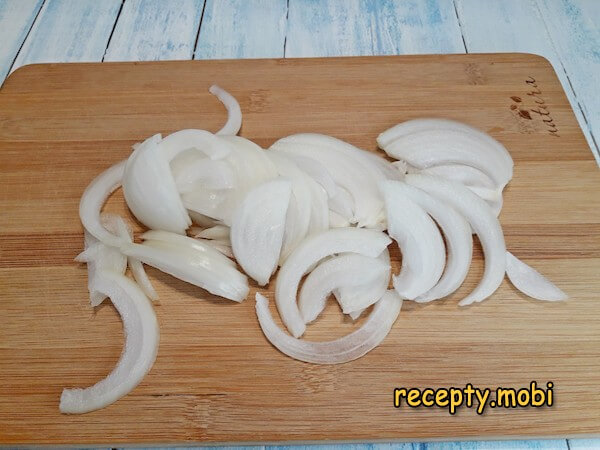
I cut the onion in half first, then shred it into thin strips. Cutting it thinly matters – thick onion stays tough in the jar even after sterilisation.
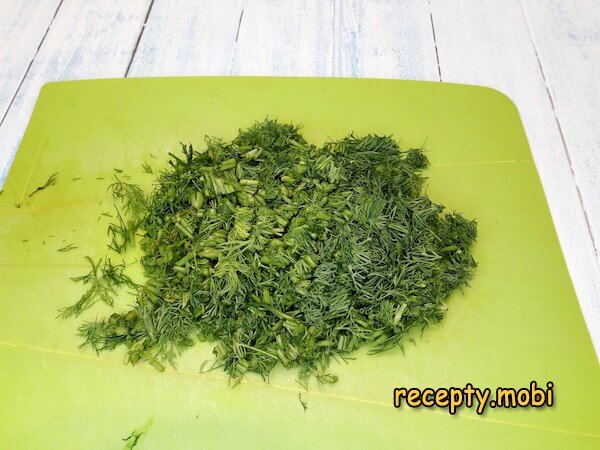
I chop the dill finely – this way it gives off the most aroma into the juice.
I add the onion and the herbs to the bowl with the cucumbers.
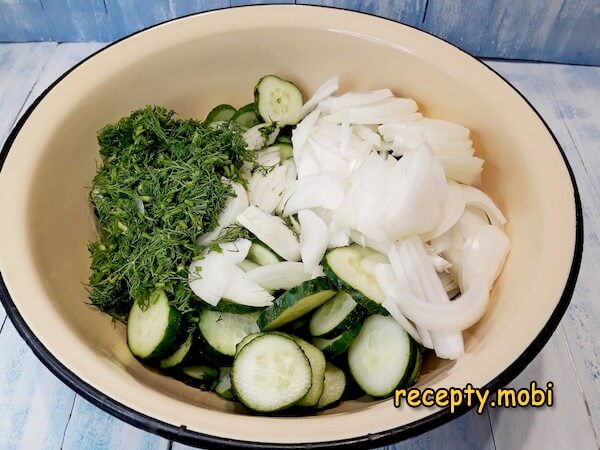
I season everything with salt and sugar – it is the salt that draws the juice out of the cucumbers, while the sugar balances the acidity of the vinegar in the finished salad.
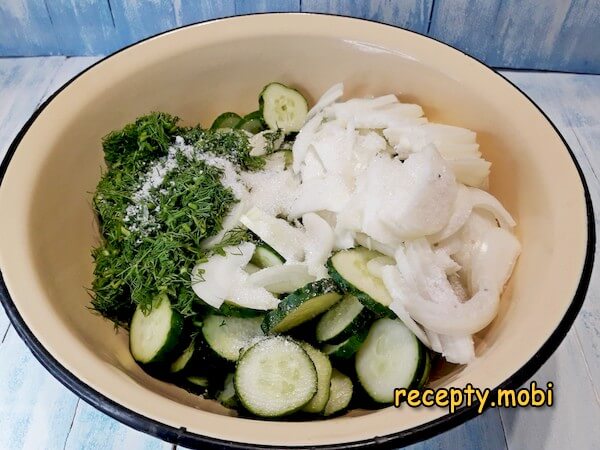
I pour in the 9% vinegar – it works as a double agent: it gives the characteristic marinade flavour and at the same time acts as a preservative, without which the salad would spoil without sterilisation.
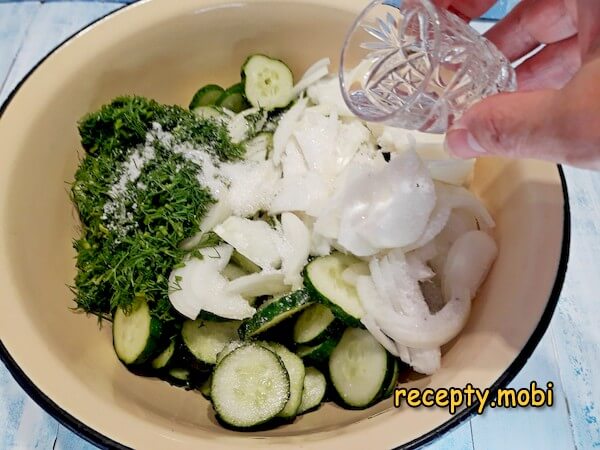
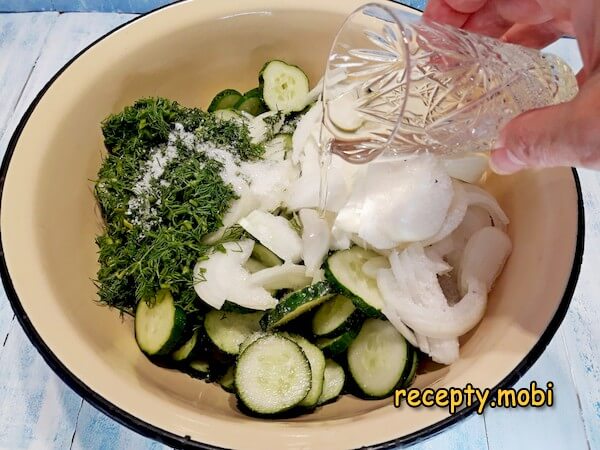
And I dress it with vegetable oil – it will form a thin film over the juice in the jar that protects against contact with air.
I stir the contents of the bowl so that everything is evenly distributed throughout. I leave the mixture on the worktop at room temperature – the warmth speeds up the release of the juice.
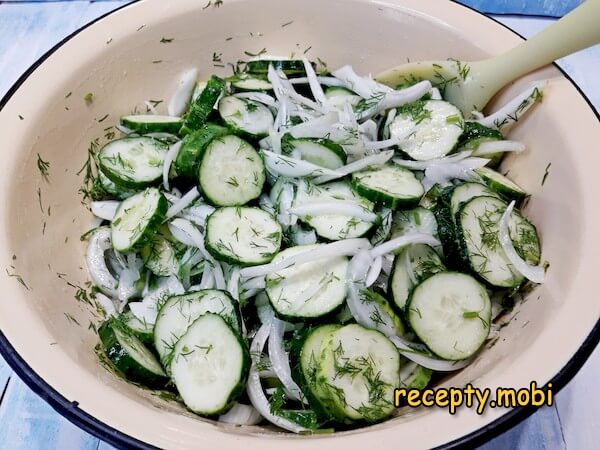
After 2 hours the cucumbers will have released a large amount of juice, which is needed for the further preserving. Water is completely out of the question in this preserve – there is enough cucumber juice to fill all the empty space in the jars, and on top of that the cucumbers will give off even more liquid during sterilisation.
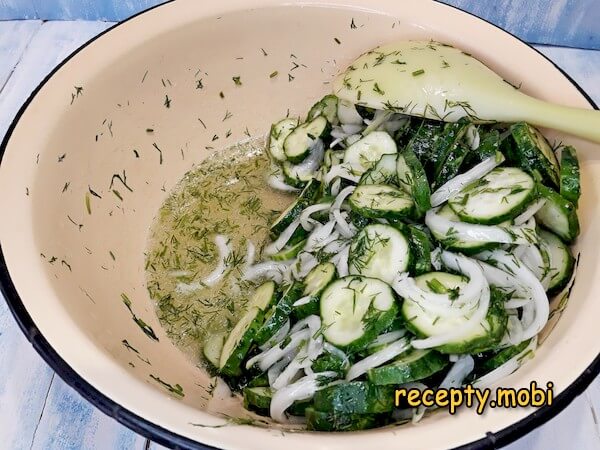
I pack the jars tightly with the cucumbers and onion, pressing them down with a spoon – the tighter they are packed, the less air there is in the jar and the longer the preserve keeps.
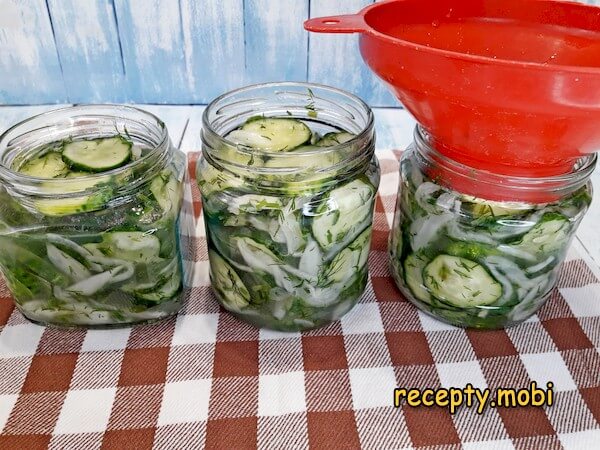
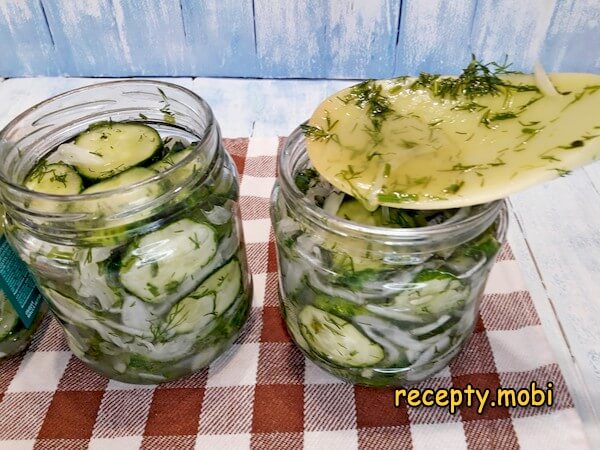
I pour over the cucumber juice. If the liquid falls a little short of the top of the jars, it is not a problem – during boiling the cucumbers will release more juice and make up the level.
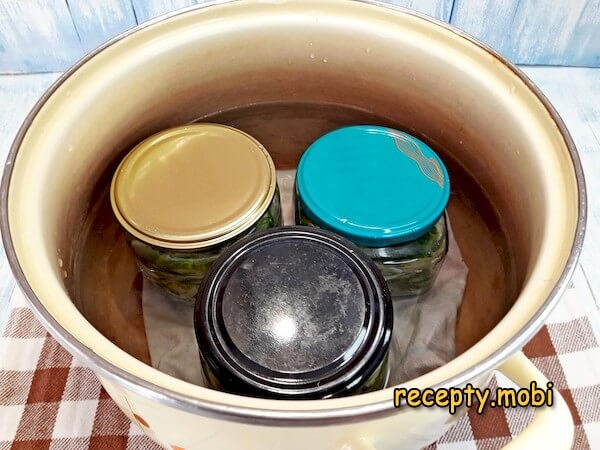
I line the bottom of a pot with a cloth and stand the jars of salad on it – the cloth stops the jars knocking against the bottom as the water boils and cracking. I cover them with lids (not screwed on, just resting on top). I pour cold water into the pot up to the shoulders of the jars and put it on the heat. Once it starts to boil, I sterilise the salad for 10 minutes (for half-litre jars). For one-litre jars – 20 minutes.
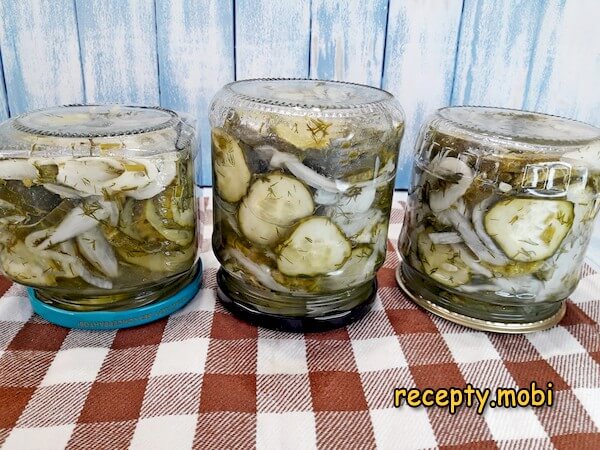
I carefully take out the jars and screw on or seal the lids with a sealing tool. I check that the seal is secure by turning the jar upside down – if nothing leaks out from under the rim, the seam is airtight. If all is well, I return the jars the right way up and leave them to cool. A salad like this can be stored even in a kitchen cupboard – nothing will happen to the seal even after a couple of years.


Tips
- 1
CUCUMBERS IN THEIR OWN JUICE – the secret of the fresh taste. Adding water dilutes the concentration of aroma and the salad turns into a "run-of-the-mill marinade". With no water, only cucumber juice, the flavour stays summery and rich even in winter.
- 2
THINLY SLICED ONION – the secret of softness. Half-rings 5+ mm thick stay tough even after 10 minutes of sterilisation. Thin strips soak up the juice and lose their sharpness instead of staying "firm" in the mouth.
- 3
A CLOTH ON THE BOTTOM OF THE POT – the secret against cracks. A glass jar knocks against a metal base as the water boils and can crack at the most important stage. With a towel or a silicone mat, the jars stand still and withstand the whole sterilisation.
- 4
VEGETABLE OIL ON TOP – the secret of long storage. Without oil, mould forms on the surface of the juice because of contact with air. The oil creates a thin film that separates the juice from the air – years of storage without any loss of quality. The same principle is used in Eggplant and Bean Salad for Winter "Special".
Video

FAQ
Which cucumbers are suitable for Winter King salad? +
Almost any cucumbers will do – that is the convenience of this recipe. The "classics" are fresh pickling varieties 8–15 cm long with bumpy skin. Alternatives include overgrown cucumbers (scoop out the large seeds with a spoon), hook-shaped and crooked ones (cut them however is easiest), and even slightly bitter ones (the bitterness goes away in their own juice). Do not use salad varieties with smooth skin and watery flesh – cut into rounds, they fall apart. The premium choice is cucumbers from your own garden, picked the same morning.
How long does Winter King salad keep after sterilisation? +
In an ordinary kitchen cupboard it keeps for 1.5–2 years; in a cellar or a cool larder, up to 3 years without any loss of flavour. Once the jar is opened – 5–7 days in the fridge under the lid. Signs of spoilage are a bulging lid, cloudy juice with white flakes, and a sour or rotten smell – a jar like that goes in the bin without regret. A properly made salad only becomes softer and more aromatic with age – the cucumbers soak up the marinade better, while the oily film reliably keeps the air out.
Can I replace 9% vinegar with apple or wine vinegar? +
You can, but in different proportions. Apple vinegar 6% – you need 35–40 ml instead of 25 ml; it gives a mild fruity note and goes very well with cucumbers. White wine vinegar 6% – 35 ml, a classic for marinades. Balsamic vinegar is not suitable: it is dark, it will change the colour of the salad, and its aroma "overpowers" the cucumbers. Freshly squeezed lemon juice (50 ml) works too, but the salad is best eaten in the first year of storage, as the acidity of lemon loses its preserving properties over time.
Why is sterilisation needed if there is already vinegar and salt? +
The vinegar and salt in the recipe are not enough for cold preserving – they give the characteristic flavour but do not kill off all the microflora. Sterilising at 100°C for 10 minutes destroys yeasts, mould and most bacteria, making the salad suitable for long storage at room temperature. Without sterilisation the preserve would have to be kept in the fridge for only 2–3 months. The brief sterilisation does not overcook the cucumbers – they stay firm, but safe.
- Comment
or post as a guest
Be the first to comment.