avg —
Green Tomato Adjika for Canning: Safe Water-Bath Recipe

Instructions
Prepare the jars and canner. Wash eight 450–500 ml canning jars, check the rims for chips and keep the jars hot. Prepare new lids as their manufacturer directs. Place a rack in a deep boiling-water canner, add water and begin heating it. During processing, the water must cover every jar lid by at least 2.5–3 cm or 1 inch.
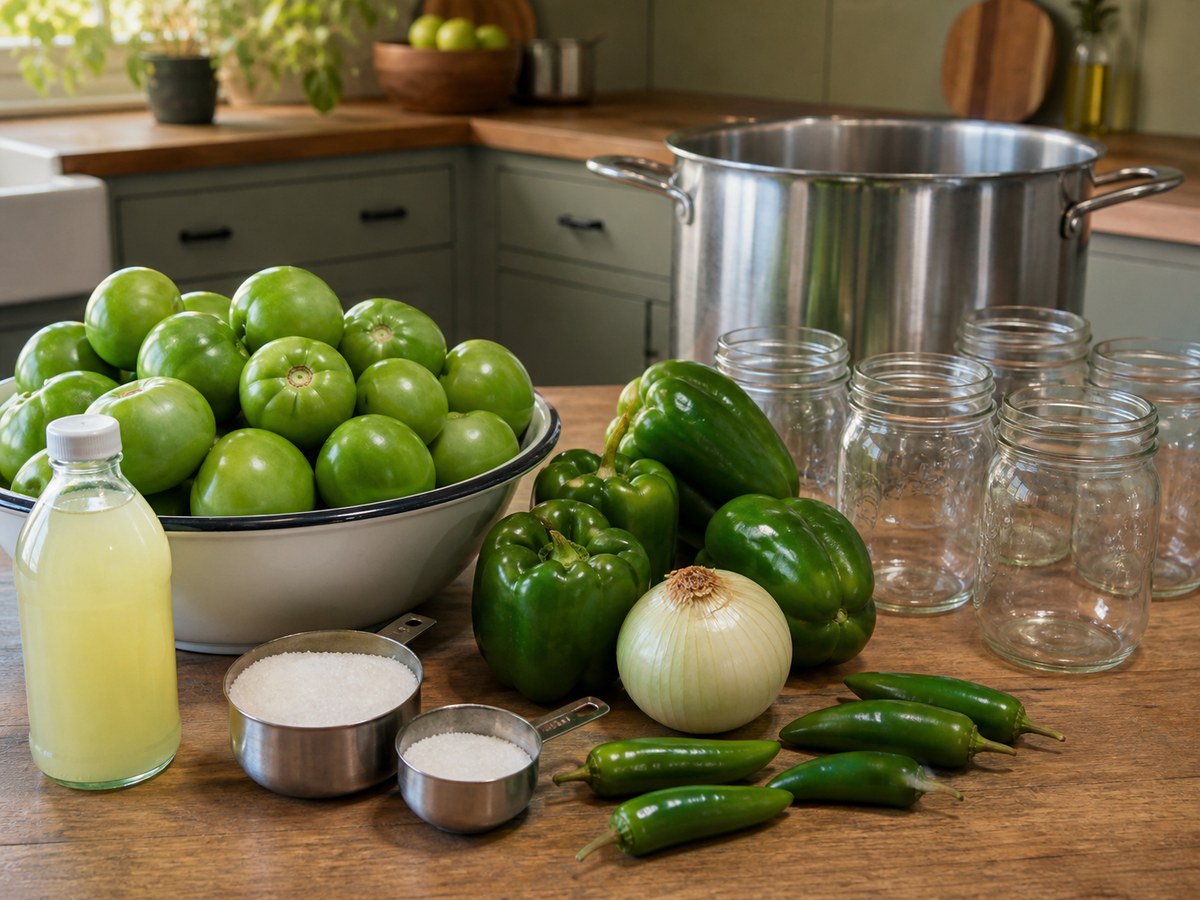
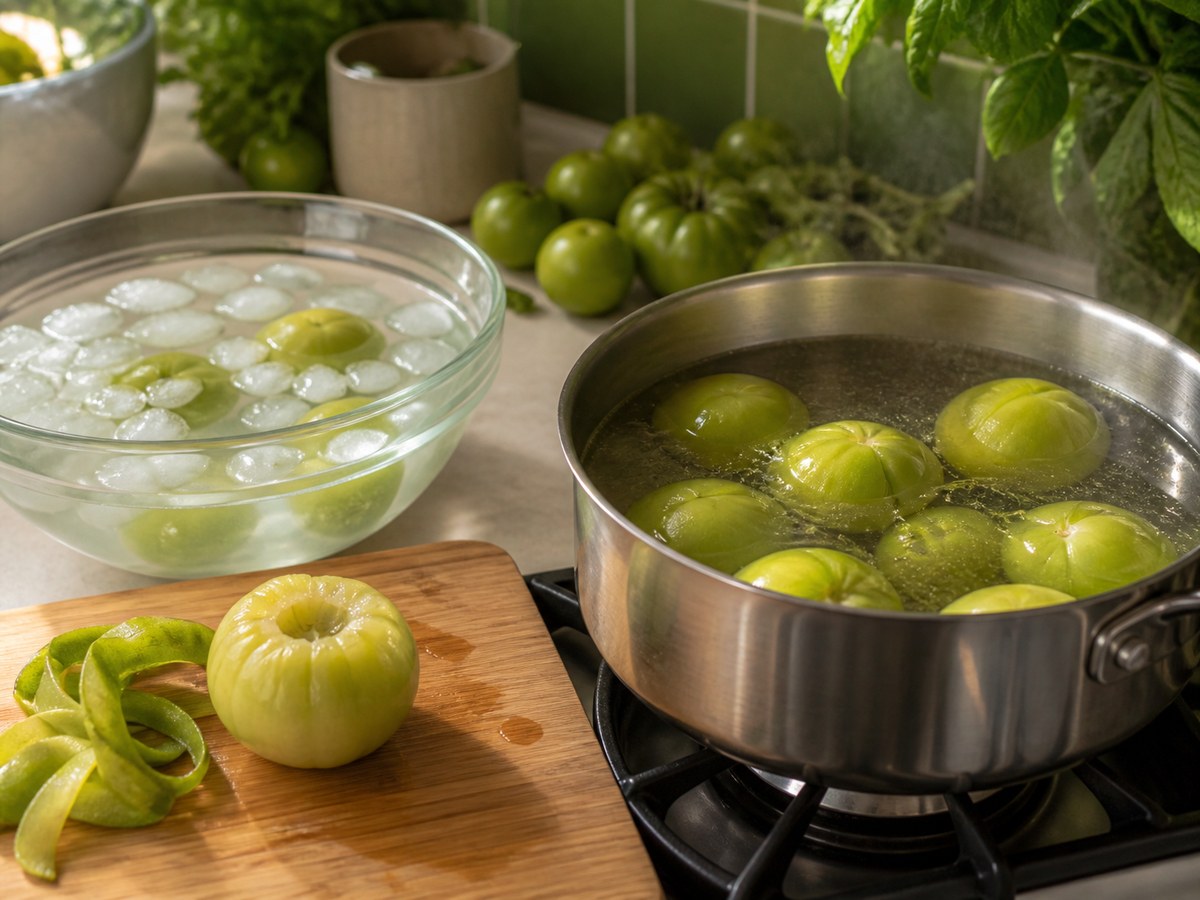
Peel and measure the green tomatoes. Use firm, sound fruit with no mould, decay, frost damage or deep cracks. Lower the tomatoes into boiling water for 30–60 seconds, transfer them to cold water, slip off the skins and remove the cores. Chop into roughly 6 mm or 1/4-inch pieces and measure exactly 10 cups.
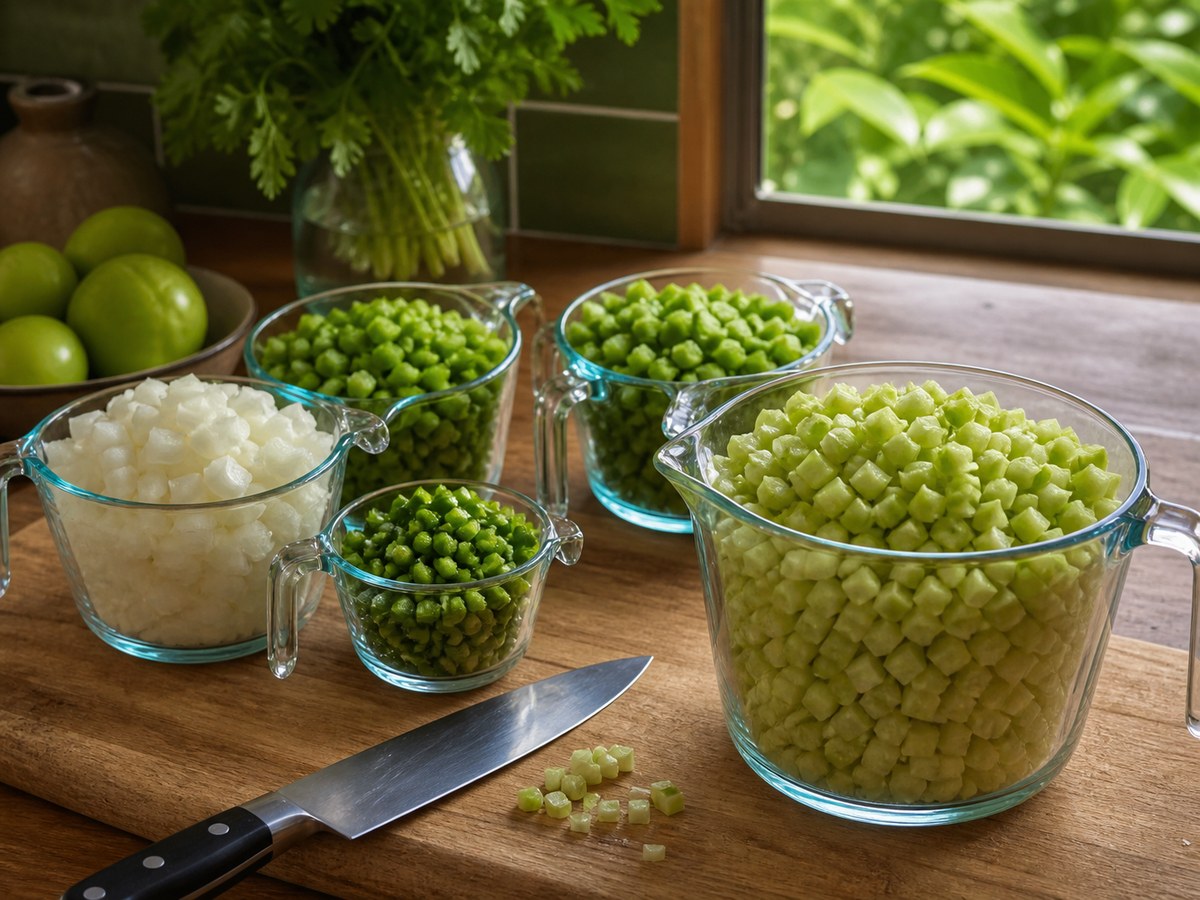
Chop and measure the peppers and onions. Wear gloves when handling hot chiles. Remove the stems and seeds and finely chop the peppers; dice the onions to a similar size. Measure 6 cups peppers and 4 cups onions separately. You may vary mild and hot peppers within those six cups, but never increase the total pepper volume.
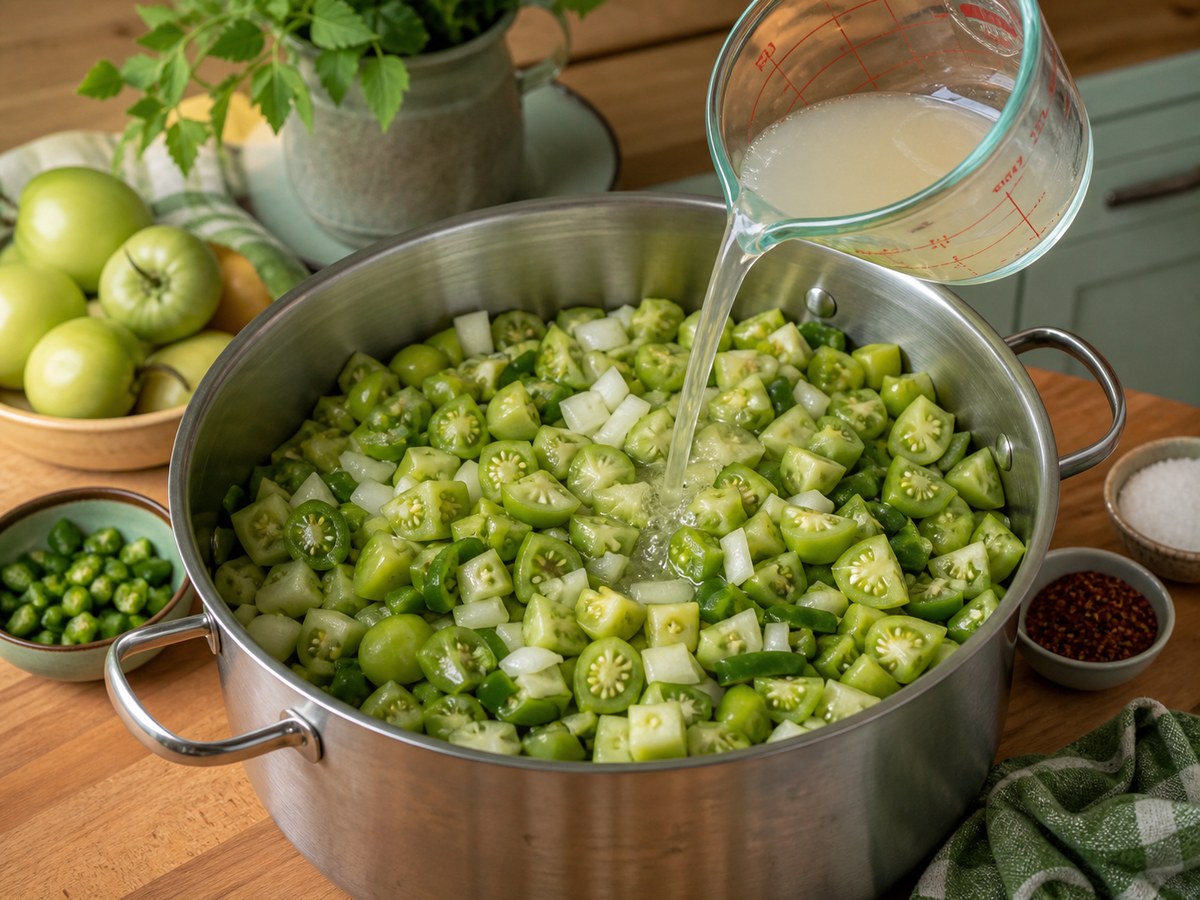
Add the acid and seasonings. Put the tomatoes, peppers and onions in a wide stainless-steel pan. Pour in exactly 240 ml bottled lemon juice and add the salt and black pepper. Stir well. Do not add oil, flour, starch or fresh garlic because none is included in the tested ratio for this water-bath process.
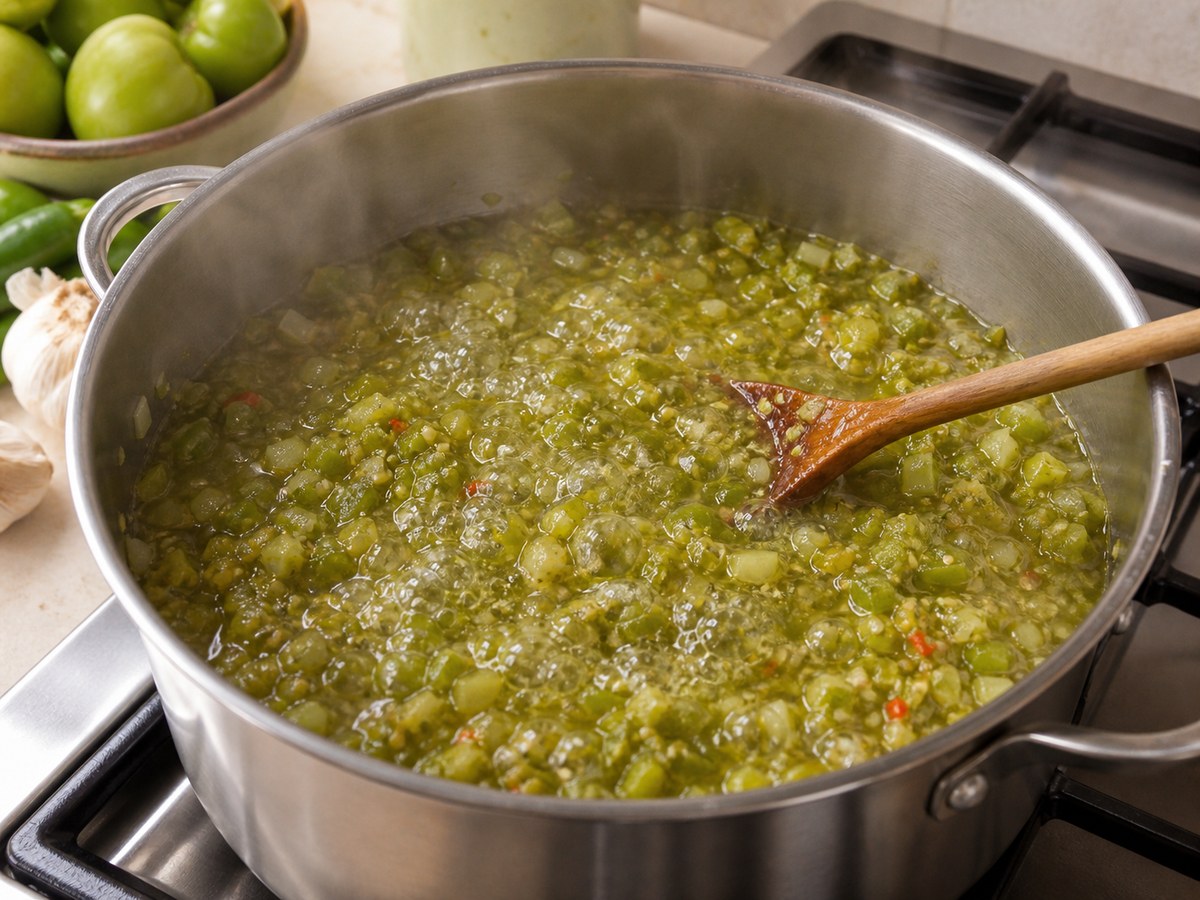
Boil the sauce for 10 minutes. Heat on high, stirring frequently, until the whole surface reaches a full boil. Lower the heat and simmer for 10 minutes, stirring occasionally. Do not reduce the mixture to a thick paste or blend it before canning; changing the density can prevent even heat penetration in the jar.
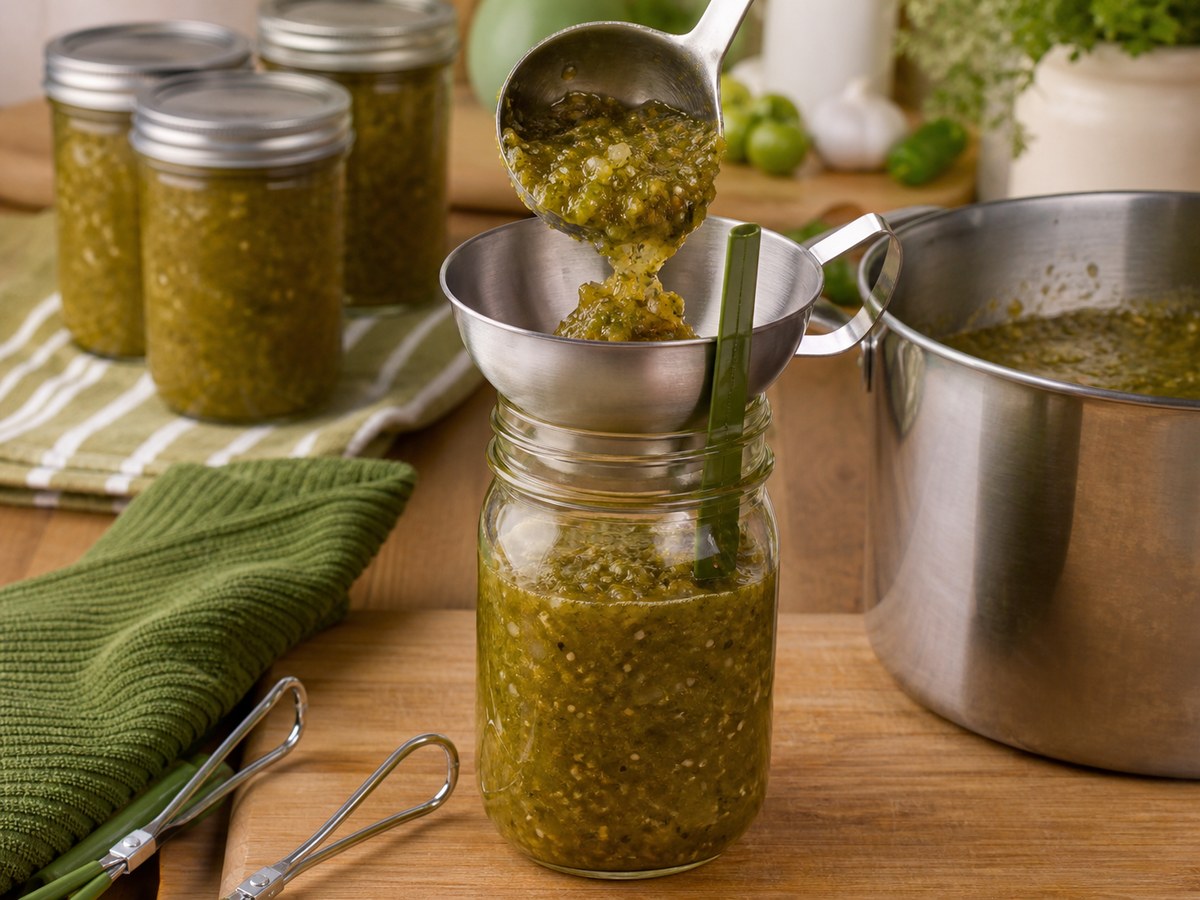
Hot-pack the adjika. Remove one hot jar at a time. Use a canning funnel to ladle in the boiling sauce, leaving 1.3 cm or 1/2 inch headspace. Remove trapped air with a non-metallic tool, recheck the headspace, wipe the rim with a clean damp paper towel and apply the lid without overtightening the band.
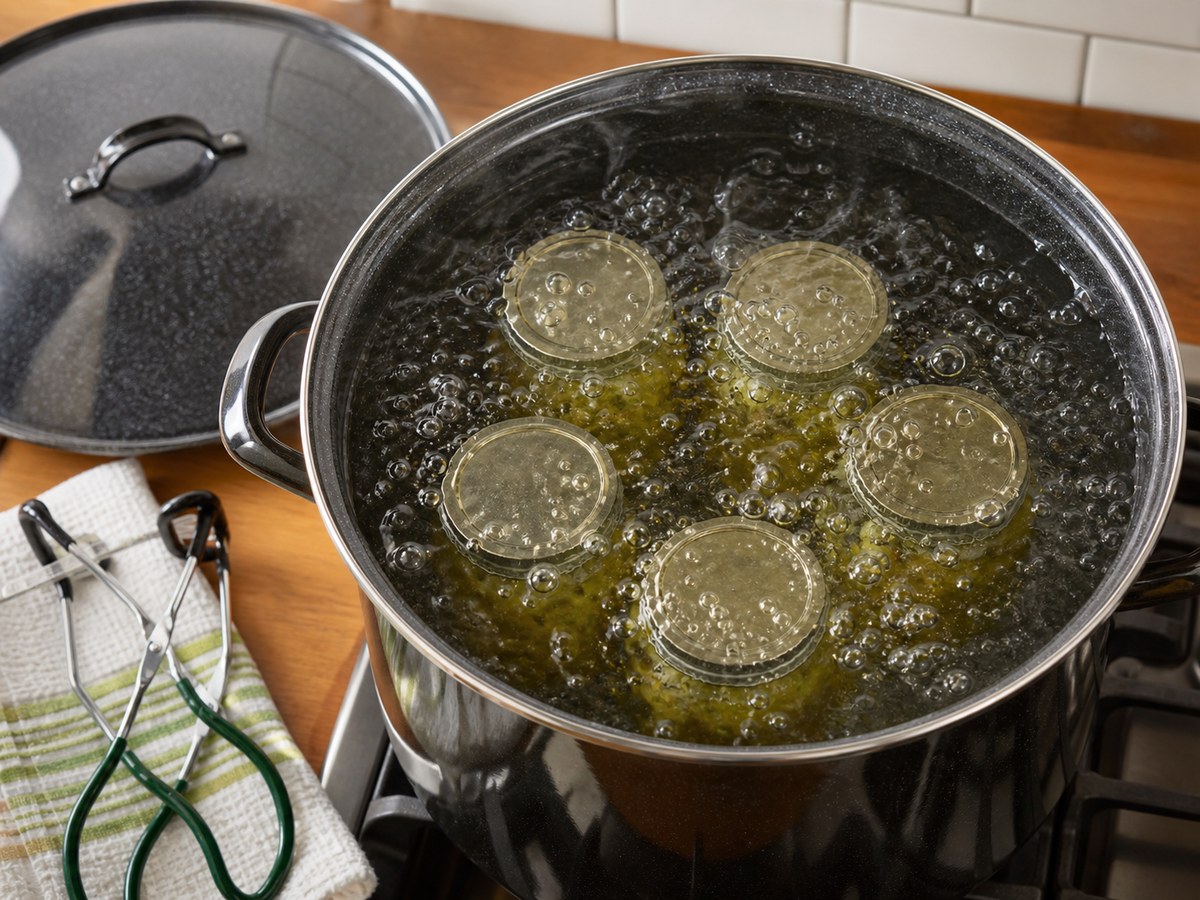
Process in boiling water. Stand the jars upright on the rack and fully submerge them, keeping at least 2.5–3 cm or 1 inch of water above the lids. Cover the canner. Start timing only when a vigorous boil returns: 15 minutes at 0–1,000 ft, 20 minutes at 1,001–6,000 ft or 25 minutes above 6,000 ft. Turn off the heat, wait 5 minutes, lift out the jars and leave them undisturbed for 12–24 hours.


Processing time by altitude
| Altitude | 450–500 ml / pint jars |
|---|---|
| 0–1,000 ft / 0–305 m | 15 minutes |
| 1,001–6,000 ft / 306–1,829 m | 20 minutes |
| Above 6,000 ft / 1,829 m | 25 minutes |
The water must boil throughout the stated time. If the boil stops, bring the water back to a vigorous boil and restart the timer. Add boiling water when needed so the jars remain completely covered.
Why this is not traditional Abkhaz adjika
Traditional Abkhazian adjika is based on hot peppers, salt, garlic and spices and normally contains no tomatoes. “Green tomato adjika” has become a familiar name for a hot homemade vegetable sauce. This recipe uses that practical search term, but the method is deliberately built for safe home canning.
For a milder spread with less acidity, choose green tomato caviar instead. The two pages serve different intents: adjika is sharper and hotter, while vegetable caviar is milder and thicker.
Safe and unsafe changes
| Change | Safe? | What to do |
|---|---|---|
| Make it hotter | Yes | Replace some mild pepper with hot chile while keeping exactly 6 cups total. |
| Replace the lemon juice | Yes, within one limit | Use 240 ml commercially made vinegar labelled 5% acidity. |
| Reduce the acid | No | Sweeten an opened serving if desired, but never reduce the acid before canning. |
| Add fresh garlic, carrot or apple | No | Add fresh extras only after opening the jar. |
| Thicken with flour or starch | No | Reduce the amount you need in a saucepan after opening. |
Flavour and texture
The freshly cooked sauce is assertively tangy, peppery and bright. After two or three weeks in the jar, the sharp edges soften and the vegetable flavours blend. The texture stays chopped like a thick salsa; safe canned green tomato adjika is not meant to be a smooth paste.
- Moderately hot: use about 5 1/2 cups mild pepper and 1/2 cup hot chile.
- Mild: use only mild green bell peppers while keeping the full 6-cup total.
- Garlicky after opening: stir fresh minced garlic into the opened sauce and keep it refrigerated.
Nutrition
An estimated 30 g or 2-tablespoon serving contains about 10 kcal, less than 1 g protein, 0 g fat and roughly 2 g carbohydrate. The exact value depends on the tomato variety and final yield. The salt may be reduced slightly without changing the specified acidity, although the flavour and texture will change.
Storage and seal checks
- After 12–24 hours, remove the screw bands and check that every lid is concave and does not flex when pressed.
- Refrigerate any jar that failed to seal and use it promptly; never store it at room temperature.
- Label the date and store sealed jars in a cool, dry, dark place. Best quality is about 12 months.
- Refrigerate after opening and always use a clean spoon.
- Never taste food from a bulging, leaking, foaming or suspicious-smelling jar; discard it.
How to serve it
Serve green adjika with roast meat, potatoes, beans or rice, or spread a thin layer on bread. After opening, you can add garlic, coriander leaves and a pinch of sugar to taste. Find more shelf-stable ideas in sauces for winter.
Recipe video: Green tomato adjika
Important: The video complements this recipe. Use the exact quantities, temperature, timing and storage guidance in this article, as the creator's version may differ.
The hero image and step photographs are AI-generated visual guides. Follow the measured ingredient volumes, 1/2-inch headspace and full processing time rather than judging quantities from the pictures.
FAQ
Can green tomatoes be processed in a boiling-water canner? +
Yes, when green tomatoes replace ripe tomatoes in a research-tested tomato sauce formula, all vegetable and acid ratios remain unchanged, and the jars receive the full processing time. Hot filling alone is not enough.
Does green tomato adjika need water-bath processing? +
Yes. Process jars up to 500 ml for 15 minutes at 0–1,000 ft, 20 minutes at 1,001–6,000 ft or 25 minutes above 6,000 ft.
Can I reduce the bottled lemon juice? +
No. The acid is essential for the tomato, pepper and onion mixture. If the opened sauce tastes too sharp, balance only the serving you plan to eat with a little sugar.
What can replace bottled lemon juice? +
Use an equal 240 ml volume of commercially made vinegar labelled 5% acidity. Fresh lemon juice and homemade vinegar are unsuitable because their acidity is not standardised.
Why is there no fresh garlic in the recipe? +
Fresh garlic is not part of the tested vegetable-to-acid ratio. Add it after opening the jar, then keep the sauce refrigerated.
Can I blend the adjika smooth? +
Do not blend it before canning because a denser puree heats differently. After opening, you may blend a portion, simmer it to the texture you prefer and cool it.
How long does canned green tomato adjika keep? +
Properly processed, sealed jars keep their best quality for about 12 months in a cool, dark place. Refrigerate the sauce after opening.
Can I use one-litre jars? +
No. The stated process applies only to pint or approximately 450–500 ml jars. Do not improvise a time for larger jars; use smaller canning jars.
- Comment
or post as a guest
Be the first to comment.