avg —
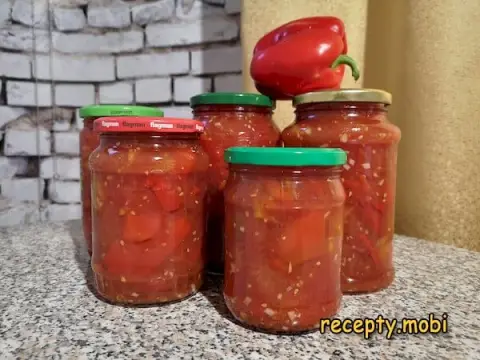
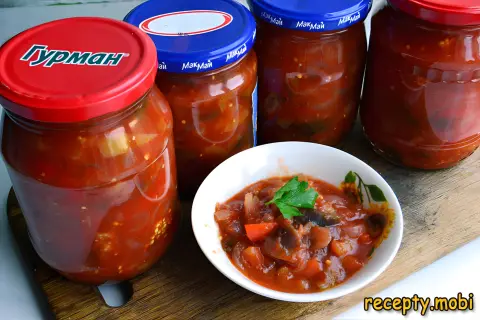
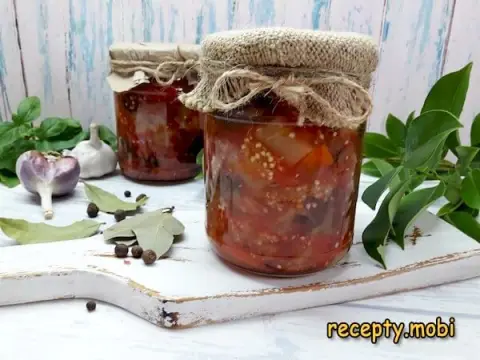
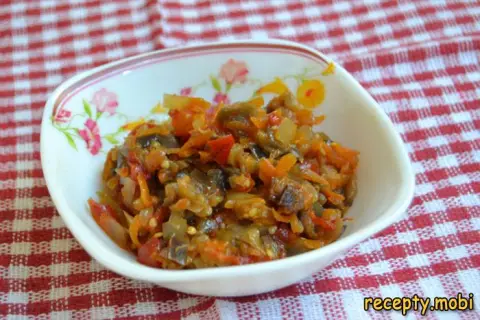
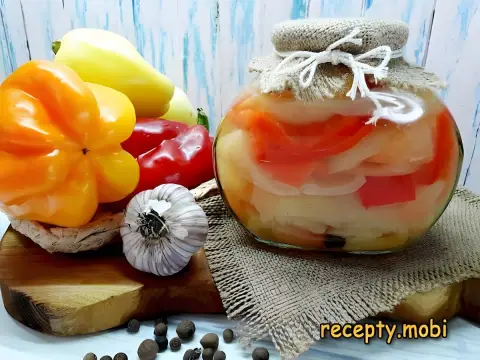
Lecho from bell peppers and tomatoes with garlic and onions for winter

Instructions
I choose meaty, bright bell peppers in red, yellow and orange. A mix of colours gives the most attractive lecho. Green pepper can be used too, but it is less sweet and adds a slight bitterness. Firm, meaty pepper holds its shape during cooking, while thin-walled varieties fall apart.
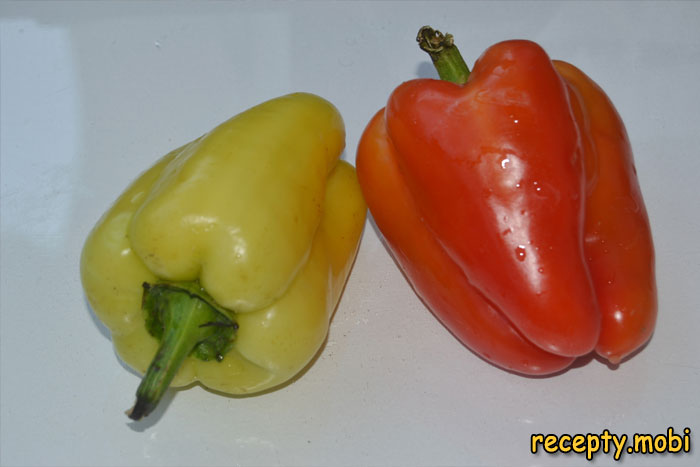
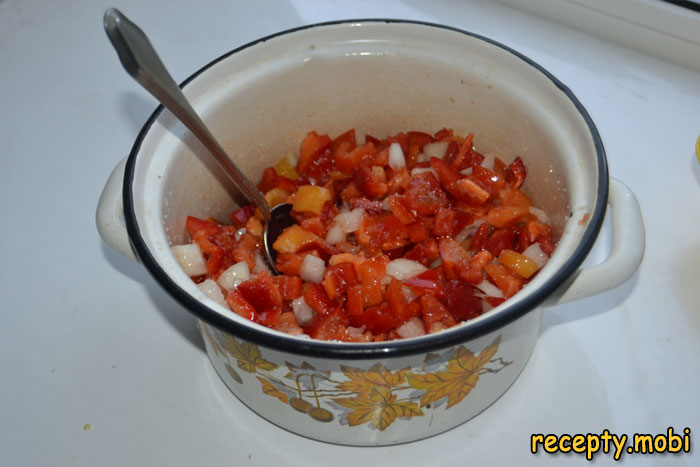
I remove the seeds and stalks from the pepper and cut it into squares of 2-3 cm. I cut the onion into half-rings or 7-8 mm cubes. I put everything into a large heavy-bottomed pot and add salt and sugar - they draw the juice out of the vegetables and speed up the process.
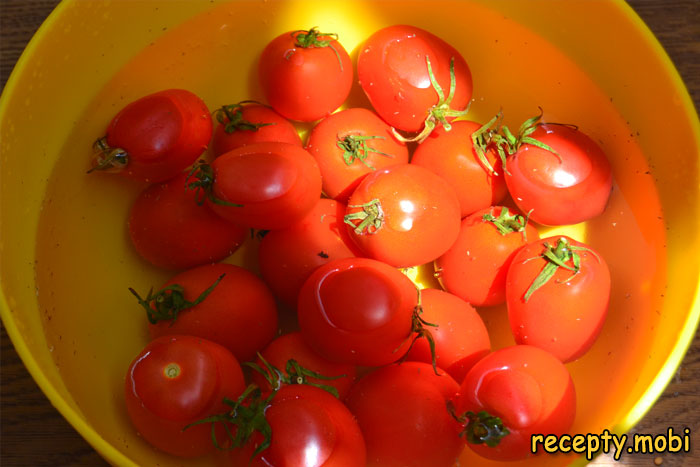
I choose ripe, meaty tomatoes of varieties such as "Slivka", "Bull's Heart" and "Rio Grande" - they give a thick, concentrated juice without excess water. I rinse them under cold running water and remove the stalks and any dark, spoiled spots.
I pass the tomatoes through a juicer - 1 kg yields about 1.5 litres of thick tomato juice. Without a juicer you can use a mincer, but then the mixture must be rubbed through a fine sieve to remove the seeds and bits of skin - otherwise the texture of the lecho will be coarse.
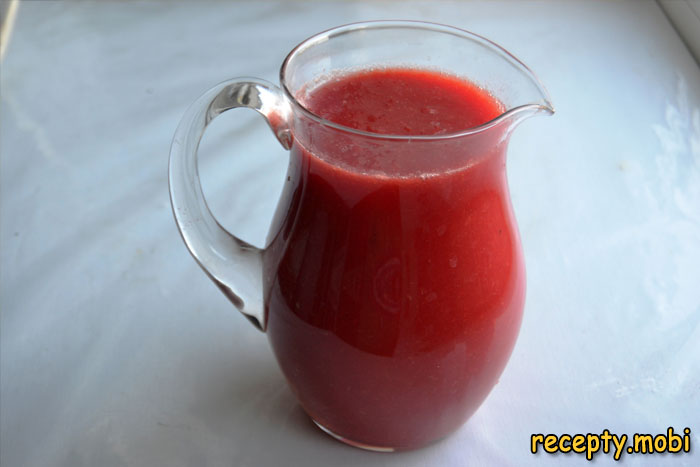
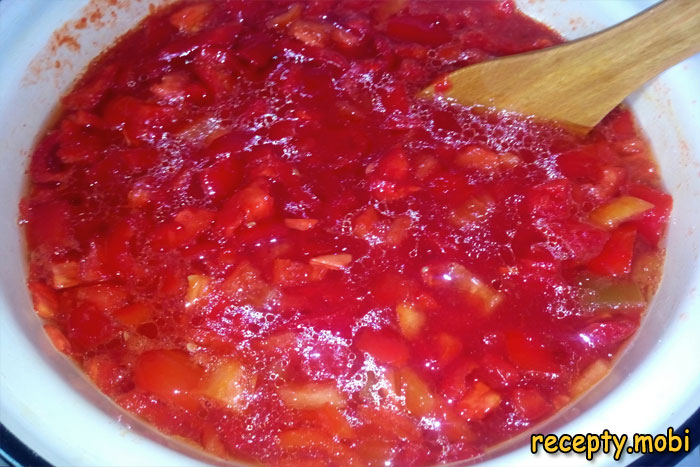
I pour the tomato juice over the vegetables in the pot and add the sunflower oil and 9% vinegar. I cook for 20 minutes over low heat, stirring now and then with a wooden spatula so that nothing burns to the bottom. Slow cooking preserves the texture and makes the flavour rich.
Into the bottom of each sterilised 0.5 l jar I put a few slices of chopped garlic. I do not add the garlic at the end of cooking - it would lose its aroma. In cold, sterile jars it keeps all the strength of its fragrance. I fill the jars to the brim with hot lecho and seal them.
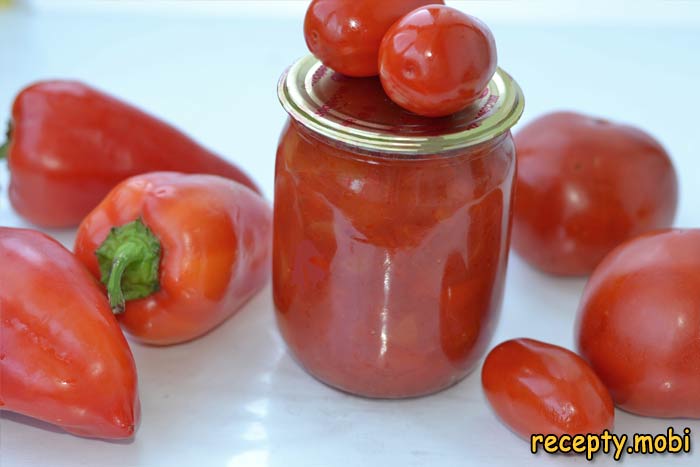
I turn the sealed jars upside down to check the seal and wrap them in a blanket for 12 hours until completely cool. Slow cooling creates an extra vacuum. I store them in a cool, dark place for up to a year. The lecho from bell peppers is ready!


Tips
- 1
Choose firm, meaty tomatoes of varieties such as "Slivka" or "Bull's Heart" - the sauce will be thick and concentrated in flavour.
- 2
Cut the pepper larger or smaller to taste - but no smaller than 2 cm, or it will fall apart during cooking. A coarser cut looks nicer.
- 3
Store in a cool, dark place for up to a year - a temperature of 5-15 °C is ideal. I make lecho with eggplant on a similar principle.
- 4
Serve it as a versatile sauce with meat, as a dish on its own with bread, or add it to borscht and solyanka for extra richness.
FAQ
Can lecho be made without vinegar? +
No, vinegar is essential as a preservative for long storage. It can be replaced with citric acid (1 teaspoon instead of 50 ml of vinegar) or with a larger amount of freshly squeezed lemon juice. Without an acidic component the preserve will ferment within 1-2 months even in a cool place. Apple cider vinegar 6% (increase the amount to 75 ml) gives a milder acidity and a pleasant fruity note. Wine vinegar also works, but it is more expensive.
How long does ready-made lecho keep? +
In sealed sterilised jars in a cool, dark place (cellar or pantry) at a temperature of 5-15 °C, it keeps for up to a year without loss of quality. In the second year the flavour holds, but the vegetables may soften. After opening a jar, move it to the fridge and use it within a week. Signs of spoilage are a bulging lid, mould, gas bubbles and a sour fermented smell - throw such jars out without regret.
Can carrot be added to lecho? +
Yes, 2-3 medium carrots will make the lecho even tastier and sweeter. Add them grated on a coarse grater or cut into thin rounds together with the pepper and onion. Carrot will also give the sauce a lovely orange tint. Other good additions are courgettes or zucchini (a summer version), eggplant (a more filling lecho) and hot chilli pepper (for those who like it spicy). Do not overdo the amount of vegetables - the base is still pepper and tomatoes.
What is lecho best served with? +
It is a versatile sauce and side dish: with fried or baked meat (pork, beef, chicken), mashed potatoes, boiled rice, buckwheat and pasta. You can spread it on a slice of fresh dark or white bread as a snack. It goes well with feta or brynza cheese (a Mediterranean version), with fried eggs for breakfast, and as a gravy with fried sausage. In borscht and solyanka it adds depth of flavour - stir 2-3 spoonfuls into the finished soup.
- Comment
or post as a guest
Be the first to comment.