avg —
Apple and Pear Compote for Winter

Instructions
The quantity of products is given for one three-litre jar. For compote it is best to take sweet-and-sour apples that are firm and not too large. The pears should be the same – do not take very ripe, juicy, soft fruit. Small garden apples and pears are perfect.
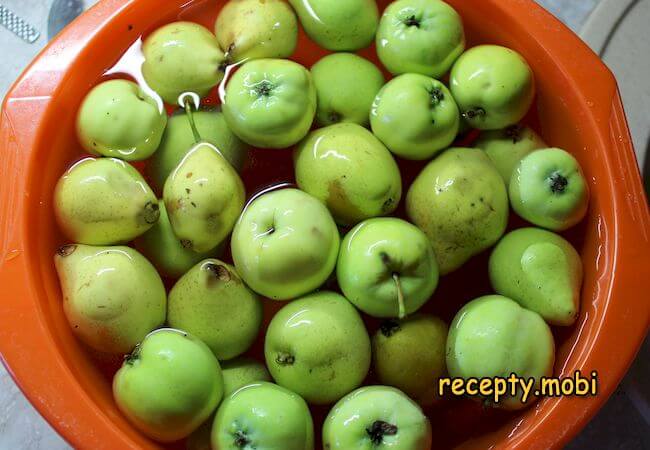
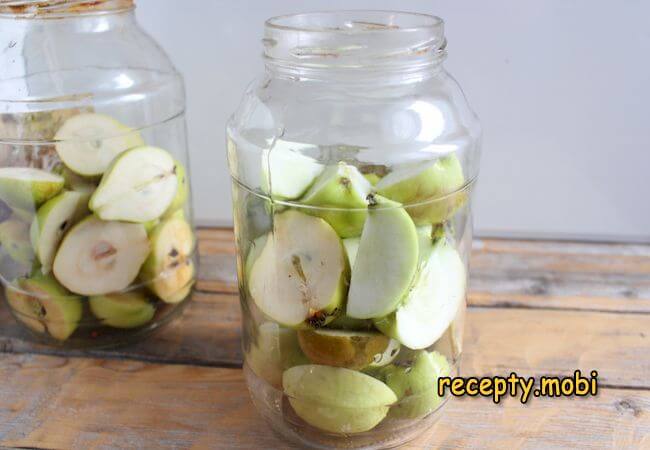
I wash the fruit, dry it off, and cut it into halves. If the fruit is large, you can cut it into quarters – the main thing is that the pieces fit freely into the jar.
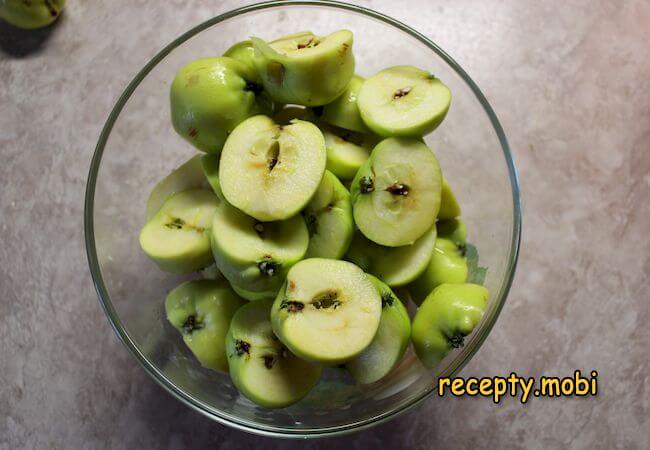
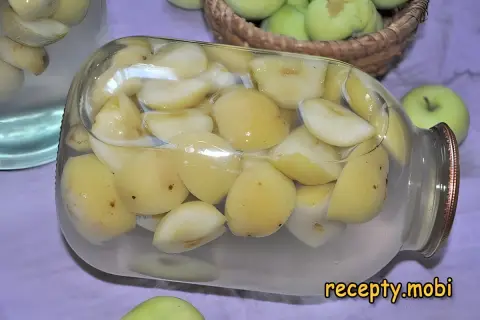
I place the apples and pears into sterile jars and pour boiling water over them up to the shoulders. Some water may be left over – do not pour it out straight away. The fruit will absorb a significant amount of water, and during preparation you will need to add more. I cover the top with clean lids. I leave it for 20 minutes.
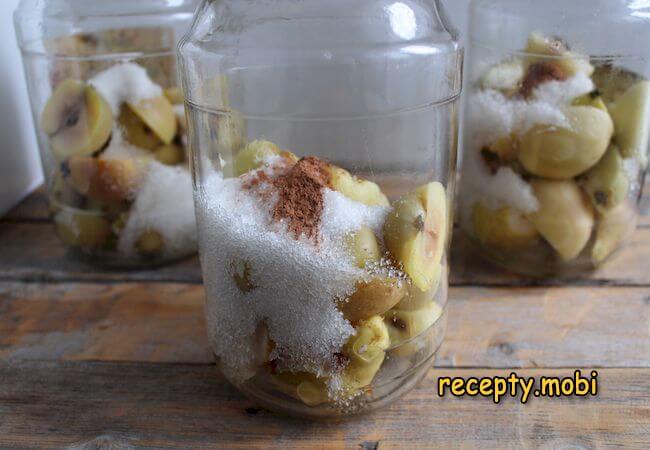
After 20 minutes I pour the water into a saucepan and boil it again – this "kills" the microbes and impurities that have come out of the fruit and could cause the preserve to spoil. I sprinkle the fruit in the jar with sugar and cinnamon.
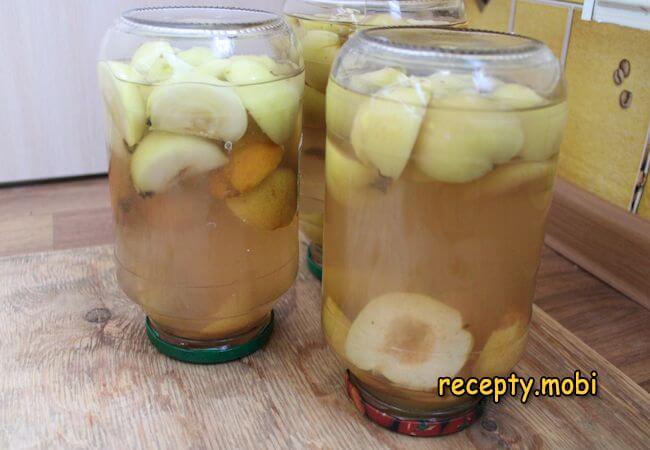
I pour in the hot liquid. Do not worry that the sugar will not dissolve – it will disperse and soak into the fruit during sterilisation. I seal the jars with lids, turn them upside down onto the lids, and wrap them in a thick material that will hold the heat for as long as possible – this gives us a double natural sterilisation. After the compote has cooled completely, I put it away for storage in a cool place until the moment I want to enjoy the pleasant taste of the drink.


Tips
- 1
Use firm, dense fruit – overripe fruit will "go to mush" in the jar and make the compote cloudy. Small garden fruit is ideal.
- 2
The double pour is the key to keeping the compote well. The first boiling water "warms through", the second locks in the sterilisation.
- 3
Add only a little cinnamon (1 tsp per jar) – more will give a "perfumed" aftertaste. A subtle note of cinnamon is the "signature" of an autumn compote.
- 4
Wrap the jars for 12–24 hours – the hot blanket "tops up" the sterilisation through the residual heat. I use the same method for other fruit compotes without sterilisation too.
FAQ
Which varieties of apples and pears are best? +
Apples: Antonovka (tart, a classic), Semerenko (firm flesh), White Naliv (aromatic), Simirenko (does not boil to a pulp), Slava Peremozhtsam (sweet). Avoid varieties with loose, mealy flesh (Melba, Grushovka). Pears: Conference (firm, does not fall apart), Duchess (aromatic), Bere (firm texture). Avoid Lyubimitsa Yakovleva and similar – they are too soft. Universal advice: take firm, underripe fruit – in the syrup it will keep its shape and flavour.
Is citric acid needed? +
In the classic recipe it is not used, because apples and pears themselves contain enough acid (especially the sour varieties). If the varieties are very sweet (such as Golden) – add 1/4 tsp of citric acid per jar to be safe. It also helps the fruit keep its colour – without it the apples may darken slightly in the syrup. For Antonovka apples citric acid is not needed – they are very sour on their own.
How long does the compote keep? +
In a cellar or cool larder (10–15 °C) – up to 12 months. At room temperature – 6–8 months. Once opened – 4–5 days in the fridge. Apple and pear compote is one of the most "stable" – the high content of pectin and natural acids helps it keep. Signs of spoilage: a bulging lid, fermentation (bubbles when opened), a white film on the surface – in these cases the compote must not be drunk.
Can other fruits be added? +
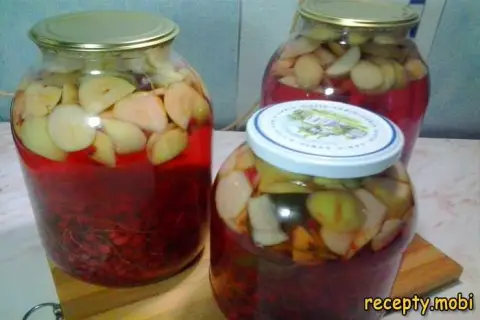
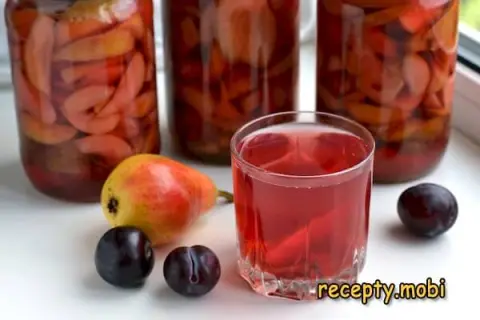
Yes, they combine well. Options: +plums 5 pieces (a richer colour), +grapes 1 handful (sweetness and aroma), +quince 1 piece (a tart accent), +cranberries 1 tbsp (tartness), +mint 2 sprigs (freshness). The main thing is not to exceed the total amount of fruit: the jar should be filled to 1/3. More fruit = less syrup. The spices can be varied: cloves 2 pieces (a spicy version), star anise 1 star (an aniseed shade), cardamom 1 piece (an Indian note).
- Comment
or post as a guest
Be the first to comment.