avg —
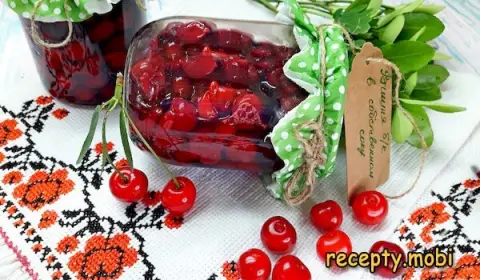
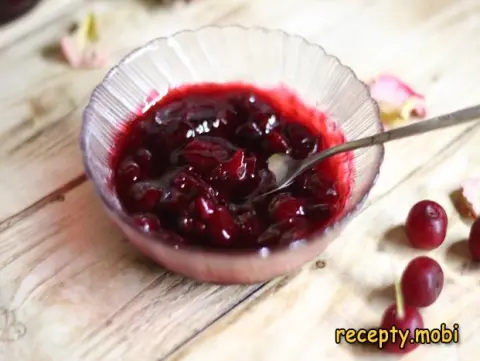
Cherry with gelatin for winter (pitted)

Instructions
I prepare the ingredients I need. I rinse the cherries and remove the pits – this is most convenient with a special cherry pitter or a pin. It is laborious, but the result is worth the effort.
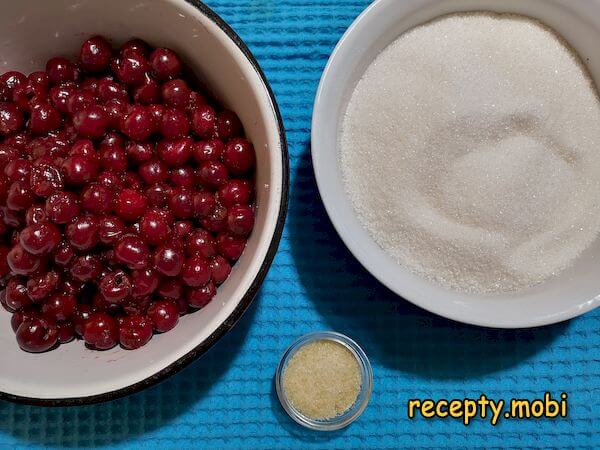
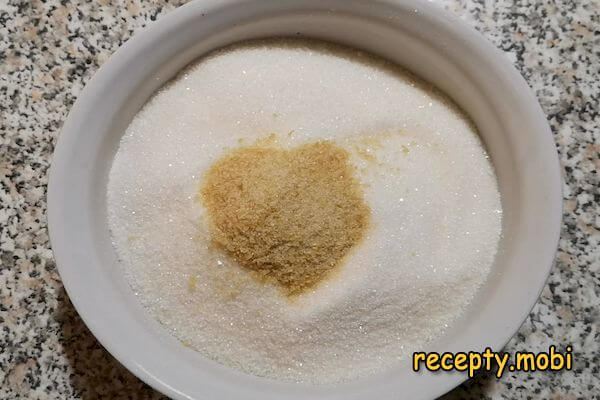
I add 2 tbsp of gelatin to the sugar and stir everything until smooth. Mixing the sugar and gelatin dry is the secret to even dissolving: if you add the gelatin on its own, it can stick together in lumps.
I pour the sugar and gelatin into the bowl with the cherries. I stir everything gently with a wooden or silicone spatula – a metal one can damage the berries. I put it in the refrigerator for 3–4 hours. During this time the cherries release their juice and the sugar with gelatin begins to set.
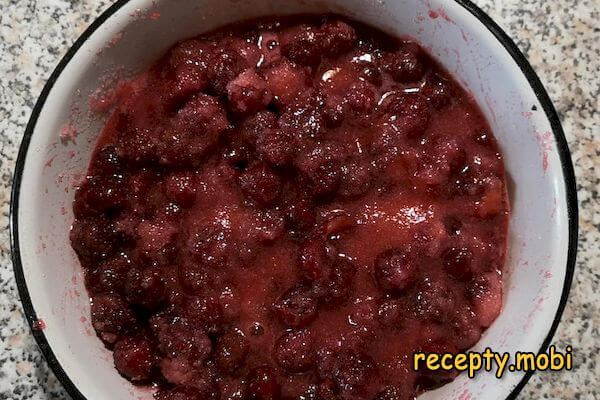
I transfer the cherry mixture into a saucepan and set it on the stove over maximum heat. I stir everything.
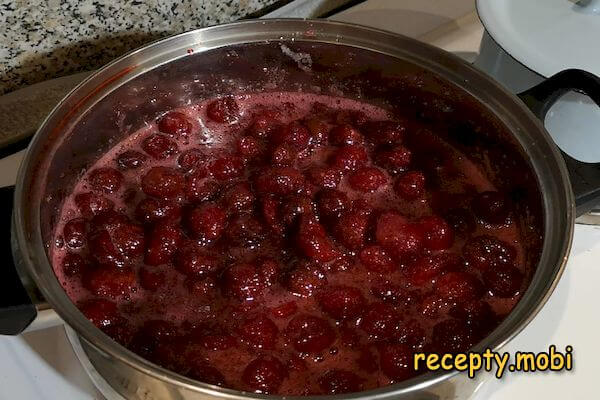
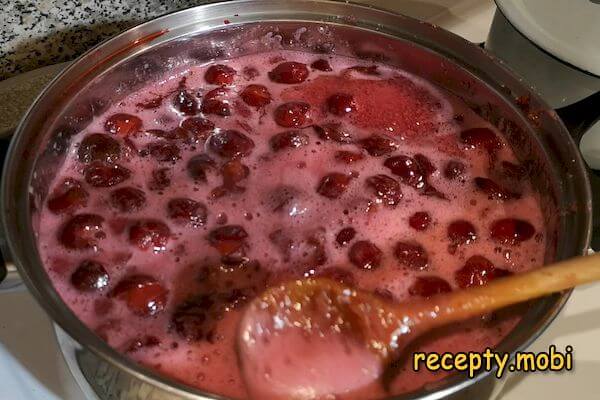
Foam may form during cooking – it needs to be skimmed off. Once it comes to the boil, I set the heat to its lowest and cook for 2 more minutes. You must not cook it for long – the gelatin will lose its setting properties.
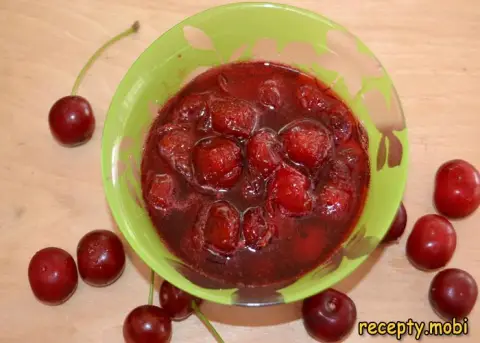
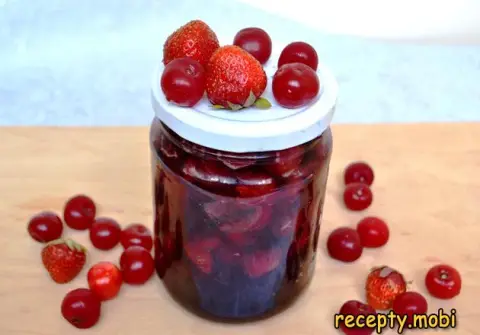
I pour the cherry preserve into previously sterilised jars. I quickly screw on sterilised lids while it is still hot.
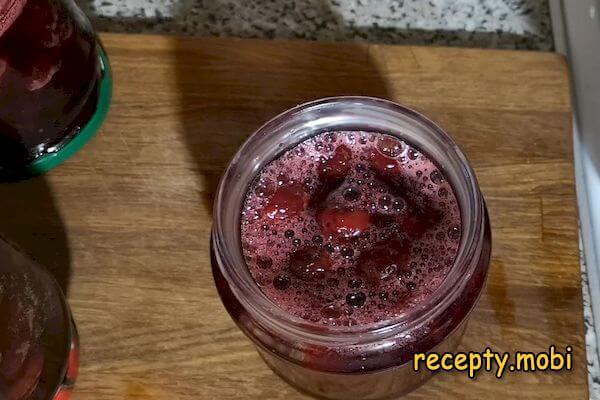
I turn the jars upside down for 10–15 minutes to make sure the jars are sealed tightly and no liquid leaks out.
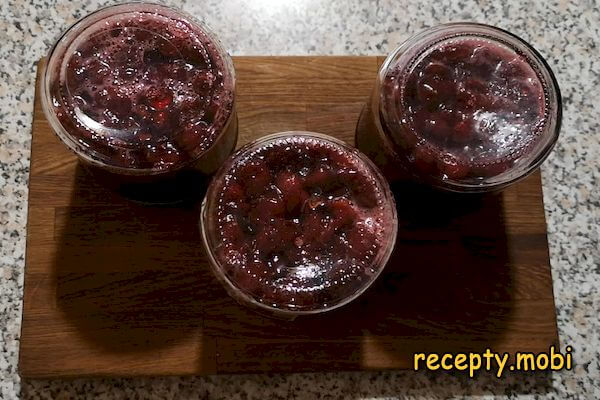
I turn the jars right side up. I leave them at room temperature until completely cool.
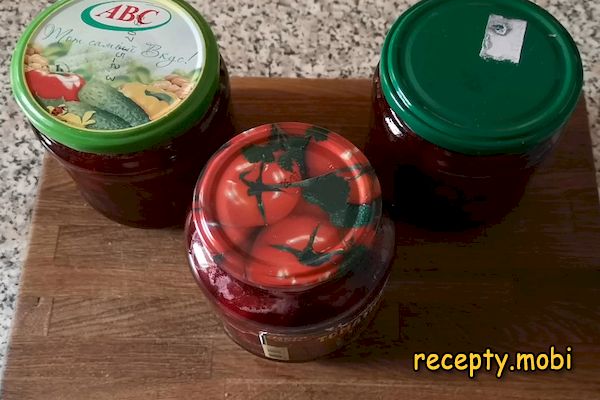
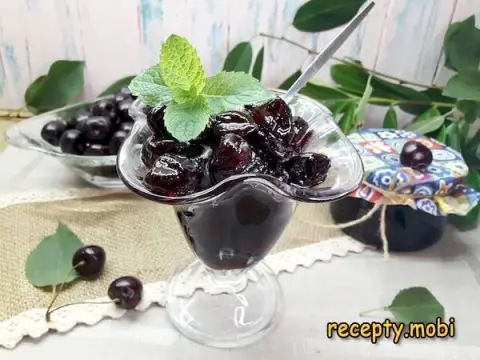
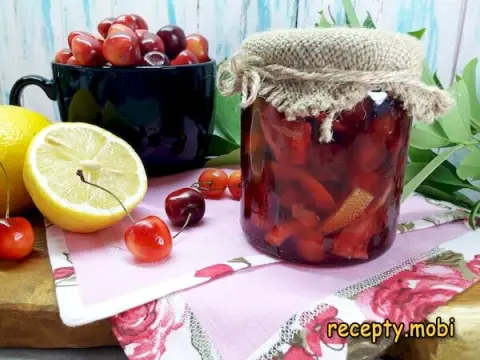
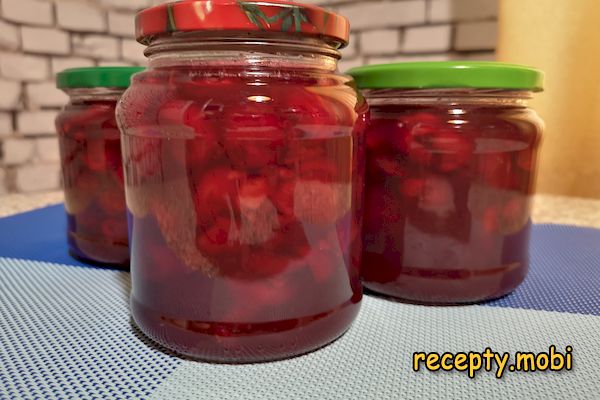
I put the finished jars of cherry with gelatin away for storage in a cool, dark place.


Tips
- 1
MIX the sugar and gelatin DRY – otherwise the gelatin will stick together in lumps and dissolve poorly during cooking.
- 2
After it comes to the boil, cook for a MAXIMUM OF 2 MINUTES – long cooking destroys the setting properties of the gelatin and the preserve will not set.
- 3
Always sterilise the JARS AND LIDS – any contamination can spoil the whole batch. Hold them for 15–20 minutes over steam or in the oven at 120 °C.
- 4
The first 3–4 hours of soaking in the refrigerator are CRITICAL. Without them the cherries will not release enough juice and the gelatin will not dissolve evenly. A similar principle works for other berry preserves with gelatin.
Video

FAQ
How do you quickly remove the pits from cherries? +
There are several options. The fast way: a special cherry pitter – it removes 500 g in about 15 minutes. A handy way: a safety pin – pierce the cherry from the side, hook the pit and pull it out (this is how grandmothers used to do it). A firm kitchen trick: place a bottle cap under the cherry and press from the top with a finger so the pit is "pushed" out (good for large cherries). Another method: a bottle with a narrow neck and a wooden stick – stand the cherry on the neck, push it through with the stick, and the pit drops into the bottle. For a 1 kg batch I recommend a pitter, otherwise the process will drag on for hours.
Can the gelatin be replaced? +
Yes, there are alternatives. Agar-agar (2 g = 1 tbsp of gelatin) – it is plant-based, suitable for vegans, and sets faster. Pectin (5–7 g per 1 kg of cherries) – gives a more "natural" set and a jammy texture. Starch (2 tbsp per 1 kg of berries) – gives a softer consistency that is not "rubbery". Gelatin is the classic: it gives a clean jelly structure and is available everywhere. Agar-agar is firmer and sets even at room temperature – ideal for a long-keeping preserve. Pectin is the most natural, but it requires precise measuring.
How long does the preserve keep? +
In a cool, dark place (a cellar or pantry at 10–15 °C) – up to 12 months. At room temperature – up to 6 months. Once opened, in the refrigerator – 1–2 weeks. In a sealed jar the gelatin stays stable – it does not separate or lose its shape. If a jar has swollen or bubbles have appeared, the preserve has spoiled – throw it away. As a rule, cherry jelly is eaten long before the use-by date because it is so delicious.
How do you use the finished cherry jelly? +
There are several ways to serve it. Sandwiches: bread + butter + cherry jelly – a classic "grandmother's" breakfast. As a filling: for pancakes, pies and dumplings (swap the curd cheese for the jelly). As a cake layer: between the sponges, it gives bright colour and fruity flavour. As a dessert decoration: for pancake cakes, yoghurts and curd mousses. With pancakes: instead of jam. With ice cream: a spoonful of jelly plus a scoop of vanilla ice cream makes an elegant dessert. As a drink: 1 tbsp of jelly plus a glass of hot water makes a cherry "tea" (especially nice in winter when you have a cold).
- Comment
or post as a guest
Be the first to comment.