avg —
Sponge Roll with Custard

Instructions
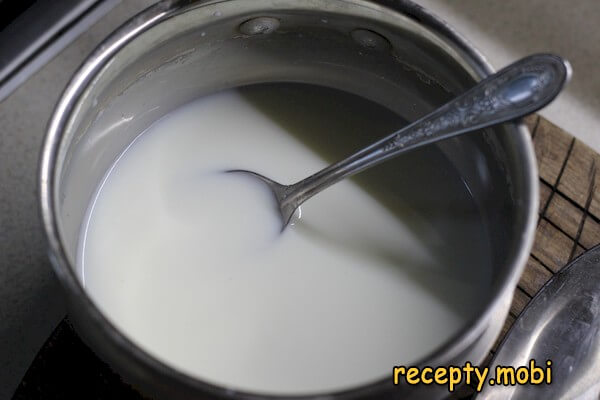
First I make the custard base for the cream. I mix the sugar with the starch and vanilla, add the milk, then cook the mixture over heat until it thickens. After that I cover it with plastic wrap pressed directly onto the surface and let it cool to room temperature.
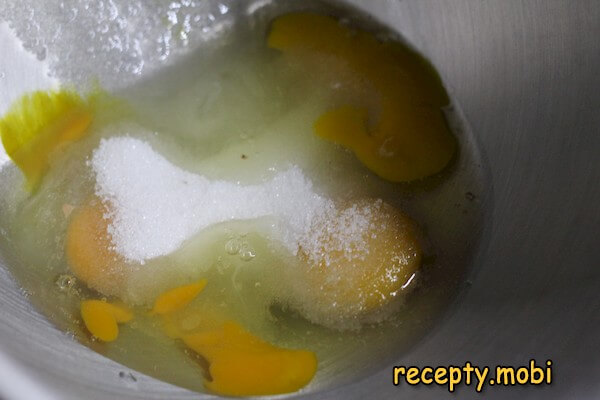
Next I move on to the sponge base. I beat the eggs with the vanilla, sugar and salt into a firm, thick and fluffy mass. When the right consistency is reached, the whisk should leave a clearly visible trail on the eggs.
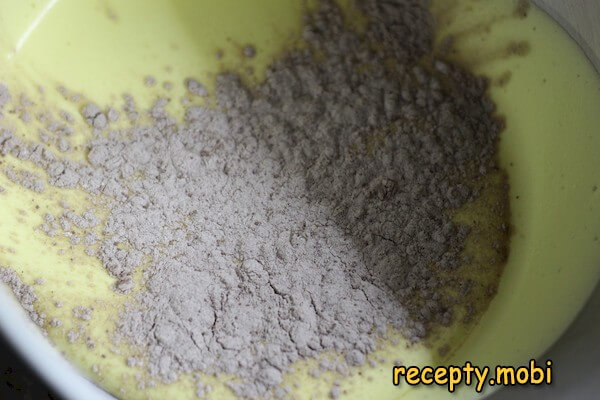
I sift the cocoa and flour together into the eggs. I gently fold the mixture in with a spatula.
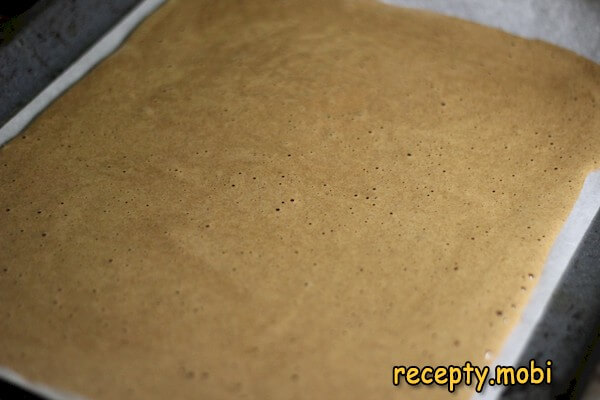
I pour the batter onto a flat baking sheet lined with parchment. I spread it into a thin rectangle and put it into an oven preheated to 180 degrees. In an electric oven on the top-and-bottom setting it bakes for 6-7 minutes. In a gas oven I bake it longer, about ten minutes. After five minutes from the start of baking you can in any case open the oven and check for doneness with a dry wooden skewer.
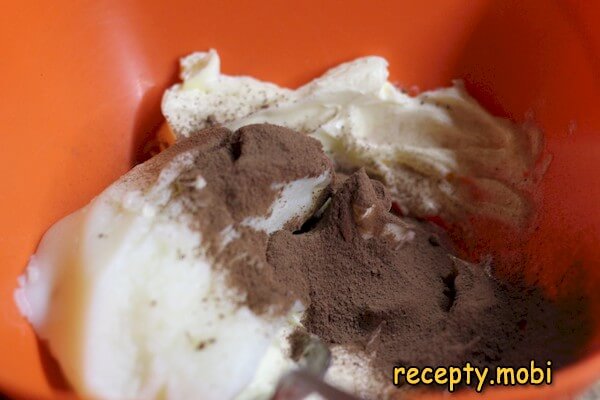
I add the soft butter to the cooled custard base along with the cocoa. I mix until smooth and uniform.
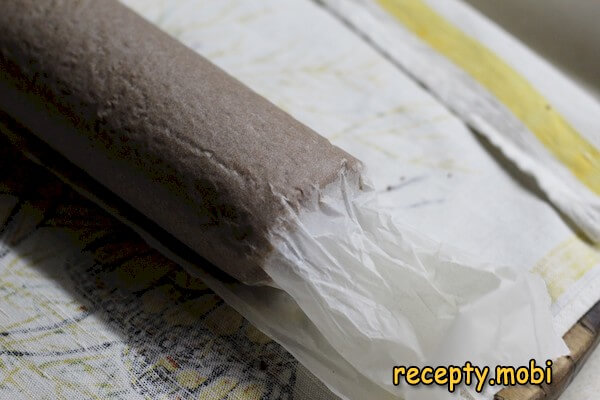
I roll the hot sponge base into a roll together with the parchment. I wrap the roll in a towel and leave it until it has cooled completely.
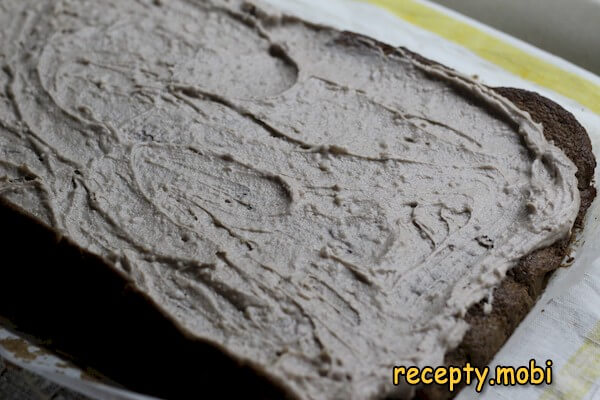
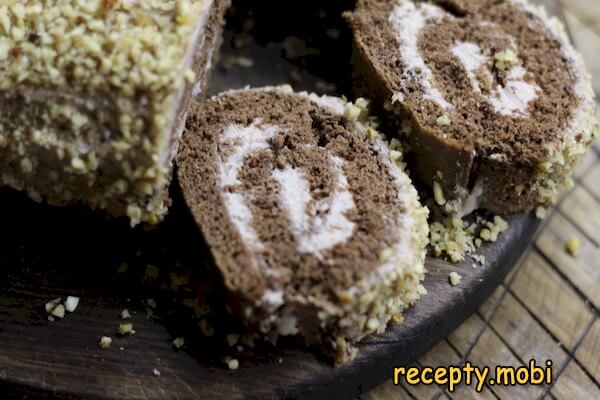
As soon as the roll has cooled, I unroll it and remove the parchment. I soak the base with raspberry liqueur or another spirit. I spread the cream over the sponge and roll it back up into a tight roll.
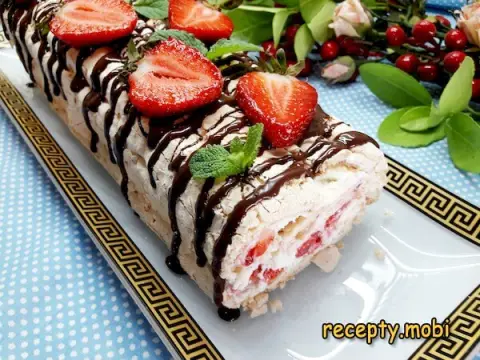
I decorate the top of the roll with cream and chopped nuts. For convenience you can cut the roll into two smaller ones.
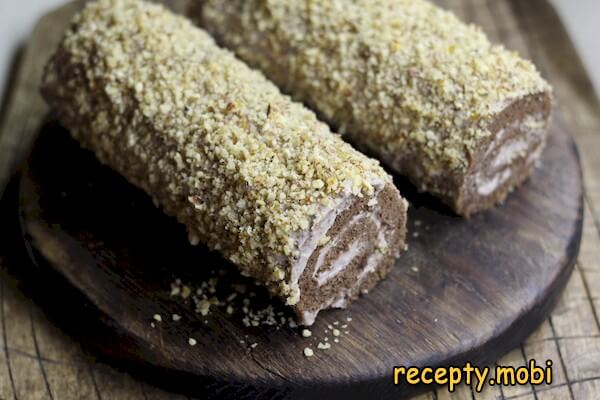
The tasty chocolate roll with cream is ready!


Tips
- 1
Roll it while hot – the secret to avoiding cracks. A cold sponge breaks when you roll it. A hot one, with the parchment, is pliable and rolls up without cracking.
- 2
Plastic wrap directly on the cream – the secret to avoiding a skin. Without wrap on top, a skin will form. Wrap laid straight onto the cream keeps it smooth.
- 3
A liqueur soak – the secret to juiciness. A dry sponge becomes moist once it is soaked. Raspberry liqueur with chocolate is a premium pairing.
- 4
Nuts on top – the secret to texture. Inside, they go unnoticed. On top of the cream they stay crunchy and add a visual accent. The same principle works in other kinds of sponge rolls.
FAQ
Which cocoa should I choose? +
Ideal is natural cocoa without sugar (15 g in the batter + 5 g in the cream for a brighter chocolate flavour). Alternatives: alkalised (Dutch-process) cocoa (15 g + 5 g – premium, richer), a 50/50 blend of natural and alkalised cocoa (7 + 7 g each – premium), sweet "Nesquik" cocoa powder (20 g + 7 g – reduce the sugar), melted dark chocolate (30 g – premium natural), carob powder (15 g + 5 g – a healthy alternative). Fresh cocoa in airtight packaging is the premium option. Do not use: instant cocoa drinks with sugar (they upset the balance). For a classic chocolate roll, natural cocoa is a must.
What can replace the raspberry liqueur? +
Alternatives: berry syrup (2 tbsp – alcohol-free), cherry syrup (2 tbsp – alcohol-free), brandy or rum (1 tbsp – classic), cherry cordial (2 tbsp – brighter), Baileys (2 tbsp – premium and creamy), strong coffee with sugar (2 tbsp – an espresso accent), milk with rum essence (2 tbsp + 3 drops – for children), or simply sweet tea (2 tbsp – economical). Fresh raspberry liqueur is the premium option. Do not use: plain vodka (too harsh) or savoury infusions. For a classic dessert roll, a sweet fruit soak is a must.
How long does the roll keep? +
In the fridge in a tightly closed container – 3 days. Any longer and the sponge dries out and the cream separates. Before serving, let it stand for 15-20 minutes at room temperature. In the freezer – up to 1 month; defrost it in the fridge for 6-8 hours. A fresh roll is at its best 2-3 hours after assembly (once it has soaked through). On the second day the flavour is deeper, as the roll has had time to settle. Do not leave it at room temperature for longer than 4 hours with a milk-based cream. It is ideal to make it for 1-2 tea parties.
What should I serve the roll with? +
A classic with tea: a cup of black "Earl Grey" tea with milk. With a cup of coffee with milk in the morning. With vanilla ice cream (for contrast). With fresh berries (raspberries, strawberries, blueberries). With a glass of cocoa. With a cappuccino or latte. With a glass of Cahors wine (for church holidays). With a glass of milk (the family way). With a glass of sweet liqueur (Baileys, Sheridans). With a cup of herbal mint tea. With a white dessert wine (Moscato, Sauternes). With hot cocoa and marshmallows for children. For a family tea party it is a versatile serving. A festive dessert for tea time.
- Comment
or post as a guest
Be the first to comment.