avg —
Kuban Salad for Winter

Instructions
-
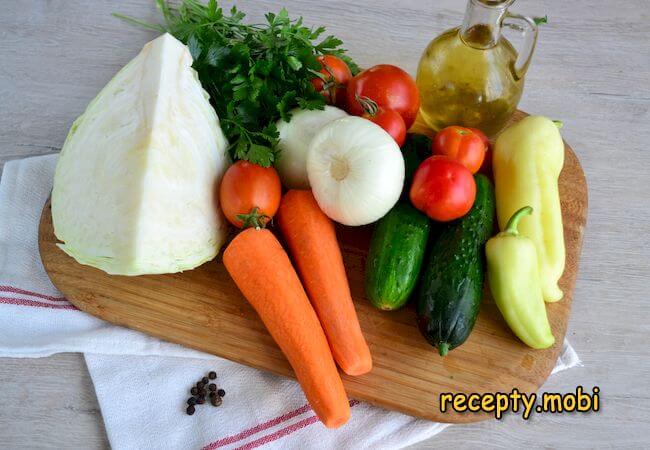
Lay out every ingredient before starting the preserve project. Rinse all the vegetables thoroughly under cool running water, peel the carrots and onions, and remove the seeds and white inner ribs from the bell peppers. Have the sterilized jars and lids ready alongside the work surface for the filling step at the end.
-
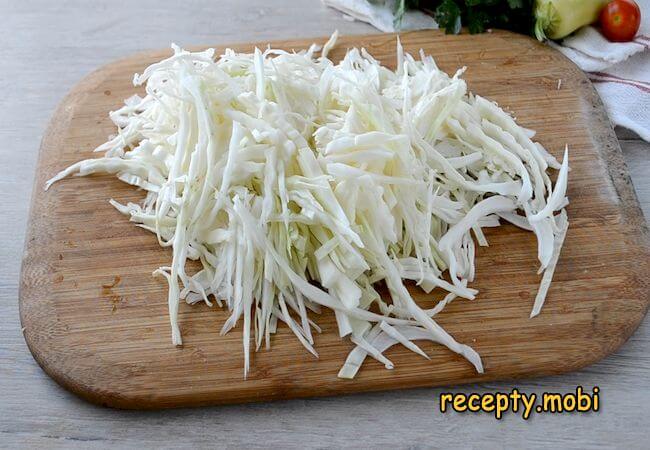
Start with the cabbage because it takes the longest to release its juice. Shred the cabbage finely with a sharp knife or use a dedicated cabbage grater for the most uniform thin shavings.
-
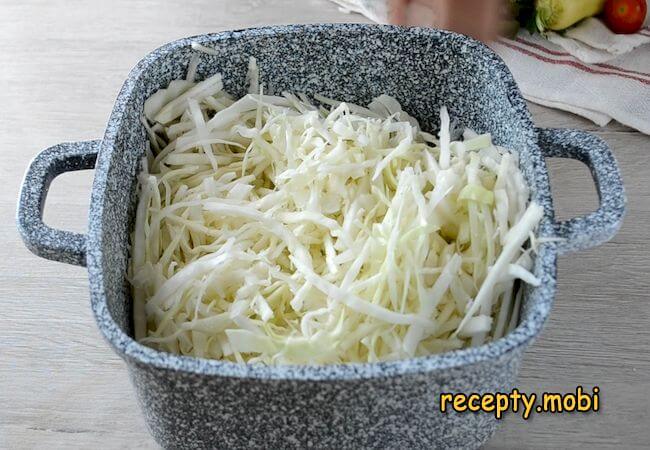
Move the shredded cabbage into the large pot you plan to use for cooking the salad. Add half of the listed salt (about half a tablespoon) and massage the cabbage with your hands, pressing down firmly to help it release juice into the pot bottom.
-
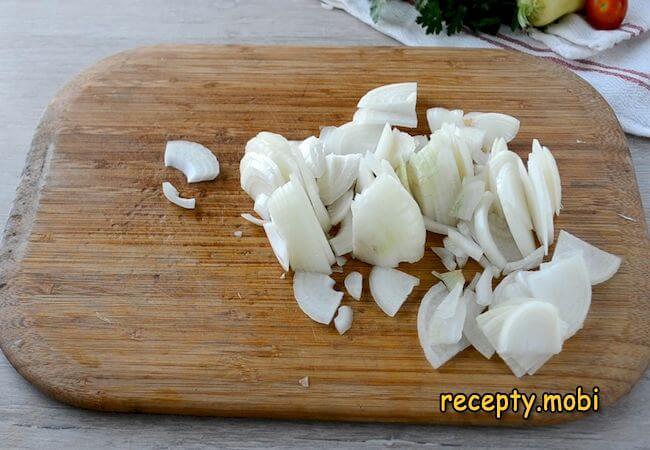
Slice the peeled onions into thin half-rings. Thin slices distribute more evenly throughout the salad and produce a milder finished flavor than chunky onion pieces that stay sharp at the centre.
-
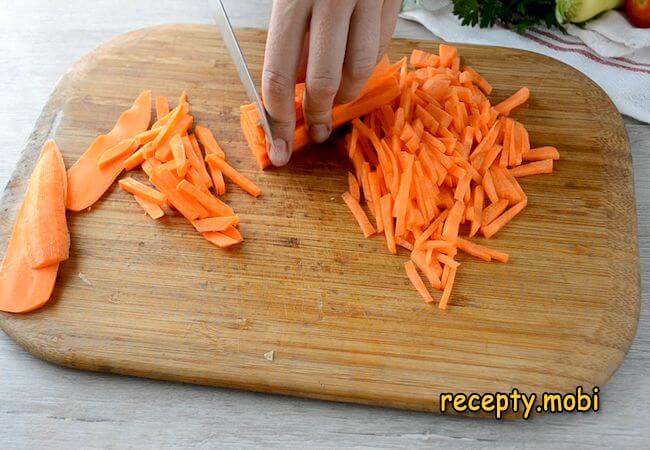
Cut the carrots into thin short matchstick strips with a sharp knife or grate them on a Korean-carrot grater. Both methods produce similar results; choose whichever feels more natural in your kitchen.
-
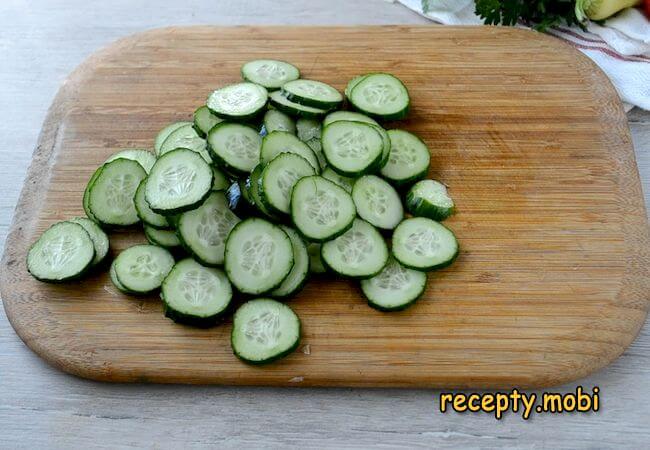
Slice the cucumbers into thin rings about three millimetres thick. Use small cucumbers with thin skins and minimal seeds for the cleanest finished texture in the preserve.
-
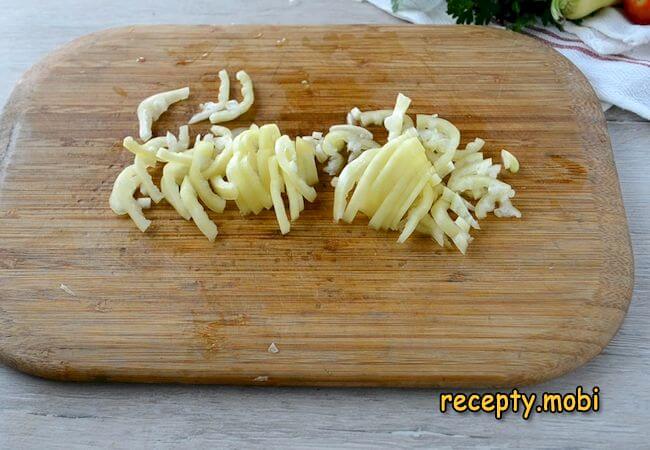
Cut the bell peppers into short thin strips matching the carrots in size. Uniform strips give the finished preserve a tidy professional appearance that distinguishes home-canned products from amateur attempts.
-
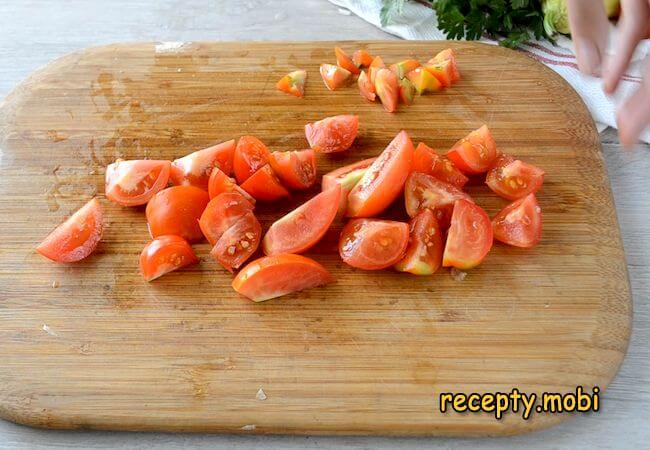
Cut the tomatoes into medium-sized wedges, removing the green stem area first. Choose firm not-too-ripe tomatoes for the best results; the firmer pieces hold their shape during the cooking phase rather than disintegrating into mush that ruins the visible texture of the finished salad.
-
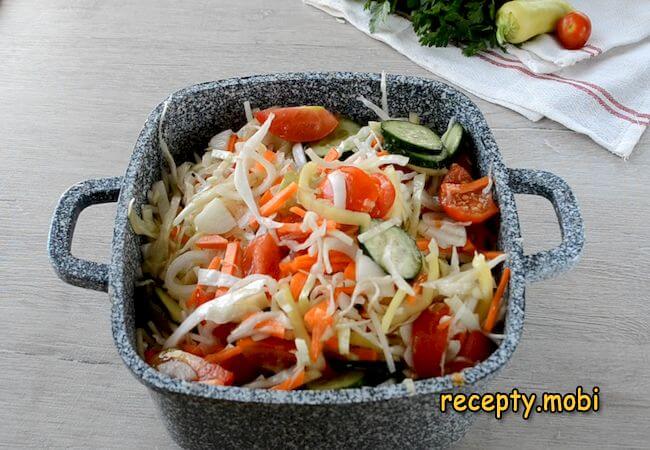
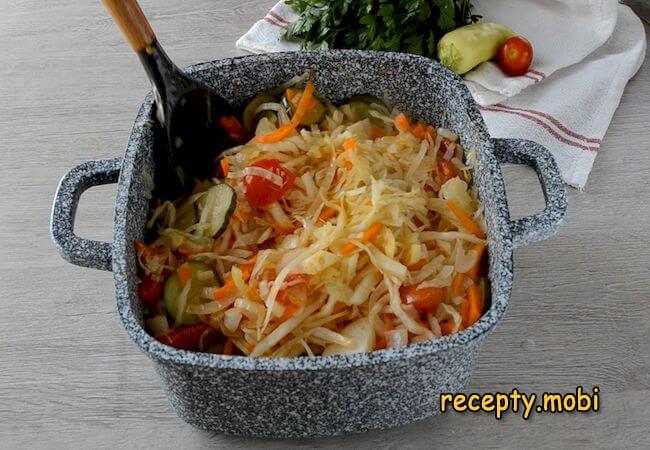
Add all the prepared vegetables to the pot with the salted cabbage. Add the remaining half tablespoon of salt, the two tablespoons of sugar, the sunflower oil, and the vinegar. Stir everything together thoroughly and let the pot sit undisturbed for one to two hours so the vegetables release more juice and exchange aromatic compounds with each other in the bowl.
-
Place the pot of vegetables on medium heat and bring to a boil. Add the black peppercorns at this stage. After the first boil, reduce the heat slightly and simmer for eight to ten minutes, then pull the pot off the heat immediately to prevent overcooking.
-
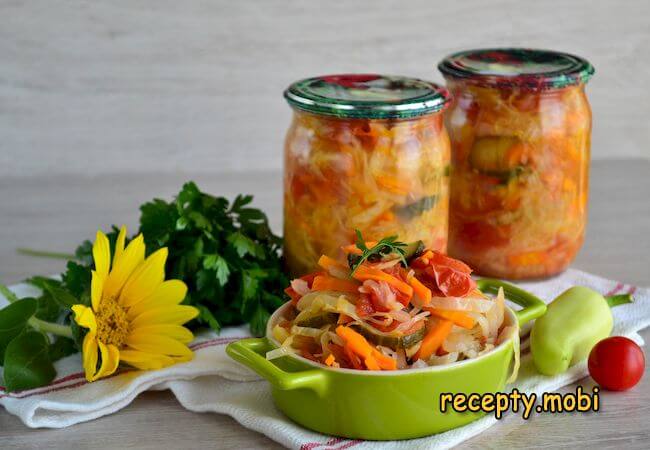
Distribute the hot salad immediately into sterilized half-litre jars and seal each with a metal lid while the contents are still hot to create the strong vacuum seal essential for safe long-term storage. The Kuban Salad prepared this way keeps beautifully in the cellar through the winter and well into the next year. Bon appetit on cold winter evenings when the bright colors and fresh flavors are most welcome.


Tips
-
1
Use only non-iodized salt for any home-canning project. Iodized table salt clouds the brine permanently and can leave a faintly bitter aftertaste in the finished preserve. Look for kosher salt, pickling salt, or coarse sea salt without anti-caking additives. The right salt simply dissolves cleanly into the vegetable juice and steps quietly into the background, letting the natural vegetable flavors shine through the finished jars.
-
2
Choose tight firm cabbage heads for the best results. Soft loose cabbage releases too much water during salting and produces a watery finished salad with limp vegetables. Firm cabbage holds its texture beautifully through the salting and cooking process and contributes the satisfying crunch that defines this preserve. Pair the salad with another reliable winter pantry staple like the colorful Bakat Salad from Eggplant for Winter.
-
3
Sterilize the jars and lids thoroughly before filling. Boil the lids for five minutes in a separate small saucepan and either bake the empty jars at one hundred and twenty degrees for fifteen minutes or steam them over a kettle of boiling water. Properly sterilized vessels are essential for the long shelf life of any home preserve. Store the sealed jars in a cool dark cellar or pantry for up to two years.
-
4
Let the salted vegetables rest for the full two hours before cooking, even if you feel rushed. The rest time allows the vegetables to release juice and exchange aromatic compounds, producing a more cohesive flavor profile in the finished salad. Skipping the rest produces a salad where each vegetable tastes separate rather than blended into the unified Kuban character. Pair the salad with the savory Eggplants "Firefly" for Winter.
Video
FAQ
How long does Kuban Salad keep on the shelf? +
Properly canned and sealed Kuban Salad keeps for up to two years in a cool dark cellar or pantry shelf without significant loss of flavor or color. After two years, the texture starts to soften noticeably and the color fades slightly, though the salad remains safe for another six months. Always check the seal before opening: a properly sealed jar shows a slightly concave lid that does not pop when pressed. Once opened, refrigerate and use within two weeks. Always use clean utensils when scooping out portions to prevent contamination.
Can I make this salad without sterilizing the jars? +
Sterilization is essential for safe long-term storage of home preserves; skipping the step risks botulism and other dangerous bacterial contamination that can develop unnoticed in unsterilized canned goods. For a quick refrigerator pickle that does not need long storage, you can skip the sterilization and consume the salad within two weeks of preparation, keeping it refrigerated at all times. The flavors actually develop nicely during the first week even without the heat processing, making this a reasonable option for small batches consumed quickly.
Can I substitute or add other vegetables to this salad? +
Yes, several additions blend beautifully with the basic Kuban formula. Cauliflower florets, lightly blanched first, add interesting texture and visual variety. Green beans cut into short pieces work beautifully and contribute crunchy contrast. Sliced zucchini brings a lighter character that suits late-summer batches when zucchini is abundant. Hot pepper rings add fiery heat for those who enjoy spicy preserves. Whatever additions you choose, keep the cabbage as the dominant ingredient because it provides the structural backbone that defines the Kuban character.
What can I serve alongside Kuban Salad in winter? +
The bright tangy salad pairs beautifully with several classic Russian dishes. Boiled potatoes with butter and dill create a perfect simple winter meal. Grilled meats (pork chops, chicken thighs, beef cutlets) benefit from the fresh acidic contrast that the salad provides. Borscht and other hearty winter soups welcome the salad as a side dish that brightens the overall meal. For drinks, chilled vodka or a crisp lager pair traditionally with this preserve at any winter table. Cold cuts and crusty bread make a quick lunch platter centered around the salad.
- Comment
or post as a guest
Be the first to comment.