Bulgur – how to cook, how to choose and store bulgur
Bulgur is a popular Middle Eastern grain made from steamed and cracked wheat that has become very popular in Russia and Europe in recent years as a wholesome alternative to rice, buckwheat and ordinary millet. Bulgur has a pleasant light nutty flavor, cooks faster than many other grains and is perfectly suited for side dishes, pilaf, warm salads, stuffed vegetables, tabbouleh and many other dishes of Mediterranean and Middle Eastern cuisine. This guide gathers detailed information about bulgur: what varieties exist (fine, medium, coarse), how they differ in use, how to properly cook bulgur (exact 1:2 ratio with water and 15-20 minute timing), how to choose quality product at the store and home storage conditions. Methods for cooking on water, on milk and in a multicooker are also covered.
Bulgur is a very healthy grain used to prepare nutritious dishes. At home it is very simple and quick to cook and requires no great culinary experience. Even a beginner cook can manage ordinary bulgur porridge.
Bulgur consists of small granules made from wheat. It is used to make porridge, a side dish, and also a full main course with meat or vegetables. Bulgur differs from regular wheat grains in consistency — the granules cook down well and turn out soft. Only when the cooking rules are followed does the grain keep its many nutrients, which is why it is so important to learn how to cook bulgur properly.
What is bulgur?
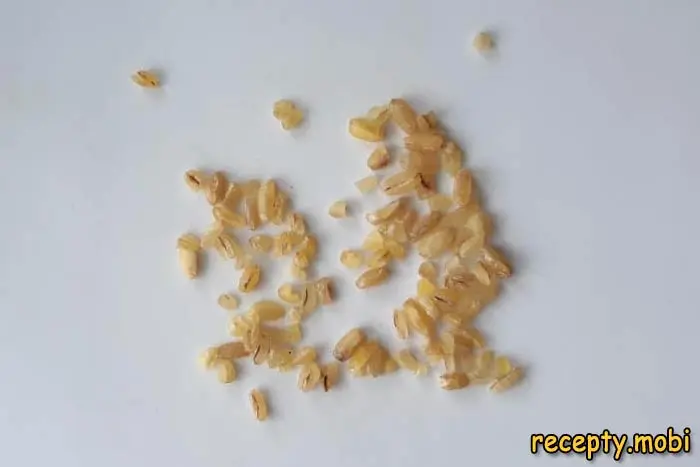
Many people wonder which grains bulgur is made from. It is made from hard varieties of wheat, so it retains all the beneficial properties of this grain. In appearance it resembles yellow rice or the lesser-known product called couscous.
The production process consists of several stages. First, the selected wheat grains are treated with steam. Next they are dried and then cleaned of the bran. The dried and cleaned grains are ground, and the result is uniform granules. The product reaches the shops packaged in varying degrees of grinding:
- Fine-ground product is chosen for making fillings in baked goods.
- Medium-ground bulgur goes perfectly in salads and soups.
- Coarse-ground grain is the choice of cooks for preparing a side dish and pilaf.
How does bulgur differ from regular wheat grains? In its composition there is no particular difference, but in taste it earns a higher rating. On top of that, bulgur does not turn into mush and its grains do not stick together — it is an excellent choice for a side dish.
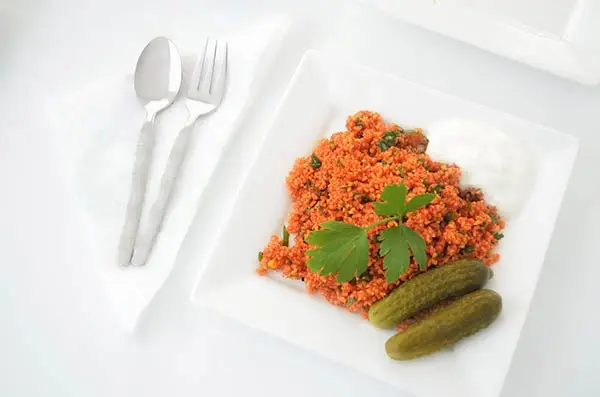
How to choose and store bulgur
For the beneficial properties of the grains to be revealed in full, you need to use a quality product to make the porridge. When buying, it is important to pay attention to the following points:
- No damage to the packaging — it should be completely intact.
- The colour of the granules ranges from yellow (light golden) to brown.
- Bulgur should crumble well in the packaging. Stuck-together lumps are a sign of poor quality (moisture may have got inside).
- There must be no plant debris (remains of husk and grass), and certainly no small stones or soil. A conscientious manufacturer always cleans the product well of any debris.
- The grain should be fresh. If the use-by date has passed, it is best not to buy it.
How should the product be stored properly? The grain stays fresh for 4–10 months (the information is given on the packaging). Granules from an opened package are tipped into a container with a lid and moved to a dark, dry place. It is important to remember that moisture leads to rapid spoilage of the grain — it becomes damp and bacteria develop in it. Light speeds up the oxidation of the grains.
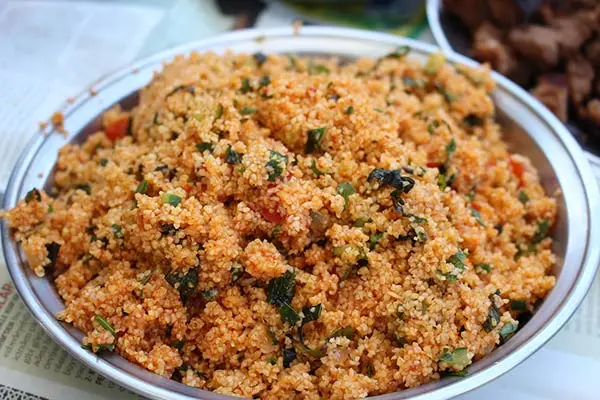
How to cook bulgur in a pot
Before you start cooking, see to a suitable pot. It is advisable to choose cookware with a thick bottom and walls, so the grain gradually absorbs the moisture and does not burn to the bottom of the pot. The cooking process is so simple that even a newcomer to cooking can manage it.
To get crumbly porridge, take the ingredients in the following proportions:
- bulgur – 0.5 cup;
- drinking water – 1 cup;
- sunflower oil – 2 tablespoons;
- table salt – 1 teaspoon.
Cooking process:
- Tip the grain from the packet into a shallow bowl and sort through it carefully, getting rid of any stray grains and plant debris. This is not strictly necessary, since conscientious manufacturers always sort the grain well before packing it.
- Put the sorted grains into a bowl of cold water and rinse them well. Drain in a colander and leave for a couple of minutes so the water runs off completely.
- Pour the sunflower oil (2 tablespoons) into the pot. Then move the pot onto the stove and set a medium heat.
- When the oil has warmed slightly, add the prepared bulgur and stir with a spoon. Fry for 1 minute, no longer. Do not forget to stir with the spoon, or the grain will burn to the bottom of the pot.
- Pour boiling water (1 cup) into the pot. Add salt and stir with a spoon.
- Cover the porridge with a lid and cook for 15 minutes over low heat. Start counting the time from the moment it comes back to the boil.
- There is no need to stir the porridge while it cooks. In a pot with a thick bottom it does not burn. If the water has boiled away but the grains are still hard, pour in half a cup of hot water and carry on cooking.
- Take the bulgur off the heat and taste it. Mix the finished dish well with a fork, divide into portions and serve.
How to cook bulgur in a slow cooker
Modern cooks invariably have a slow cooker in the kitchen. This appliance is an indispensable helper in preparing culinary masterpieces. Soups and porridge cook quickly in it and pies are baked. To cook bulgur in it properly, follow these instructions.
It is important to keep to the proportion of ingredients, so that the porridge from the slow cooker turns out crumbly and does not become a uniform sticky mass. For 4 full servings, take this amount of products:
- bulgur – 1 cup;
- drinking water – 2 cups;
- butter – a small piece;
- salt – to taste.
Preparation:
- First of all, prepare the grain for cooking — rinse it well and dry it by draining in a colander.
- Put the butter into the bowl of the appliance and switch on the "Fry" mode. Pour the clean grain into the bowl with the melted butter and fry for 3 minutes. Switch off the programme.
- Pour hot water into the slow cooker bowl and add salt to taste. Click the lid firmly shut.
- Cook the bulgur on the "Buckwheat" mode for 25 minutes. When the time is up, taste the dish — if the grains are hard inside, switch the slow cooker on for another twenty minutes or so, adding a little water.
- The dish is ready! When serving, you can add berries or pieces of fruit to the plate for flavour. The porridge is served warm; if it has cooled, warm it up first.
How to cook soup with bulgur
Vegetable soup with chicken and bulgur is a wonderful dish for people following a diet. The soup satisfies hunger well, even though it contains a minimal amount of fat. The soup can be served at lunch and at breakfast.
To prepare this culinary masterpiece you will need the following products:
- drinking water – 2 litres;
- chicken – 300 grams;
- sunflower oil – 2 tablespoons;
- large potatoes – 4 pieces;
- medium carrot – 1 piece;
- bulgur – 40 grams;
- onion – 1 head;
- dill – a small bunch;
- ground black pepper and salt – to taste;
- large bay leaf – 1 piece.
Cooking process:
- First cook the meat broth. Pour water into a pot and add the chicken, rinsed beforehand. Salt to taste. Cook until done under a closed lid over medium heat. Do not forget to skim off the foam from time to time.
- While the chicken broth is cooking, prepare the vegetables. Rinse the onion, carrot and potatoes in water. Cut the peeled potatoes into medium cubes. Peel the onion of its skin and cut it into small squares. Peel the carrot and grate it on a coarse grater.
- Heat a frying pan with oil on the stove. When the oil starts to bubble, add the carrot and onion and fry for 5 minutes. You can fry the vegetables until golden.
- Strain the finished broth into a clean pot. Separate the chicken meat from the bones and cut it into slices.
- Put the pot of broth on the stove and bring to the boil. Add the potatoes and cook for 5 minutes. Then add the bulgur and cook the soup for 7 minutes over low heat.
- Last of all, add the fried vegetables, the bay leaf, the chopped dill, and salt with ground pepper. Cook the chicken soup for no more than 7 minutes. Switch off the stove and let the dish stand under the lid for at least 10 minutes.
- The first course is ready. You can call everyone to the table. Enjoy your meal.
How to prepare pilaf with bulgur
Pilaf with bulgur turns out very tasty and filling, and in flavour it is not inferior to the traditional dish made with rice. If you want to surprise your household with something, be sure to make pilaf using this recipe.
We will need the following ingredients:
- carrots – 2 pieces;
- beef – 0.5 kg;
- bulgur – 2/3 cup;
- onion – 1 piece;
- garlic, turmeric and cumin – to taste;
- sunflower oil – for frying;
- pepper and salt – to taste.
Cooking process:
- Wash and peel the carrots and onion. Cut the carrots into strips and the onion into half rings. In a deep frying pan, fry the vegetables in sunflower oil for 2–3 minutes.
- Cut the thawed meat into small pieces and transfer it to the frying pan with the vegetables. Fry until golden for 3 minutes.
- Heat water in a kettle until boiling. Pour the water into the frying pan in an amount that completely covers all the ingredients. Simmer over low heat for 10 minutes.
- Then add the seasoning (turmeric and cumin) and the peeled garlic cloves, and mix well.
- Spread the bulgur into the pan and stir. Pour in boiling water, making sure the water covers the contents of the pan by 1 cm. Salt and pepper to taste.
- Cover the pilaf with a lid and cook over low heat for at least 20 minutes. If the pan has a thick bottom, there is no need to stir the dish while it cooks.
- Switch off the stove. Let the pilaf stand for several tens of minutes. Divide the dish onto individual plates and serve. Enjoy your meal.
As you can see, there is nothing complicated about cooking the product called bulgur. This dish can be aromatic, tasty and beautiful if you follow the basic rules and do not stray from the recipe.