avg —
How to boil chicken hearts

Instructions
Get the ingredients ready. Rinse the hearts thoroughly under running water and sort through them – they often come mixed with other offal, which is best not cooked together, as different offal has different cooking times.
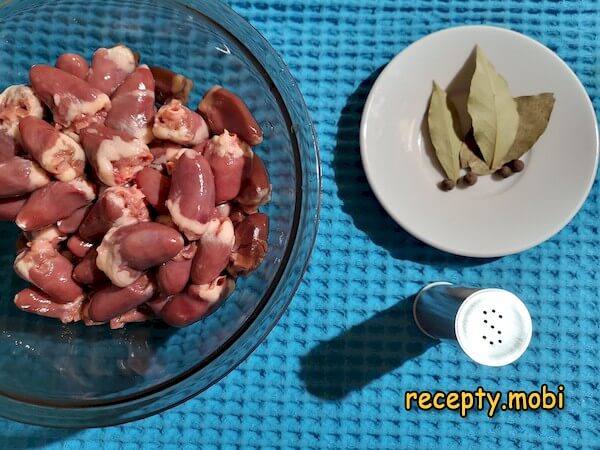
Cut the chicken hearts in half and remove the vessels. If you like, you can also remove the fatty tissue and any blood clots. I did not remove the fatty tissue – it makes a richer broth.
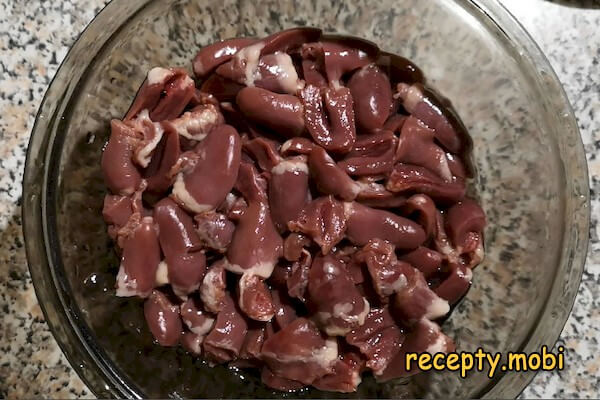
Transfer the offal to a pot and pour in enough water to cover the hearts by about 1–2 cm. Set it over maximum heat and bring it to a boil.
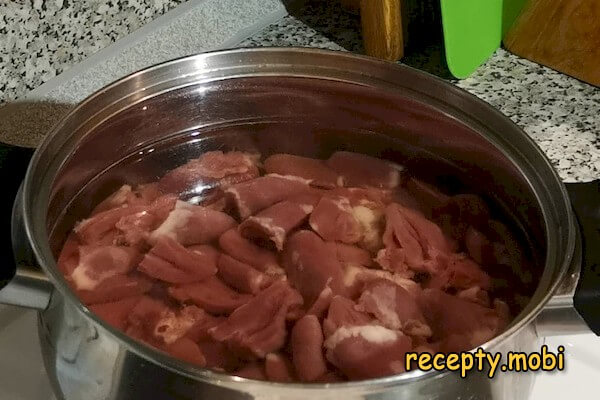
Once it boils, lower the heat to below medium so the liquid is barely bubbling. As it cooks, foam will form – skim it off with a slotted spoon or a spoon.
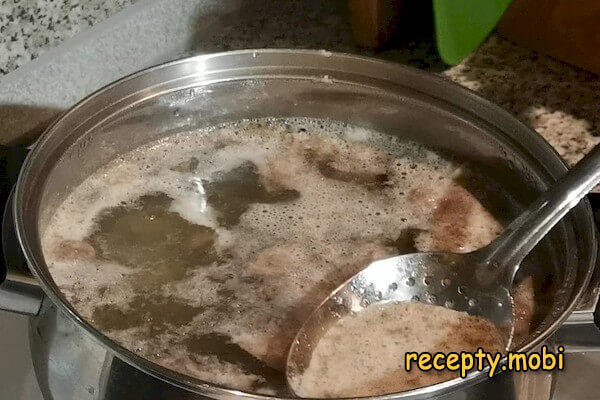
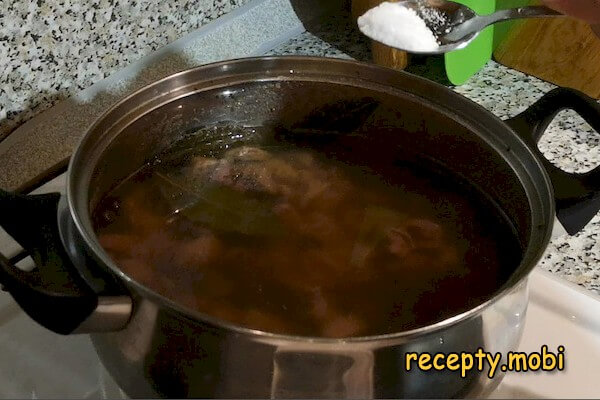
After skimming off the foam, add 2–3 bay leaves and 4 allspice berries. Cook, covered, for about 20 minutes. Then add half a teaspoon of salt and stir. Cook for another 10 minutes or so.
Check that the hearts are done by piercing them with a fork. If they pierce easily, they are ready.
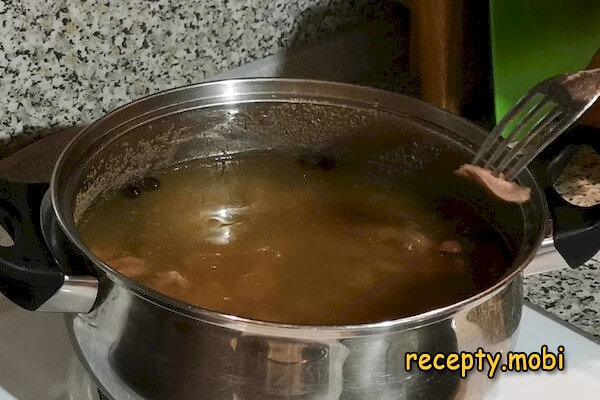
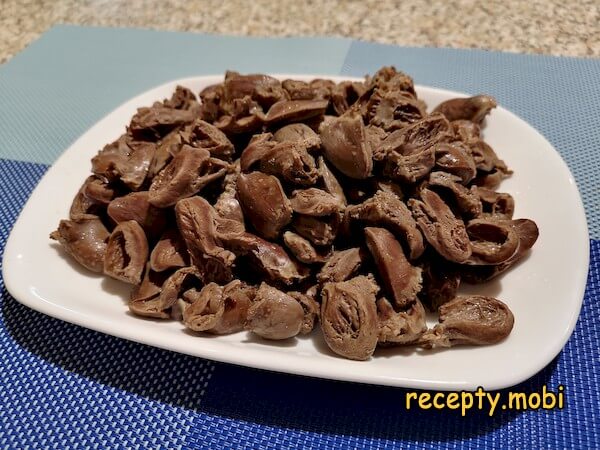
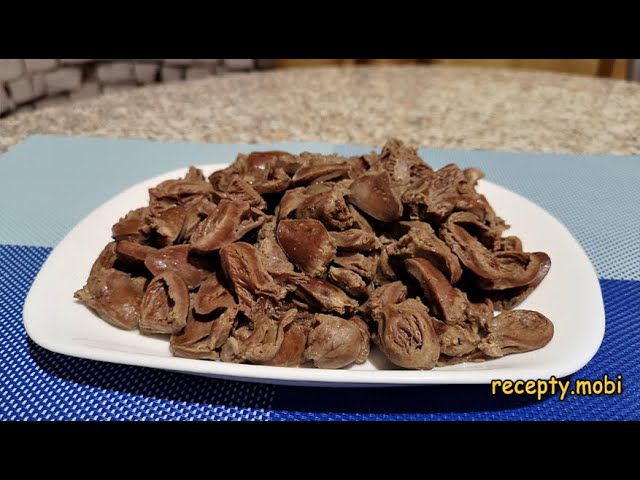
Take the pot off the heat and leave it until completely cooled. Lift the boiled chicken hearts out of the liquid and use them as intended. The broth makes a good base for soup.


Tips
- 1
SKIM THE FOAM – it gives a clear broth. "Curdled" protein clouds the broth and makes it harder to use in soups.
- 2
SALT HALFWAY THROUGH COOKING – not at the start. Salt added early draws the juices out of the hearts, leaving the meat dry.
- 3
FATTY TISSUE – you don't have to remove it. It makes the broth richer; for salads it is better to trim it off.
- 4
COOL THEM IN THE BROTH – this keeps the hearts juicy. The same principle works for other ways of boiling offal.
Video
FAQ
How long to boil chicken hearts? +
The cooking time depends on the size and the cooking method. On average it is 30–45 minutes in lightly salted water over low heat. If you plan to fry or bake the hearts, 10 minutes of boiling is enough. First bring to a boil, then cook covered. For salads – a full boil of 30–40 minutes. For julienne – 20 minutes. For a stew – 30 minutes, followed by further braising. Frozen hearts – thaw them for 4–6 hours in the fridge before boiling. Fresh or chilled hearts are preferable.
How to tell when the hearts are done? +
Pierce one of them with a fork or knife. If it goes in easily and a colourless liquid comes out, the hearts are done. If the juice has a reddish tint, they need a little more time. A cooked heart is firm but not "rubbery". It shrinks by 20–30% from its original size. The colour on the cut is greyish-pink. Hard hearts are underdone; "falling-apart" ones are overdone. The ideal texture is springy, tender and easy to slice with a knife.
How long do boiled hearts keep? +
In the fridge, in the broth in a covered container – 3 days. Without the broth, in a closed container – 2 days. In the freezer – up to 1 month. Thaw in the fridge for 6–8 hours. For salads – slice them after they have completely cooled. For soups – keep them in the broth (it adds richness). The broth from cooking is great for soups or sauces – don't pour it out! Cook for 2–3 meals at once – a handy "convenience food" for weekdays. Don't leave them at room temperature for longer than 2 hours.
What do hearts go well with? +
Uses: "Kurochka Ryaba" salad, solyanka, stew, cutlets, pie filling, pilaf, julienne, little skewers. With a sour-cream sauce and mushrooms – "home style". With pasta and cheese – an Italian serving. With rice and vegetables – Asian style. On sandwiches – finely chopped with mayonnaise. For "cold appetisers" – with herbs and mustard. A versatile offal. With dry red wine or beer. For a "diet" menu – braised with vegetables without oil.
- Comment
or post as a guest
Be the first to comment.