avg —
Meat Piles in the Oven

Instructions
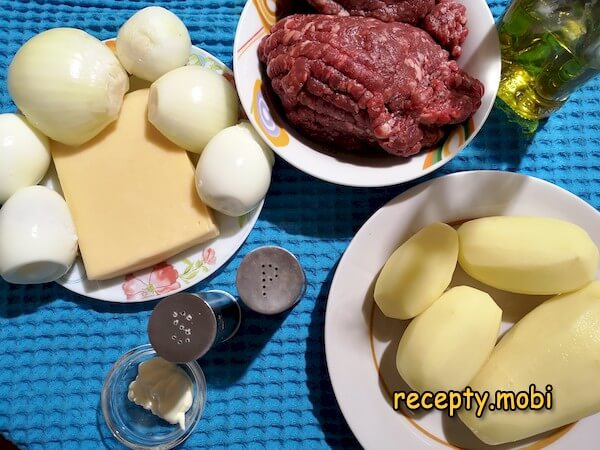
I prepare the ingredients. Peel the potatoes and rinse them under cold running water. Peel the onion. Hard-boil the eggs and remove the shells. The mayonnaise can be either homemade or store-bought.
Grate the boiled eggs on a vegetable grater.

Add 1 tablespoon of mayonnaise to the grated eggs and mix everything together.

Grate the potatoes on the vegetable grater as well.

Lightly salt the grated potato and mix everything together.

Grate the Parmesan on the small holes of the grater.

Cut the peeled onion into small cubes.
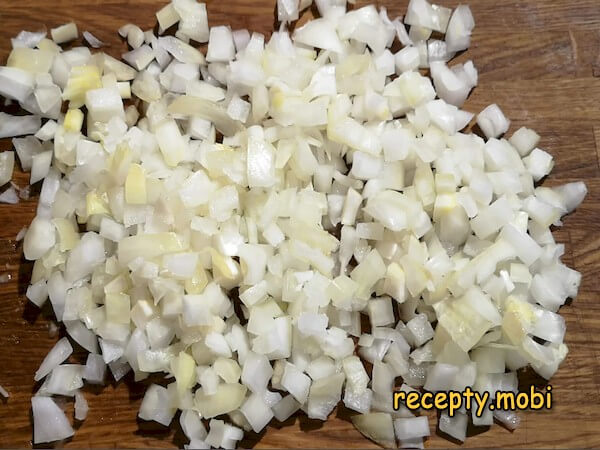
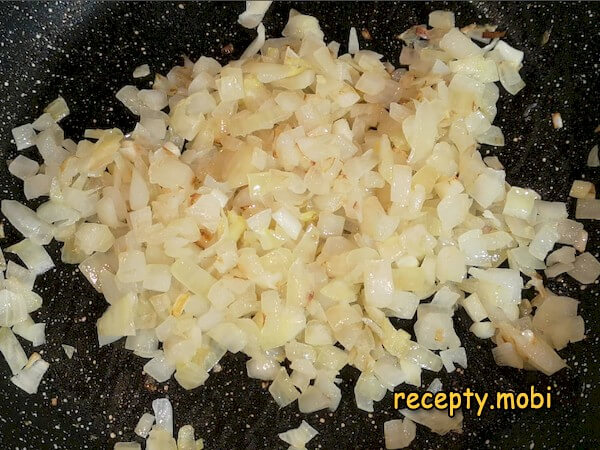
Heat a frying pan, pour in a little vegetable oil, add the chopped onion and fry until golden.
Add salt and black ground pepper to the minced meat to taste.

Grease a baking dish with vegetable oil. Shape patties from the mince and arrange them in the dish.

Press the patties down lightly with a spoon and place the fried onion on top of them.

Spread the prepared egg mixture over the onion.

Place the grated potato over the egg layer.

Brush the potato with mayonnaise on top.

As the final layer, cover the piles with grated cheese.

Preheat the oven to 180 degrees and bake the piles for 30 minutes.

The meat piles in the oven are ready. Take the dish out of the oven and serve hot.



Tips
- 1
Press the patties down with a spoon – the "secret" to the shape. Without a hollow, the layers slide off. With a small dip, the egg mixture and the potato sit in even layers.
- 2
Parmesan on top – the "secret" to the crust. Ordinary cheese spreads out. Parmesan forms a thin, crisp crust with a bright flavour, like a "lid" on the pile.
- 3
Mayonnaise under the cheese – the "secret" to making it stick. Dry potato does not hold the cheese. A grid of mayonnaise creates a "glue" – the cheese sticks and melts evenly.
- 4
180 °C for 30 minutes – the "secret" to even baking. At 200 °C the cheese burns before the mince is cooked. At 180 °C everything bakes through at the same time. The same principle works with other kinds of minced-meat bakes.
Video

FAQ
Which mince should I choose? +
Ideal is beef mince with 15–20% fat (500 g is the juiciest for the piles). Alternatives: a 50/50 mix of beef and pork (250 g of each), chicken mince (500 g, the lighter option), turkey mince (500 g), lamb mince (500 g, for a brighter flavour) and veal mince (500 g, more tender). Use fresh, chilled mince. Do not use shop-bought frozen mince with additives, or low-fat mince, as the piles will turn out dry. For the classic version, beef – or a beef-and-pork mix – is a must.
What can replace Parmesan? +
Alternatives: a firm hard cheese such as a mature Cheddar or Gouda (170 g), Grana Padano (170 g), Pecorino (170 g, sharper), Gruyère (170 g), a 50/50 mix of Parmesan and mozzarella (85 g of each) or grated suluguni (170 g). Use fresh Parmesan in a piece. Do not use processed cheese, which will run, or blue cheese, which will throw off the flavour. For the classic version, a semi-hard or hard cheese is a must.
How long do the meat piles keep? +
In the fridge, in the dish under foil, for 2–3 days. Any longer and the meat loses its juiciness, the potato darkens and the cheese turns rubbery. Before serving, reheat in the oven for 10 minutes at 150 °C under foil. The microwave works in 2–3 minutes, but the crust will soften. Cooked piles keep in the freezer for up to 1 month; thaw them in the fridge for 8–10 hours. Fresh piles are at their best 5–10 minutes after the oven, once they have cooled slightly so they hold their shape. On the second day the flavour is deeper. Do not leave them at room temperature for longer than 4 hours.
What should I serve the meat piles with? +
A classic for a family dinner: with a light vegetable salad of cucumbers and tomatoes; with boiled green beans or steamed broccoli; with sauerkraut or lightly salted cucumbers; with a bowl of thick tomato soup to start; with a slice of dark bread and butter; with a glass of freshly squeezed tomato juice; with a shot of cold vodka on a celebration; with a cup of green tea after the meal; with tartare sauce or sour cream with herbs; with cauliflower purée; with a dry white wine (Chardonnay). It is a versatile, hearty hot dish for everyday meals.
- Comment
or post as a guest
Be the first to comment.