avg —
Jellied Meat in a Multicooker-Pressure Cooker in Two Hours

Instructions
I prepare the meat: I cut the beef (500 g) and pork (500 g) into large pieces of 8–10 cm, and I check the homemade chicken (½ piece) for any remaining feathers, singeing it thoroughly if needed. I clean the pig’s leg (1 piece) carefully – removing dirt and bristles and scrubbing it with a brush. I soak all the meat in a large container of cold water for 1 hour to draw out blood and impurities.
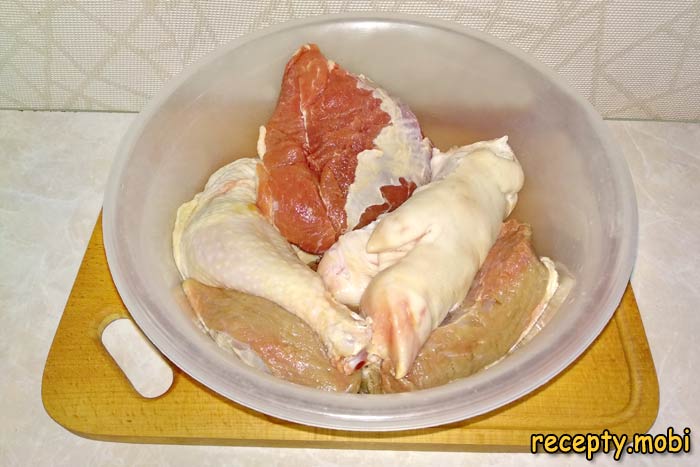
I prepare the root vegetables: I peel the celery root (30 g), parsley root (30 g), parsnip (30 g), carrot (1 piece) and bulb onion (1 piece). The root vegetables give the secret characteristic aroma of a Russian festive kholodets – without them you get an “ordinary” aspic. I leave the vegetables whole, without cutting them, so they are easy to lift out of the broth later.
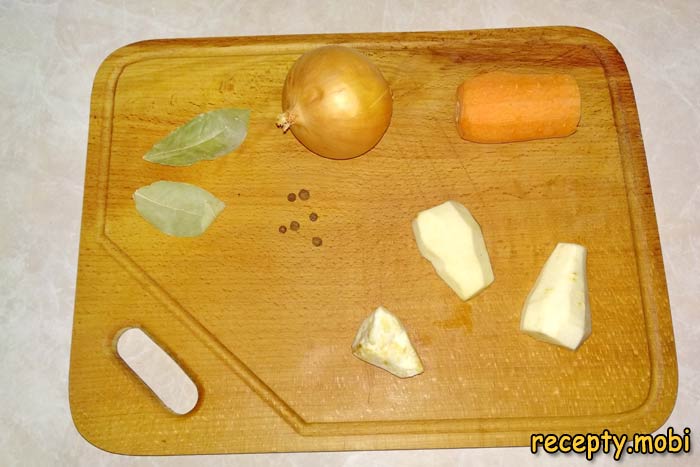
After soaking, I rinse all the meat thoroughly under running water and put it into the bowl of the multicooker-pressure cooker. I pour in warm water (2 l) – the water should cover the meat by 5–7 cm above its level. I add salt (1 tbsp) and switch on the “Fry” or “Boil” mode for 10–15 minutes. I skim off the foam as it forms with a slotted spoon. Then I add the root vegetables, onion, bay leaf (3 pieces) and allspice (5 pieces). I close the lid, turn the valve to the “closed” position and set it for 90 minutes on the “Under pressure” mode.
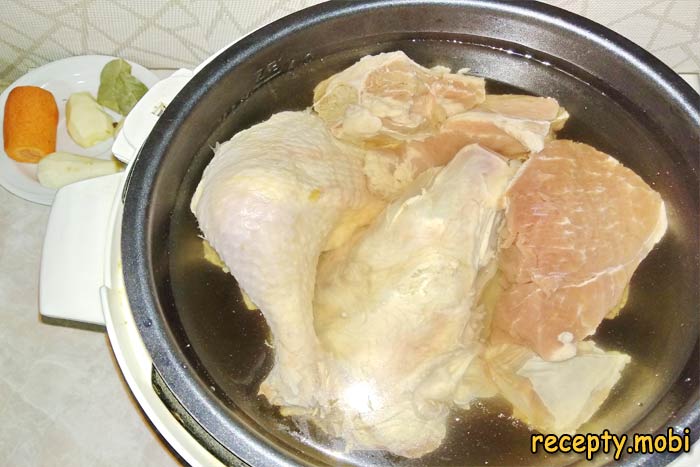
After the ready signal, I wait 10 minutes to let the pressure equalise on its own. Then I carefully open the valve to release the remaining steam and open the lid. The broth should be clear, aromatic and rich – with a golden tint from the meat and root vegetables.
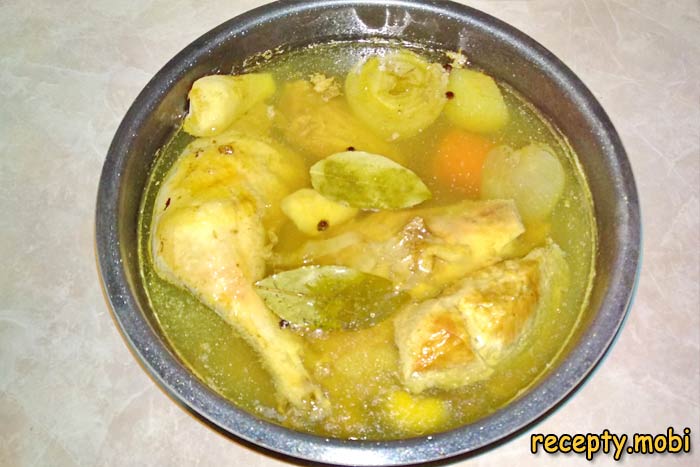
Using a slotted spoon, I carefully lift all the meat and bones out of the broth onto a large plate to cool. I strain the finished broth through a colander lined with 4 layers of cheesecloth into a clean saucepan – the cheesecloth traps all the small particles and makes the broth perfectly clear. I keep the carrot – it will come in handy for a pretty decoration.
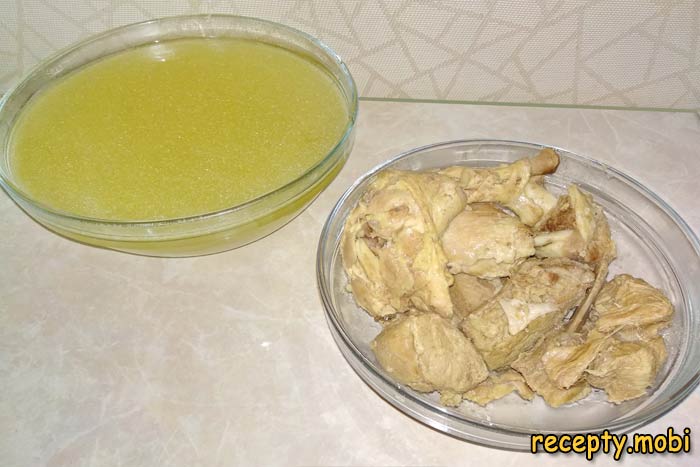
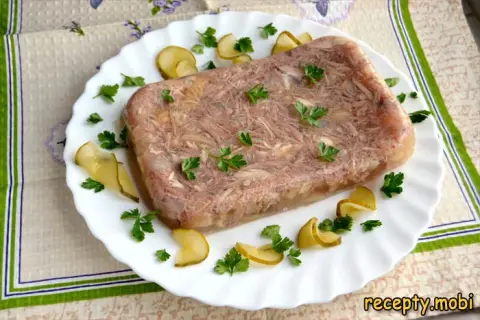
When the meat has cooled a little (but is still warm), I separate it from the bones and remove any membranes and cartilage. I cut the meat into small pieces of 1–1.5 cm or pull it apart into fibres. On the bottom of the serving moulds or a large dish I place the crushed garlic (5 cloves through a press) – it will give a characteristic aroma. On top I arrange decorative shapes cut from the boiled carrot (stars, flowers) and sprigs of greenery for decoration. Then I distribute the meat evenly. I pour over the clear strained broth so that it covers the meat. First I let it cool at room temperature for 1–2 hours, then I put it in the refrigerator for 8 hours or overnight until it is completely set.
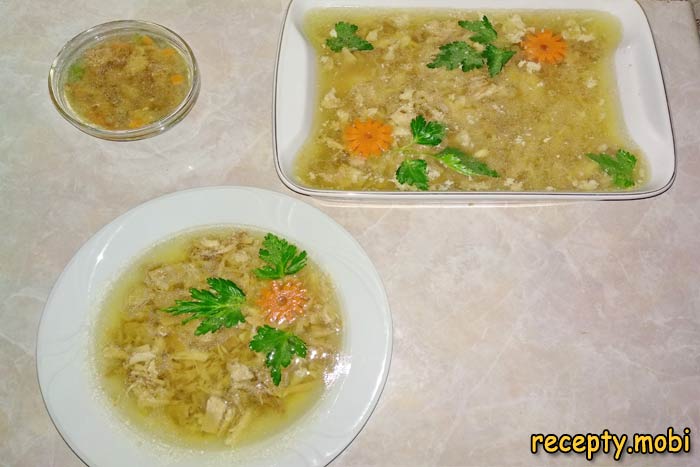
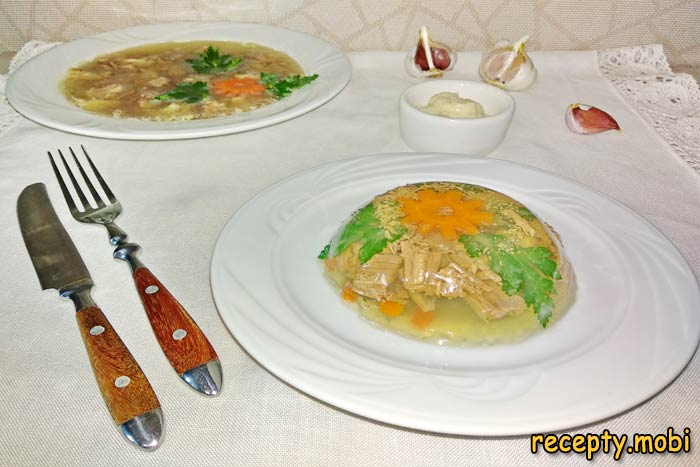
For an individual serving, I dip the moulds into hot water for 5–10 seconds – the jelly will slightly “release” from the walls and easily “drop” onto the plate in a pretty “dome” with the decoration facing up. Without the “hot bath” the jelly will “stick” and fall apart when served.
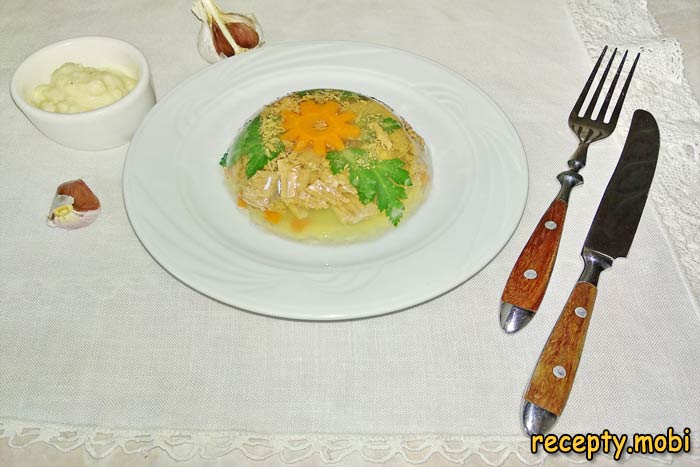
The jellied meat in the multicooker-pressure cooker is ready! I always serve it with horseradish (shop-bought or homemade), mustard and marinated onion. It is perfect for a New Year’s, Christmas or any winter festive table – a “royal” Russian dish.


Tips
- 1
The pig’s leg provides natural gelatin from the bone tissue – the kholodets will set without any added gelatin, just like Grandma’s classic version.
- 2
Soaking the meat in cold water for 1 hour removes blood and impurities – the broth will be clearer and more attractive.
- 3
Put the garlic in fresh on the bottom of the moulds – on contact with the hot broth it “blooms” in aroma and gives the kholodets a piquant note. I make pork jellied meat on a similar principle.
- 4
Serve on a flat white plate – the colour of the kholodets and the pretty decorations on the bottom look striking against the white background. Times for kholodets from different meats, in a pressure cooker and a multicooker, are in how long to boil kholodets.
FAQ
Can I make jellied meat in an ordinary saucepan? +
Yes, the classic method is on the stove: simmer for 6–8 hours over the lowest heat under a lid, skimming the foam from time to time and checking the water level. The long simmering fully “draws out” the gelatin from the bones and cartilage. The advantages of a saucepan are the authentic “Grandma’s” method and a deeper flavour. The drawbacks: it takes the whole day and needs constant attention. The pressure cooker saves 4–6 hours while giving a similar result. For a large batch of kholodets (for a banquet) a saucepan is still better – it holds more meat.
Why didn’t the jellied meat set? +
The main reasons: too little pig’s leg (it is the main source of gelatin – you need 1 leg per 2 l of water), too much water (the meat should be covered by 5–7 cm, no more), poor meat (young, without cartilage), or insufficient cooking time (you need at least 6–8 hours on the stove or 90 minutes in a pressure cooker). If the kholodets has not set, dissolve 1 sachet of gelatin (10 g) in a little broth, add it to the main broth, stir and put it back in the refrigerator. This is a “rescue” measure for fixing mistakes.
How long does the finished jellied meat keep? +
Keep the kholodets covered in the fridge and eat it within 1-2 days. Russian catering rules are stricter: no more than 12 hours at 2-6 °C. Signs of spoilage are a sour smell and a cloudy, melting jelly. Do not leave it on the table for more than 2 hours. More in how long to boil kholodets. Freezing is not a good idea: the jelly weeps after thawing.
What to serve with jellied meat? +
Classically with horseradish (grated with vinegar or sour cream) – the “Russian” way, with ready-made mustard (Russian hot or Dijon) and with khrenovina (horseradish with beetroot). For appetisers – with pickled cucumbers, patty pan squash and mushrooms. For drinks – vodka (the classic “with kholodets as a snack”), horilka, light beer, and for non-alcoholic options kvass or fruit drink. For a New Year’s or Christmas table it is an essential “Russian” appetiser. Serve it in individual portions or in a large dish in the middle of the table, slicing it with a sharp knife before serving. It is perfect for any winter holiday.
- Comment
or post as a guest
Be the first to comment.