avg —
Marinated Tomatoes for Winter Without Sterilization Quick Recipe

Instructions
Prepare all the ingredients you will need. Peel the garlic and onion, and peel the carrot. The vegetables should be fresh, with no signs of rot or soft patches – even a single spoiled tomato can cause the whole jar to ferment.
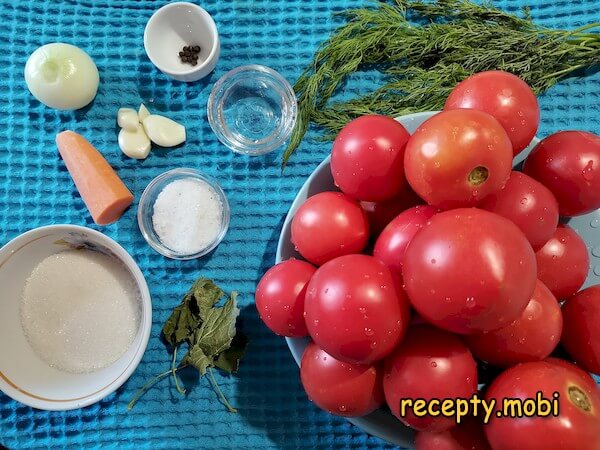
Cut the onion into large wedges and the carrot into thin rounds 3-4 mm thick. The carrot gives the brine a lovely colour and a touch of sweetness.
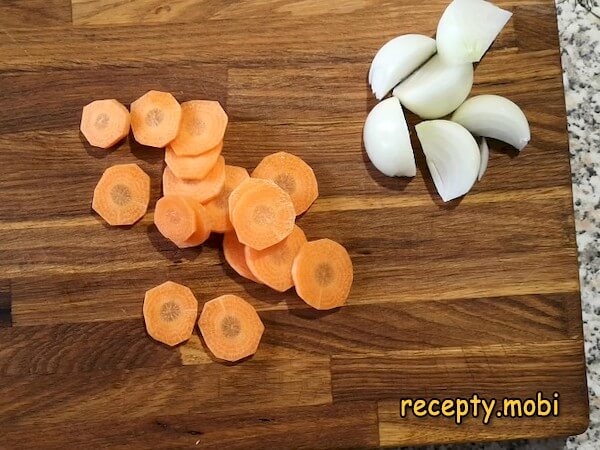
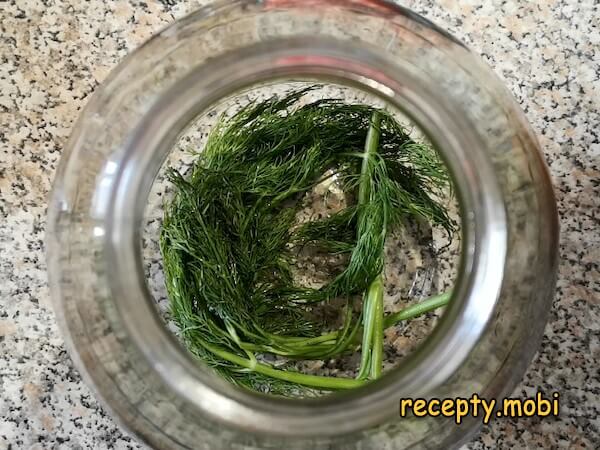
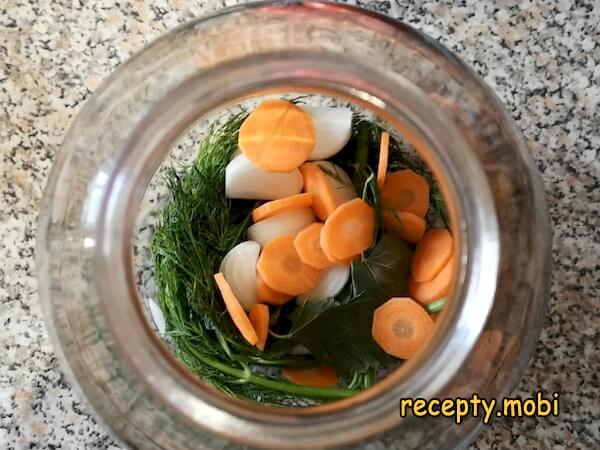
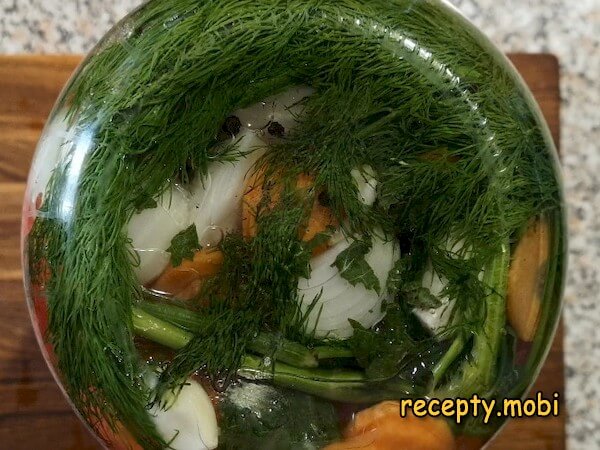
Put fresh dill in the bottom of a sterilised three-litre jar. Dill umbrellas give the brightest "summery" aroma, but ordinary sprigs work fine too.
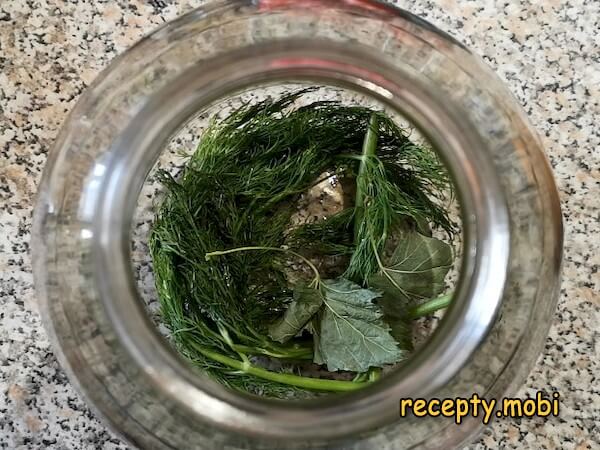
Add the currant leaves – they act as a natural preservative thanks to their tannins, and they give that characteristic spiced aroma associated with home preserves.
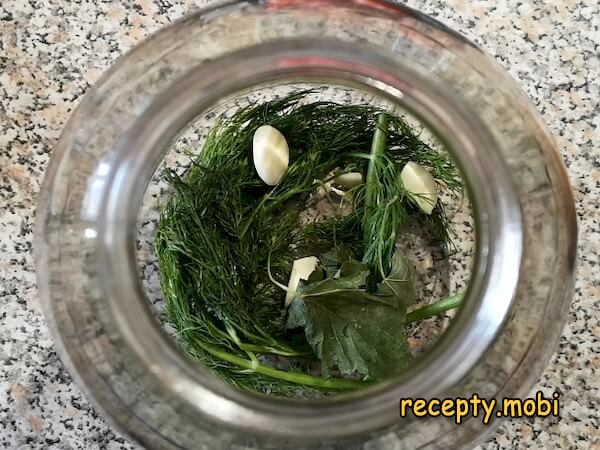
Next comes the garlic – cut the cloves in half or leave them whole. Whole cloves give a milder aroma, halved ones a stronger one.
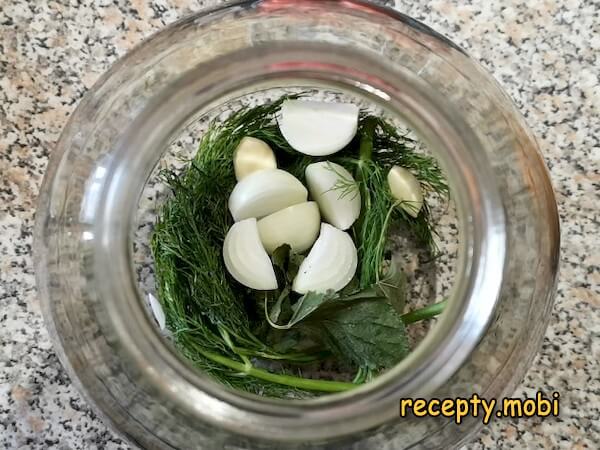
To the garlic, add the onion cut into wedges. Onion in marinated tomatoes was a discovery of mine. It gives an interesting flavour and becomes a wonderfully tasty appetiser in its own right.
Add the carrot rounds. They also become a tasty appetiser, and they look pretty in the jar.
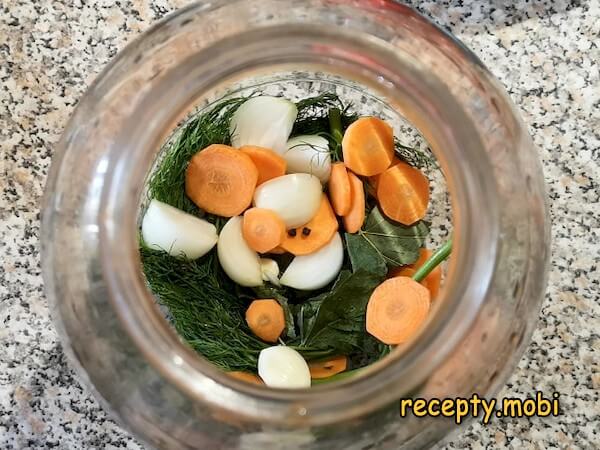
Then add the black peppercorns – they give a spiced background. You can also add allspice (3-4 peas), cloves (2 buds) or a bay leaf (1 pc).
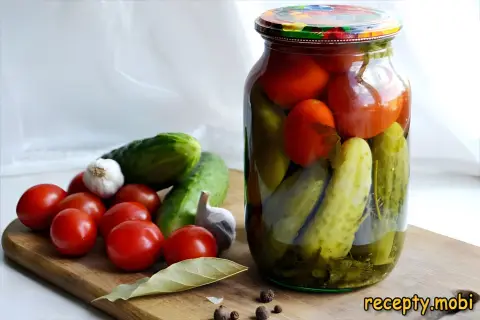
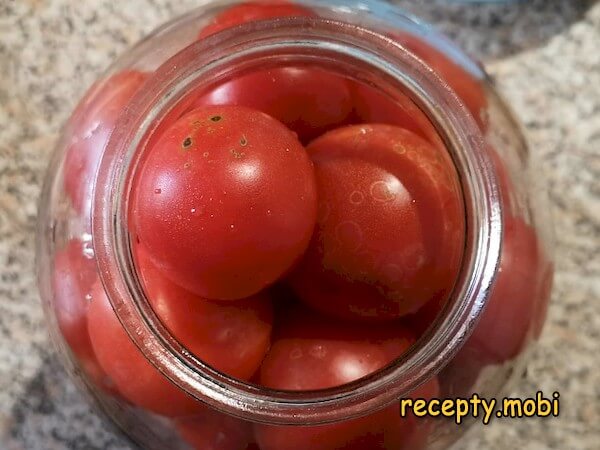
Fill the jar with tomatoes. Try to pack them as tightly as possible, but without pressing hard – otherwise the tomatoes will burst. Prick each one with a fork near the stem first – that way the skin won't split from the change in temperature.
Bring 1.5 litres of water to a rolling boil and pour it over the jar completely, right up to the rim. Cover with a sterilised lid and leave for 10-15 minutes – this is the first pour, which warms the tomatoes. Be sure to put something metal under the jar (a knife, for example) so the glass doesn't crack.
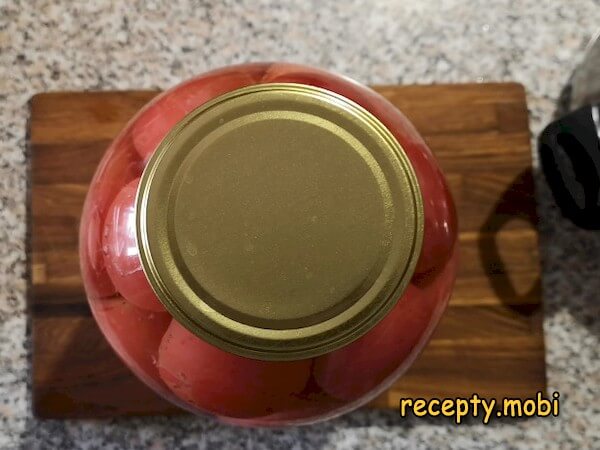
Using a special lid with holes, drain the water from the jar into a pot. If you don't have such a lid, you can use an ordinary one, leaving a small gap.
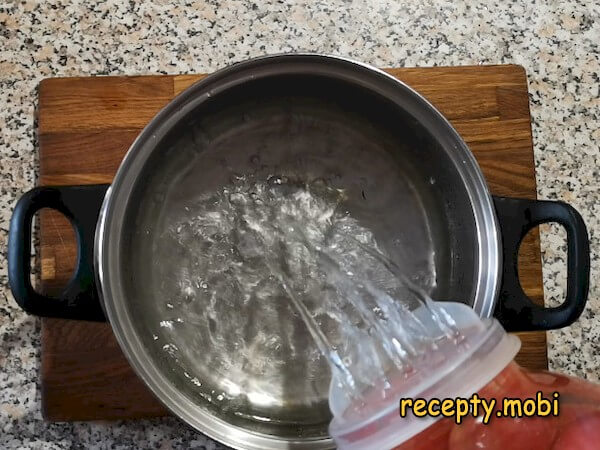
Cover the jar with a lid. Put the pot of drained water on the heat and add the salt and sugar. Stir until fully dissolved and bring to a boil. The volume may have reduced – top up with boiling water from the kettle to 1.5 litres.
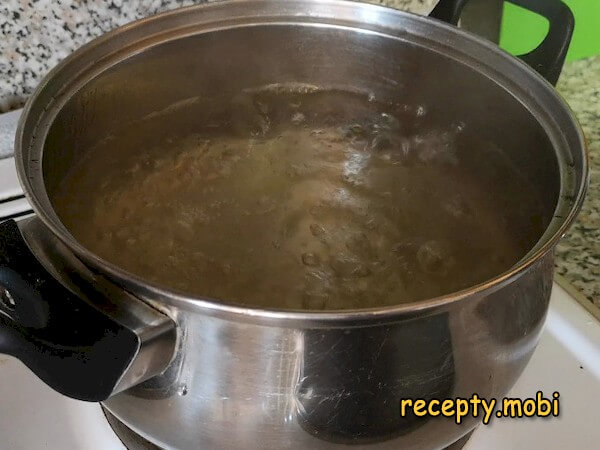
Add two tablespoons of 9% vinegar to the boiling brine. Stir and after 1-2 minutes remove from the heat – vinegar mustn't be boiled for long, as it evaporates and the preserving will not hold.
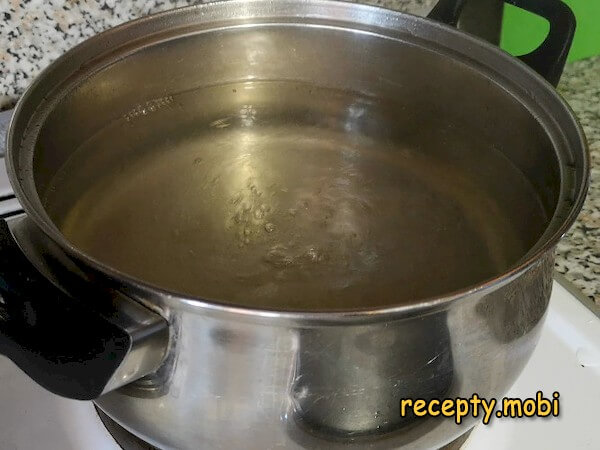
Fill the jar of tomatoes with the hot marinade right up to the rim – there should be no empty space, otherwise the lid may come off.
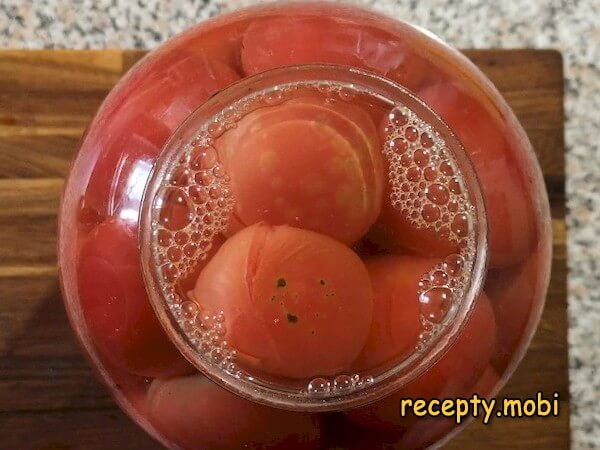
Cover with a sterilised lid and seal the jar with a canning tool. Check the seal – not a drop should seep from a properly sealed jar.

Turn the jar upside down onto its lid and leave it at room temperature under a blanket until completely cool – this is slow sterilisation and a seal check at the same time.
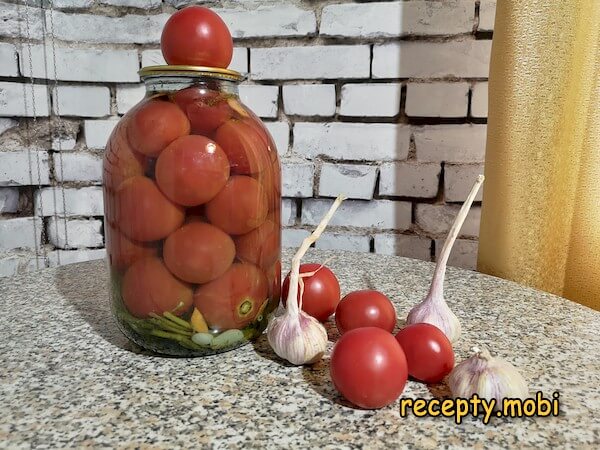
The marinated tomatoes for the winter without sterilization are ready! After a day, move them to the cellar or pantry.


Tips
- 1
Sterilise the jars and lids in advance – in the oven at 120 °C for 15 minutes, or over steam. This ensures long storage without the lids swelling.
- 2
Pack the tomatoes tightly but without pressing – that way more will fit in the jar, and the tomatoes won't burst under pressure.
- 3
Adjust the amount of garlic and dill to taste – I like it with 5 cloves of garlic. I make marinated cucumbers on a similar principle.
- 4
Store in a cool dark place for up to 2 years – a cellar or pantry at 5-15 °C is ideal.
FAQ
Which tomatoes are best for marinating? +
It's best to take firm, fleshy, medium-sized tomatoes of varieties such as plum, Rio Grande, Raketa or De Barao – they don't fall apart when scalded with boiling water and look attractive in the jar. Soft varieties (Bull's Heart, Pink Giant) are not suitable for marinating – they turn to mush. The ideal size is about that of a hen's egg, so the tomatoes pass through the neck of a 3-litre jar. All the fruit should be at the same stage of ripeness – overripe ones will burst, underripe ones will stay tough and sour.
Can I reduce the amount of sugar? +
Yes, you can, but the marinade will be more sour and sharp in taste. The sugar balances the acidity of the vinegar – try reducing it from 10 to 7-8 teaspoons. I wouldn't advise less than 5 teaspoons per 3-litre jar, as the taste becomes flat, without roundness. You can replace part of the sugar with honey (2-3 spoons right at the end of cooking the marinade), which gives an interesting aroma. For diabetics, stevia or erythritol in an equivalent amount of sweetness will work.
How long do marinated tomatoes keep in jars? +
In a cool dark place (a cellar, pantry, or the bottom shelf of the fridge) at 5-15 °C they keep for up to 2 years without losing quality. After 2 years the taste becomes sharper and the tomatoes may soften. Once a jar is opened, keep it in the fridge for up to 2 weeks – tomatoes quickly absorb odours. Signs of spoilage: a swollen lid, cloudy brine, a film or mould on the surface, a sour smell of fermentation. Throw such jars away immediately.
- Comment
or post as a guest
Be the first to comment.
Related recipes