avg —
Cherry Jam with Stones 'Five Minutes'

Instructions
-
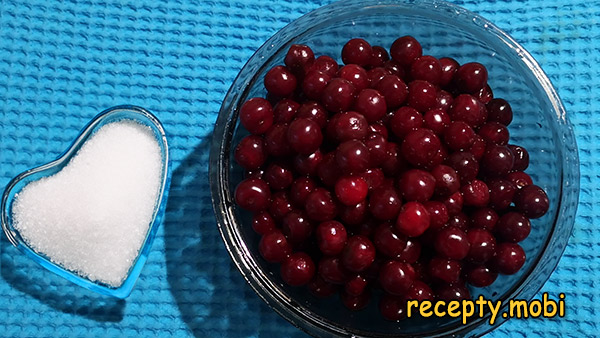
I prepare the ingredients. Cherry variety matters — bright, rich-flavoured, soft-pulp cherries are best (sour cherries like Morello, or sweet-sour cultivars). Cherries wash thoroughly under running water; pat dry on a towel.
-
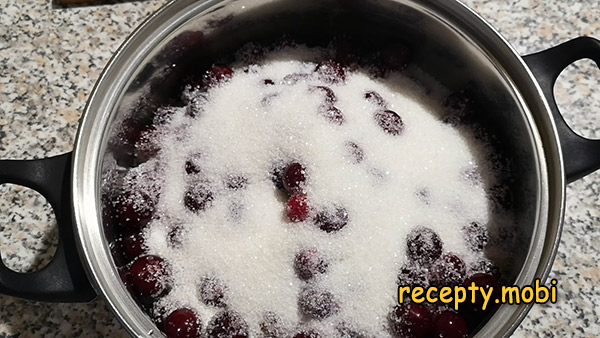
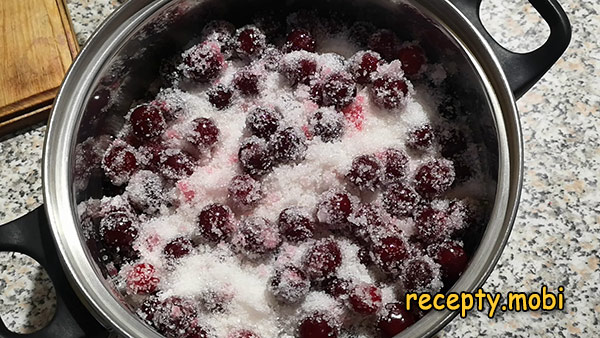
In a heavy-bottomed saucepan, cherries and sugar layer alternately. Cover with lid. Rest at room temperature 2+ hours.
-
During the rest, cherries release abundant juice — natural osmosis from the sugar contact.
-
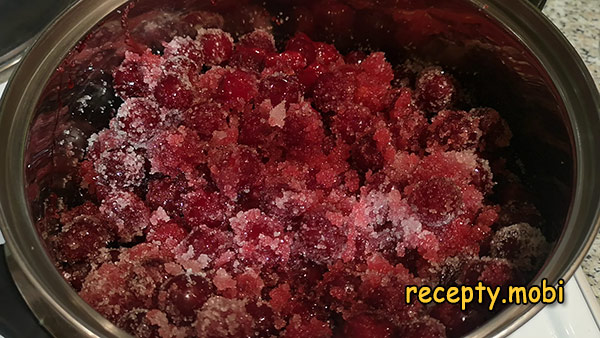
Saucepan onto stove, lowest heat. I wait for boiling. Occasional gentle stirring with wooden spatula prevents bottom-sticking.
-
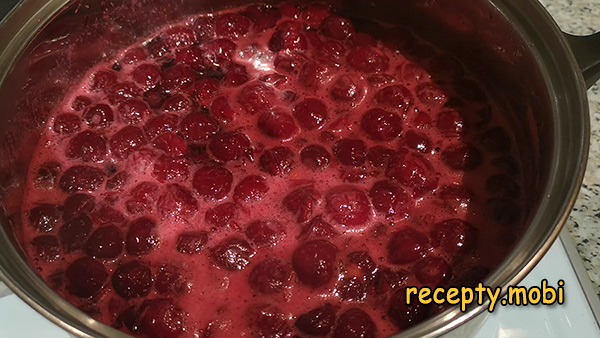
Once boiling starts, cook 5 minutes — the namesake "five minutes." Skim the foam that forms on the surface.
-
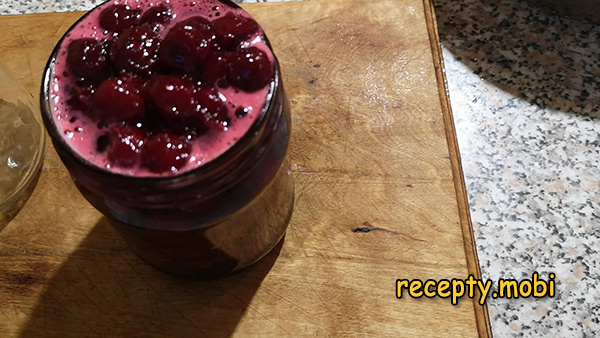
Pre-sterilised glass jars fill with hot jam.
-
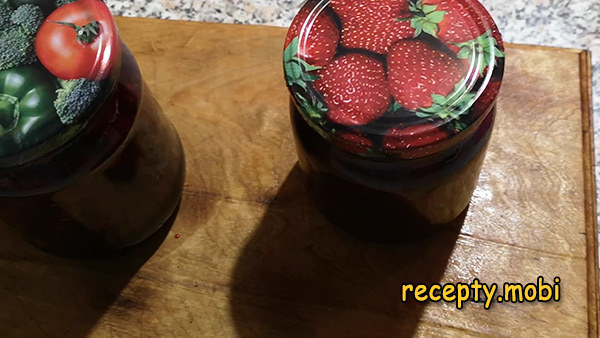
Pre-sterilised lids screw on tight.
-
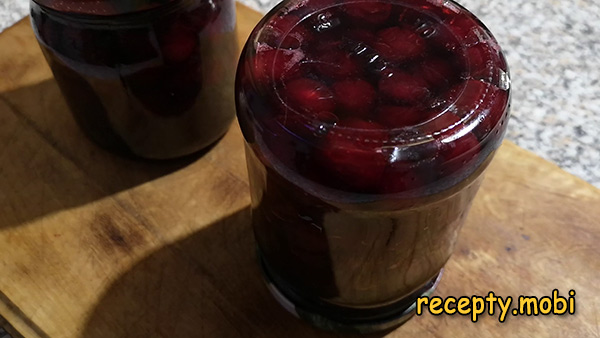
Jars invert (lids down) and slow-cool to room temperature on the counter.
-
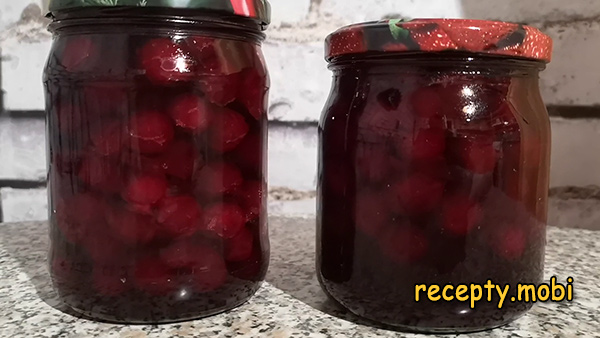
Cherry Jam with Pits "Five Minutes" is ready. Storage: fridge or cool basement (cherry jam with pits doesn't shelf-store as long as pitted versions due to the pit's slight cyanogenic compounds — see FAQ for safety details). The simple recipe captures unique cherry flavour and aroma. Use as tea accompaniment, in baking (cherry pies, cherry strudel), as cake topping, or in cocktails.


Tips
-
1
THE 2-HOUR REST IS THE NO-WATER TECHNIQUE. Step 2's room-temp rest period is what generates the cooking syrup from cherries' natural juice. Without the rest, you'd need to add water to prevent burning during the heat-up — and added water dilutes the concentrated cherry flavour. The 2-hour minimum produces enough juice; longer (4+ hours) produces more juice with deeper sugar penetration. Don't shortcut this step.
-
2
THE 5-MINUTE BOIL IS PRECISE. The "five-minute" name refers to the active cooking time at boiling — not total recipe time. 5 minutes is calibrated to set the gel without breaking the cherries apart. Less than 5: insufficient gel set, watery jam after cooling. More than 5: cherries fully disintegrate (still tasty but loses the visible-cherry quality). Set a timer; trust the timing. For another five-minute fruit jam variation worth comparing, see Strawberry Jam Five Minutes.
-
3
WHY PITS-IN ADDS FLAVOUR. Cherry pits contain trace amygdalin (a glycoside that hydrolyses to release benzaldehyde — the almond aroma compound). During months of jar storage, tiny amounts of these compounds slowly migrate into the syrup, producing a subtly almond-cherry flavour profile that pitted versions can't match. The traditional preference for pits-in jam is centuries old in Russian-Slavic cuisine specifically because of this flavour development.
-
4
EATING SAFETY WITH PITS. Cherry pits contain trace cyanogenic compounds that release minute amounts of cyanide if crushed/chewed. Whole pits ingested are harmless (gut acid doesn't release the compounds). Cracked or crushed pits are mildly toxic in large quantities. For safety: don't crack pits while eating, don't chew them, spit them out. Children must be educated to spit out pits — adult supervision recommended for younger kids. The traditional pits-in jam has been safely consumed in Eastern Europe for centuries when pits stay whole. For another five-minute apricot variation worth trying, try Apricot Jam for Winter in Five Minutes.
FAQ
Why are pits left in? +
Three reasons. First, flavour: pits release trace almond-bitter compounds during long storage that add complexity to the syrup. Second, tradition: Russian-Slavic culinary tradition has used whole-cherry preserves for centuries. Third, time-saving: pitting 1 kg of cherries is tedious (30+ minutes); pits-in approach skips this entirely. The trade-off: dental caution required when eating, slightly shorter shelf life than pitted versions. For modern taste preferences, pitted is more practical for daily use; pits-in is more traditional and flavour-complex.
How long does it keep? +
Pits-in cherry jam keeps 8-10 months in fridge or cool basement. The trace amygdalin from pits limits the ideal shelf life shorter than the 12+ months for pitted versions. Don't store at room temperature long-term — pits-in jam needs cool conditions to be safe. After 10 months, the almond flavour intensifies (some prefer this) but the pit-related compound concentration also rises slightly. The recipe specifies "fridge or cool place" for this reason.
Can I pit the cherries before making this? +
Yes — produces a different but equally valid jam. Pitted cherries: smoother eating experience, longer shelf life (12+ months at room temp), milder flavour. With pits: more traditional flavour, dental caution required, shorter shelf life. Most home cooks make BOTH versions: pits-in for occasional connoisseur enjoyment, pitted for daily use. The recipe technique is identical regardless; only the pit-status differs.
What pairs well with this jam? +
Russian-Eastern European tradition: black tea with sugar, brown bread or fresh blini, sour cream-cherry sauce on cottage-cheese pancakes (syrniki), Polish-style "twaróg" (curd cheese) with cherry jam. Modern uses: stirred into yogurt, swirled in cheesecake batter, glaze for roast duck (savoury-sweet pairing — surprisingly excellent), cocktail mixer, ice cream topping. The deep cherry colour is as much an asset as the flavour. Don't pair with strong cheeses (overwhelms the cherry); blue cheese is the dramatic exception (cherry-blue cheese is a stunning combination).
- Comment
or post as a guest
Be the first to comment.