avg —
Yeast Kefir Pizza Dough

Instructions
I prepare all the necessary ingredients. I use premium-grade flour – for pizza it is best to sift it several times to saturate it with air. I sift it once into a bowl to measure out the amount, and a second time directly into the dough.
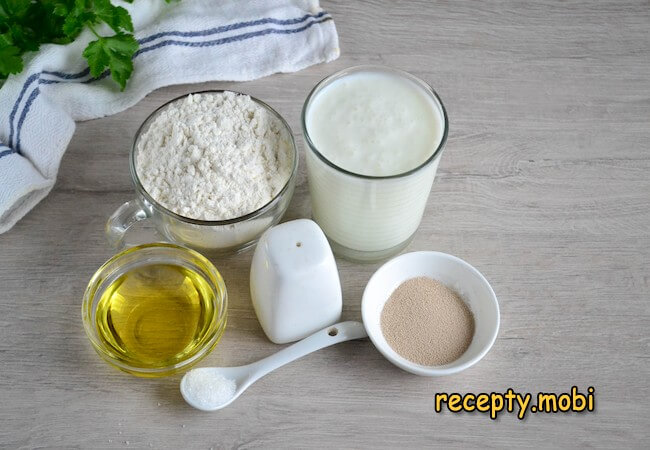
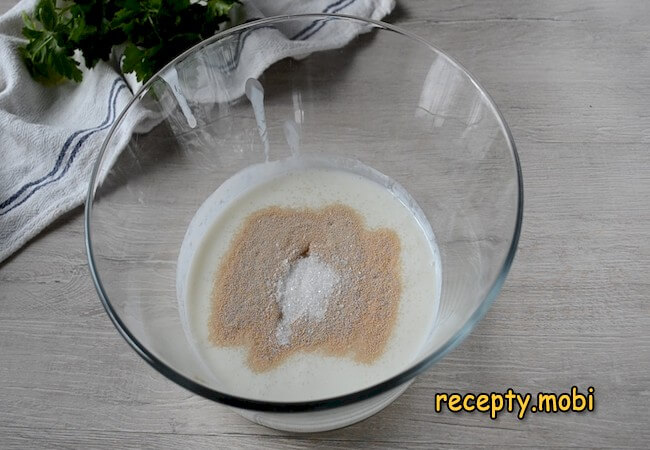
I warm the kefir to 35 degrees – otherwise the yeast will not work properly. I add the yeast, salt and sugar to the kefir. I stir to combine.
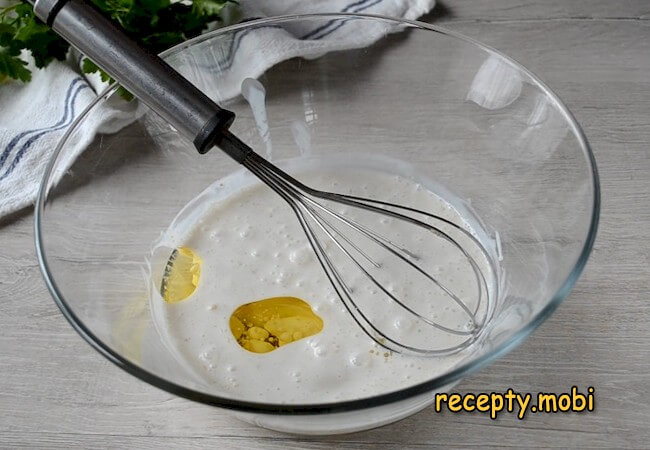
I pour in the vegetable oil. Olive oil is ideal, but sunflower oil works too – the difference is hard to taste in a pizza.
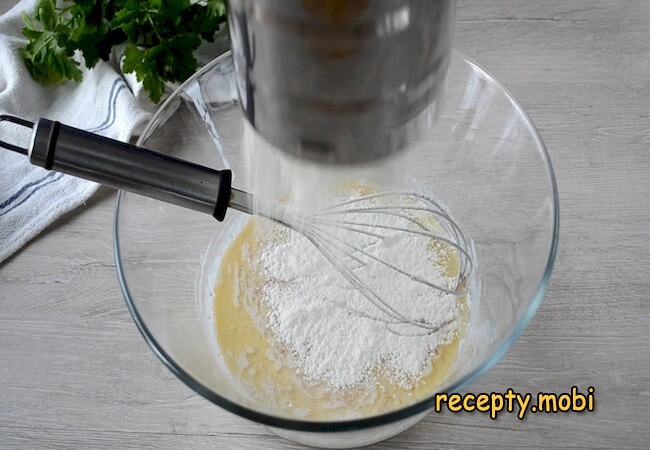
I sift the flour in batches and stir. I do not add all the flour at once – so as not to overload the dough with excess flour.
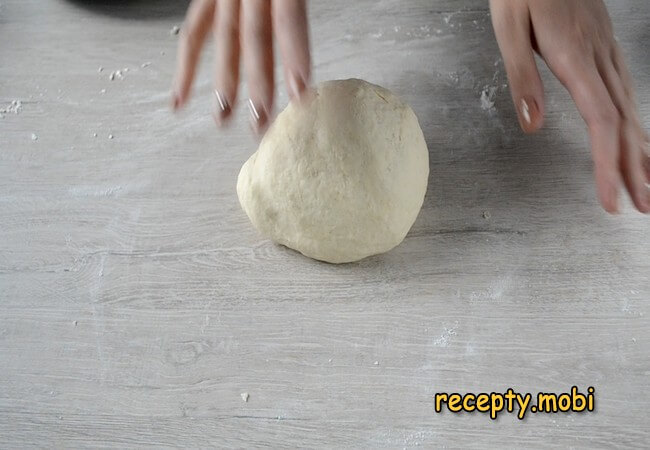
When it becomes hard to stir with a whisk, I transfer the dough onto a work surface and knead it by hand. There is no need to add more flour than the recipe states: you want a soft, elastic consistency. To make kneading easier, grease your hands with vegetable oil.
I transfer the finished dough into a small bowl, cover it with cling film and leave it in a warm place for 15–20 minutes so it rises.
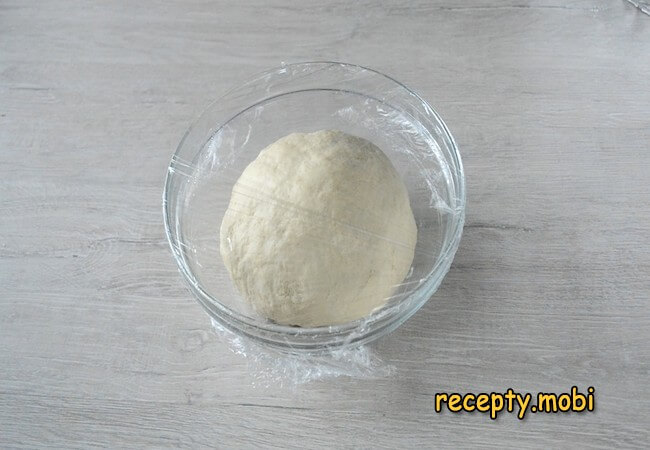
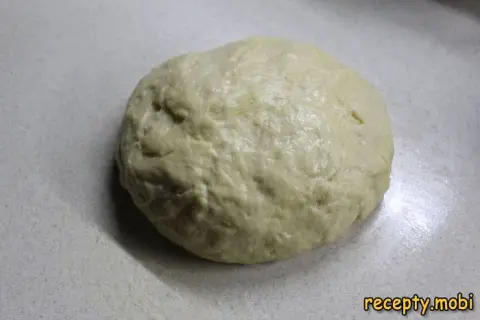
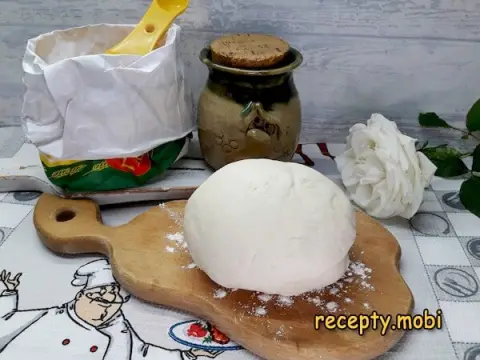
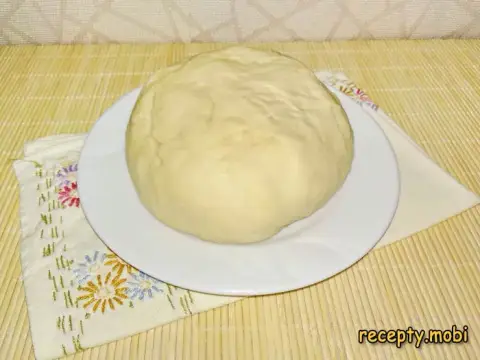
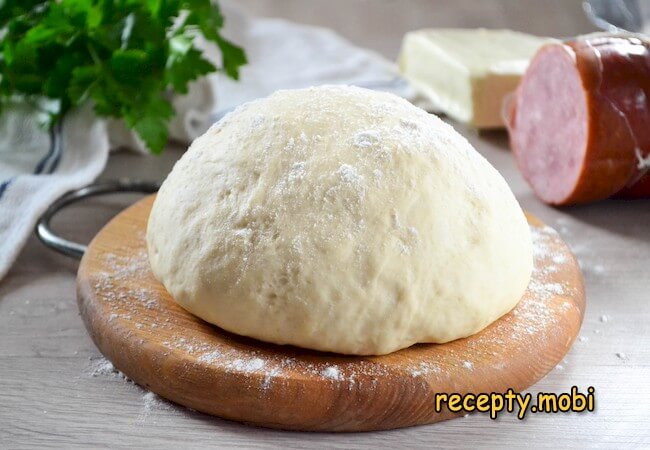
After 20 minutes I take the dough out and knead it down. The yeast kefir pizza dough is ready – you can roll it out and start assembling the pizza. Cook with pleasure!


Tips
- 1
WARM THE KEFIR TO 35 °C – cold kefir will slow down the yeast fermentation, while hot kefir will "cook" it. Use a thermometer or test it on your wrist.
- 2
SIFT THE FLOUR TWICE – air in the dough gives tenderness and elasticity. This is a classic technique for a soft crust.
- 3
DO NOT ADD EXCESS FLOUR – the dough should be soft and slightly sticky. Oil-greased hands are better than flour on the table.
- 4
A RISE OF 15–20 MINUTES in a warm place is enough for a thin pizza. There is no need for longer – the dough would become "airy", which is not suitable for pizza. The same principle works with other types of pizza dough.
Video
FAQ
Which kefir should I choose? +
Ideally 2.5–3.2% fat, fresh (with the use-by date at the start, not the end). Fat-free kefir does not give softness, while fatty kefir of 3.5%+ will make the dough heavy. Fresh kefir has almost no "gas", while over-fermented kefir is too sour. A test: pour out a little, and if it foams actively, it has over-fermented – use it for pancakes, not for pizza. Alternatives: soured milk, whey, sour milk – all give a similar result, that "pizzeria" tenderness. For vegans – soy kefir or coconut milk with lemon juice (1 tbsp per 300 ml).
What can replace dry yeast? +
Pressed (fresh) yeast – 24 g instead of 8 g of dry yeast (a 3:1 ratio). Dissolve it in warm kefir and wait 5 minutes until it foams. Yeast-free option: 1 tsp baking powder + a knife tip of baking soda (it reacts with the kefir and gives a porous texture). Sourdough starter (if you have it) – 50 g per 300 ml of kefir, but fermentation will take 3–4 hours. "Fast-acting" granulated yeast is added straight into the flour (not into the liquid), and has a slightly different technique. For pizza, dry active yeast is best of all.
How long does the dough keep? +
In the refrigerator, in a bowl covered with cling film – up to 24 hours. A "slow" fermentation will improve the flavour – the dough will become more aromatic, as in real Italian pizzerias. It should not be kept longer – it will over-ferment, lose its elasticity and turn "sour". In the freezer – up to 1 month, divided into portions and greased with oil. Defrost it in the refrigerator for 8–12 hours, then let it rise for 30 minutes at room temperature. A ready rolled-out base can also be frozen – you can bake it without defrosting, adding 2–3 minutes to the time.
What filling does it go with? +
The classics: pizza with pineapple and ham ("Hawaiian"), "Margherita" (tomatoes + mozzarella + basil), "Four Cheese", "Pepperoni", "Diavola" (with spicy sausage). For a "focaccia" – olive oil, rosemary, coarse salt. This dough suits any filling, from classic to experimental. The main thing: do not overload the thin base – 1.5 tsp of sauce + 100–150 g of filling + 100 g of cheese per serving. Any more and the crust will not bake through and you will get a "wet" base.
- Comment
or post as a guest
Be the first to comment.