avg —
Marinated Aspen Mushrooms for Winter

Instructions
I prepare the ingredients. The aspen mushrooms should be fresh, with no visible damage or spots. I rinse them well under running water and pat them dry — all the sand and pine needles must come off the caps and stems, otherwise they will leave sediment in the jar.
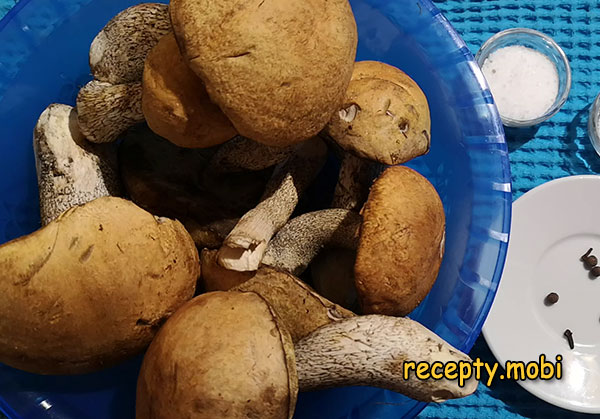
I cut the aspen mushrooms into medium cubes and transfer them to a deep pot. I add 2 cups of water and place it over medium heat — this size is convenient for serving and cooks evenly in the given time.
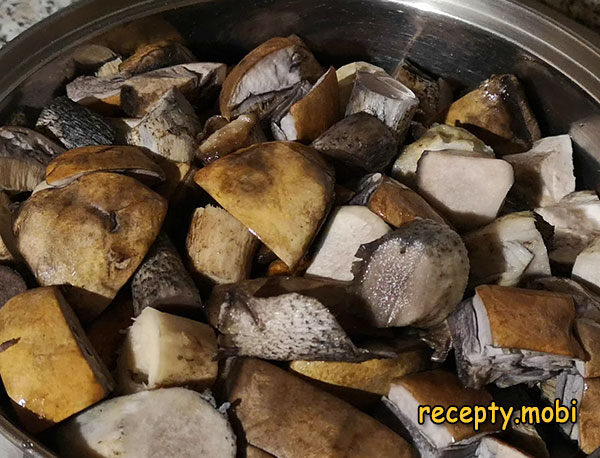
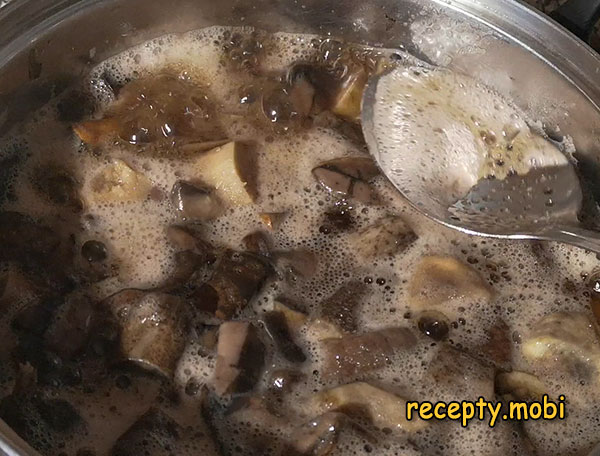
Stirring from time to time, I wait for it to come to a boil. After that I cook the mushrooms for another 5 minutes — I don't forget to skim off the foam that forms, as it holds impurities and forest debris.
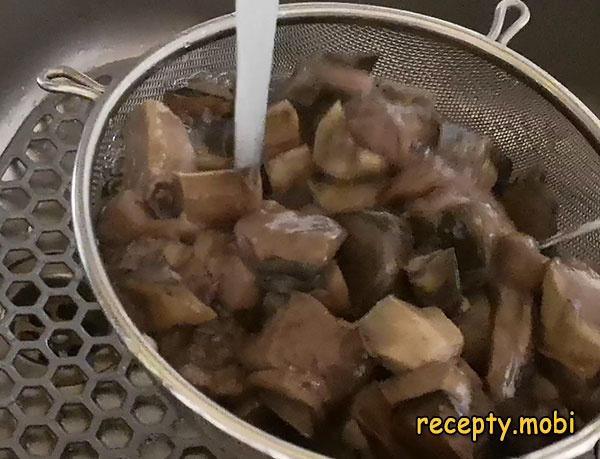
I tip the aspen mushrooms into a colander and rinse them under cold tap water — rinsing removes the last of the foam and any slime from the surface, so the marinade comes out clear in the end.
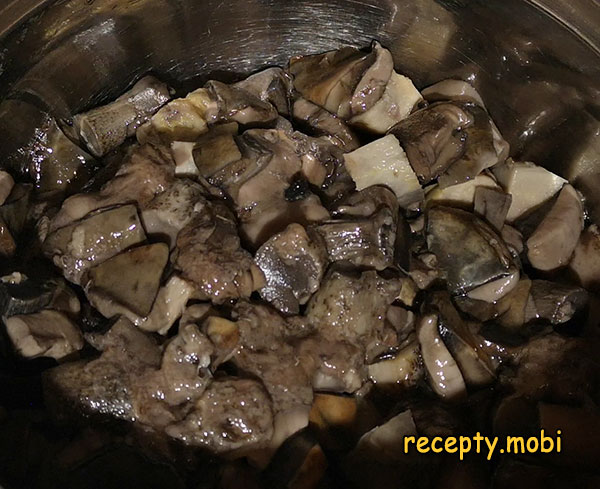
I return the mushrooms to the pot — now without the first water, which was "dirty" with forest particles and sediment after the first boil.
I pour in enough water to cover the mushrooms by about 1 centimetre. This water will be enough for the marinade — the rest goes into the jar too and ensures a good fill right to the top.
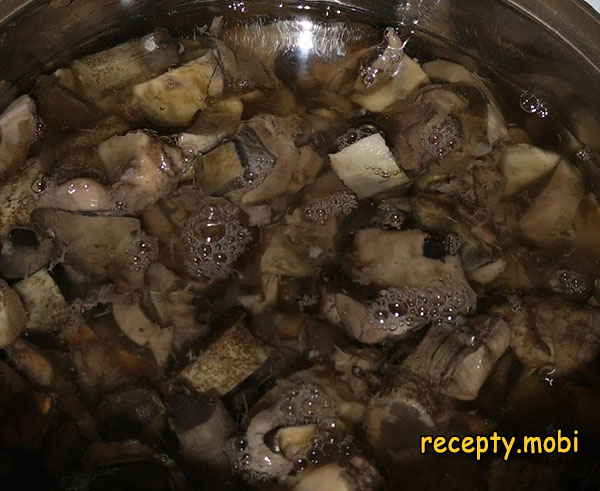
I put the pot over medium heat and wait for it to boil. As soon as it starts boiling, I cook the mushrooms for 30 minutes, periodically skimming off the foam that forms — long boiling is the key to a safe mushroom preserve.
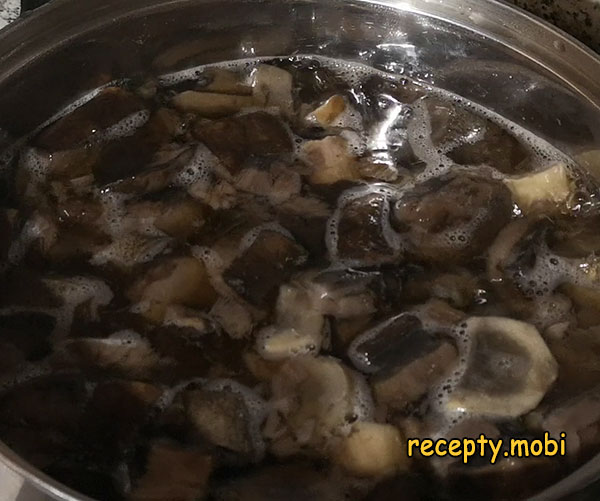
After the stated time I add the sugar — right now, once the mushrooms have boiled thoroughly and the foam has stopped forming. Earlier on, the sugar would have slowed the release of bitterness.
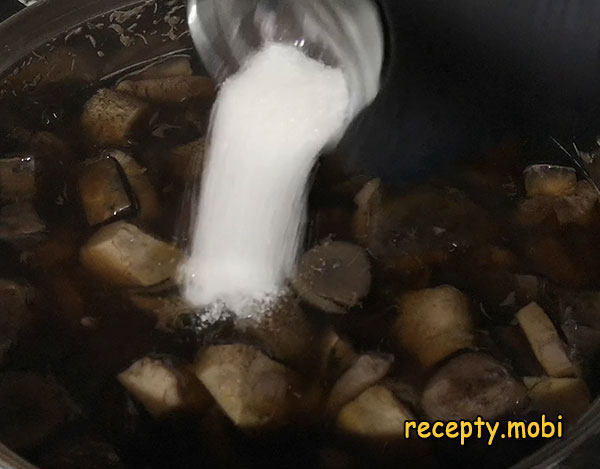
I add the salt — one heaping tablespoon per litre of marinade. This is the basic concentration for reliable preserving without over-salting the finished product.
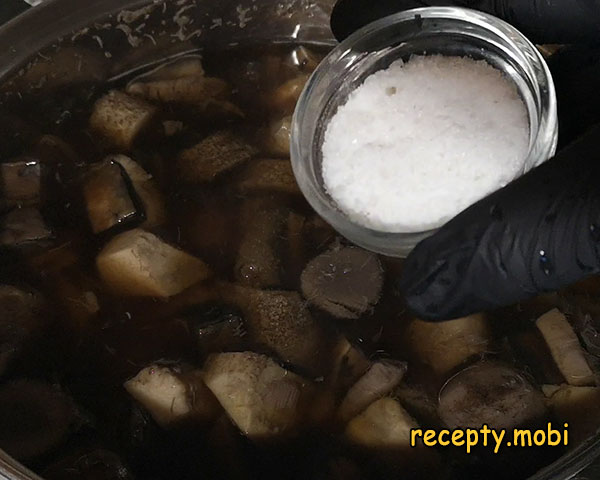
Next I add the black peppercorns and the clove buds. I stir all the ingredients thoroughly and keep cooking for another 10 minutes — the spices should open up in the hot liquid and give their essential oils to the marinade.
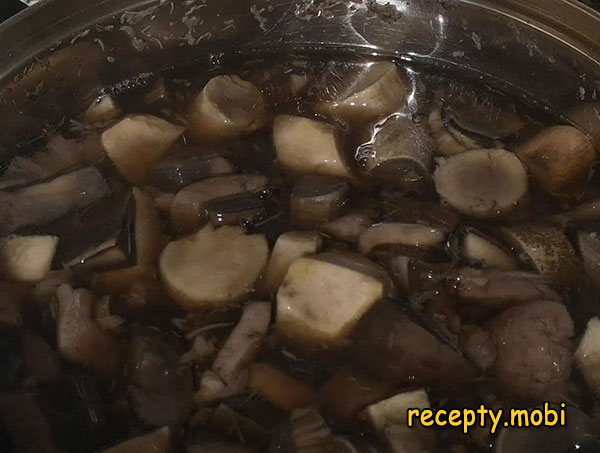
I pour 2 tablespoons of vinegar into the pot and stir everything thoroughly. Then I cover the pot with a lid and cook for another 5 minutes — the vinegar goes in right at the end so the acid doesn't boil away during the long cooking and keeps its preserving power.
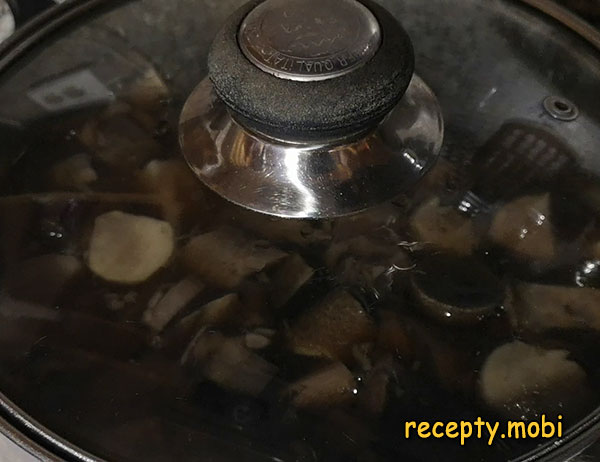
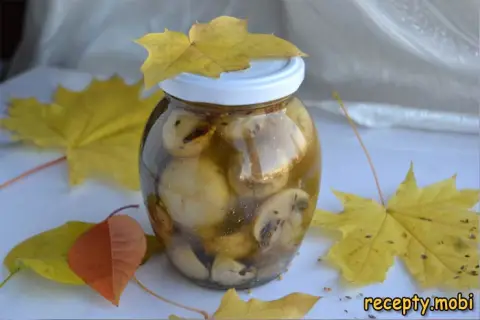
I fill the sterilised 1-litre jar first with the mushrooms, then with the marinade right to the very top — minimal air space means maximum keeping quality.
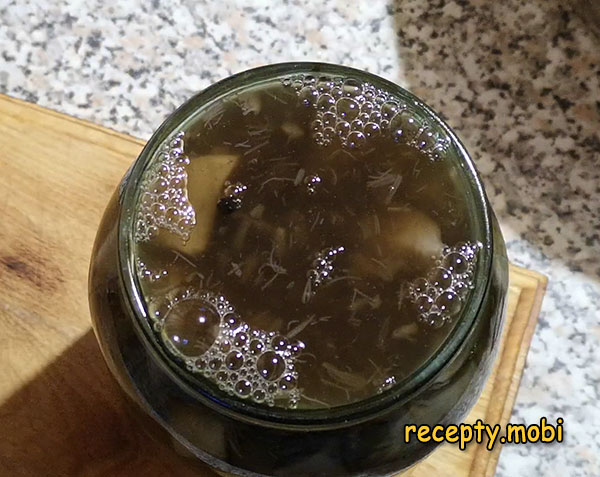
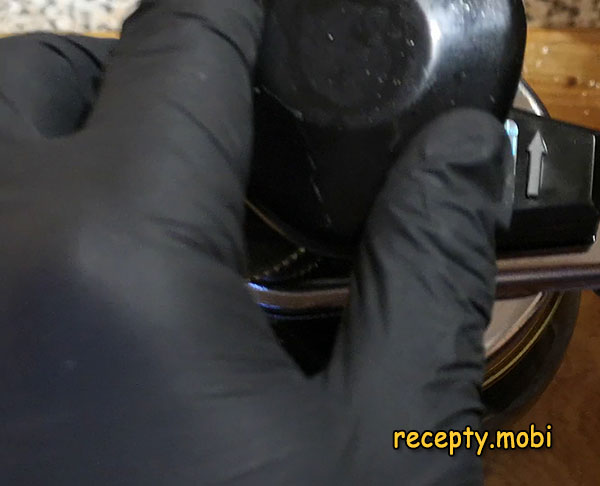
I cover it with a sterilised lid and seal it — I check that the seam is even all the way around the rim of the jar.
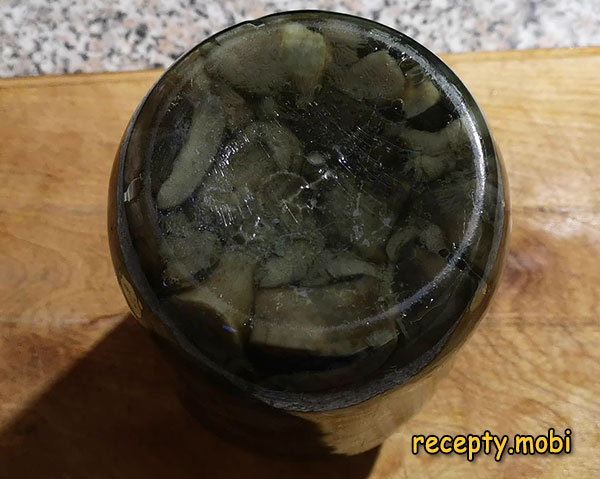
I turn the jar upside down and let it cool in this position — this sterilises the lid and checks that the seam is airtight. If nothing leaks out from under the rim, the seam is holding and the preserve will last through the winter.


Tips
- 1
THE DOUBLE BOIL — the secret against cloudiness. With a single boil the mushrooms leave sediment and cloudiness in the jar, and forest particles and foam stay with the product. A first boil of 5 minutes + rinsing + a second boil of 30 minutes in fresh water gives a clear marinade with no sediment, and the preserve keeps longer.
- 2
VINEGAR AT THE END — the secret of the preservative's strength. Vinegar added to a boiling marinade for 30+ minutes evaporates and loses its preserving power. Adding it 5 minutes before the end keeps all the acetic acid intact and working for preservation. The same trick works in marinated milk mushrooms for winter.
- 3
CAPS AND STEMS SEPARATELY — the secret of even doneness. If you happen to get very large aspen mushrooms, it's better to cut the caps and stems separately and add them to the pot 5–7 minutes apart — the stems are denser and cook more slowly. That way the caps keep their shape and the stems cook through completely.
- 4
TURNING THE JAR OVER — the secret of checking the seam. If there are any leaks from under the lid after turning it over, the seal is unreliable and you need to re-roll it or put it under a sterile nylon lid for cold storage. The same principle works in Marinated Honey Mushrooms for Winter.
Video

FAQ
Why do aspen mushrooms turn blue when cleaned? +
This is a normal biochemical reaction — the flesh of the aspen mushroom contains the enzyme tyrosinase, which on contact with air oxidises amino acids, and the cut surface takes on a blue or purple-black shade. This has no effect at all on safety or taste — after boiling, the mushrooms return to their natural colour. To avoid heavy darkening during preparation, you can keep the cut mushrooms in acidified water with lemon juice or vinegar until it is time to cook them.
How long do marinated aspen mushrooms keep? +
In a cool pantry at 8–15°C — up to one year without loss of quality. In an ordinary kitchen cupboard at room temperature — up to 8–9 months. After opening the jar — 5–7 days in the fridge under a lid, ideally with a layer of vegetable oil poured on top to protect from air. Signs of spoilage: a swollen lid, cloudy marinade with fermentation bubbles, a film on the surface, a sour or putrid smell — I throw such a jar out without regret.
Can aspen mushrooms be marinated together with other mushrooms? +
Yes, a mix of forest mushrooms turns out very well. The best matches for aspen mushrooms are porcini, birch boletes, slippery jacks and moss mushrooms — they all belong to the same "dense, meaty" class and cook in a similar time. Honey mushrooms and chanterelles I add separately or cook a little less. I don't mix milk mushrooms and white milk-caps in the same jar — they need soaking first to remove bitterness. The proportions of the components are to taste, but the basic marinade recipe stays the same.
What to serve with marinated aspen mushrooms? +
A versatile appetiser. The classic is with boiled potatoes drizzled with butter and sprinkled with spring onion. With sliced raw onion and vegetable oil — a simple cold snack to go with strong drinks. With meat: with shashlik, with fried pork, braised beef, home-made pelmeni. In "Vinaigrette" or "Mushroom" salads with egg and spring onion. For the holiday table — on a separate plate with herbs and a wedge of lemon.
- Comment
or post as a guest
Be the first to comment.