avg —
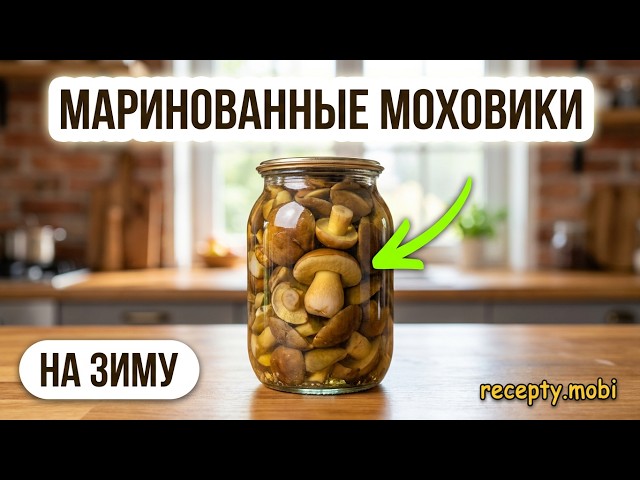
Marinated Moss Mushrooms for Winter

Instructions
To marinate moss mushrooms for winter, I get the ingredients ready. I rinse the mushrooms thoroughly under cold water and let them dry – moss mushrooms have a characteristic velvety cap that traps a lot of forest debris, sand, and pine needles.
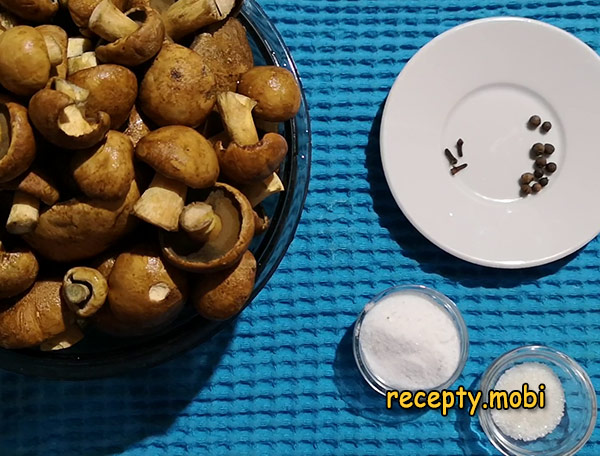
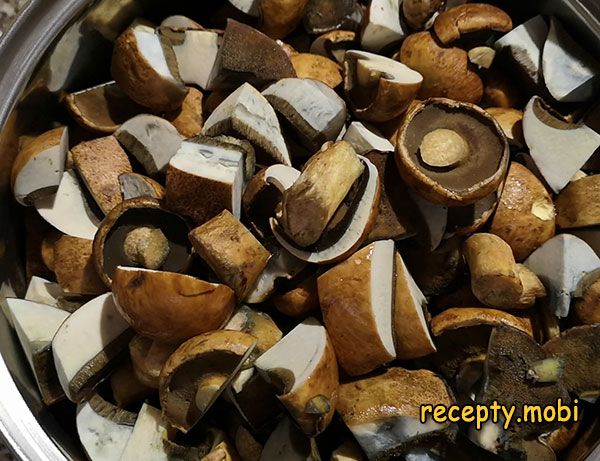
I cut the moss mushrooms as I see fit. Small specimens can be left whole – they shrink down during cooking and sit beautifully in the jar. Larger ones I cut into medium pieces. I transfer the cut mushrooms to a deep pot.
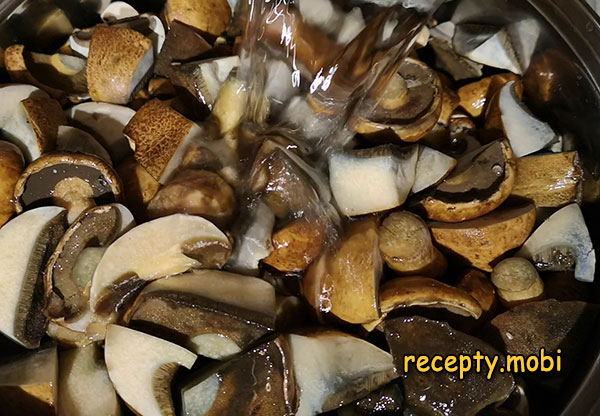
I add 2 cups of water to the pot of cut moss mushrooms and set it over medium heat – this first boil is needed to remove the forest microflora and any potential bitterness from the moss mushrooms.
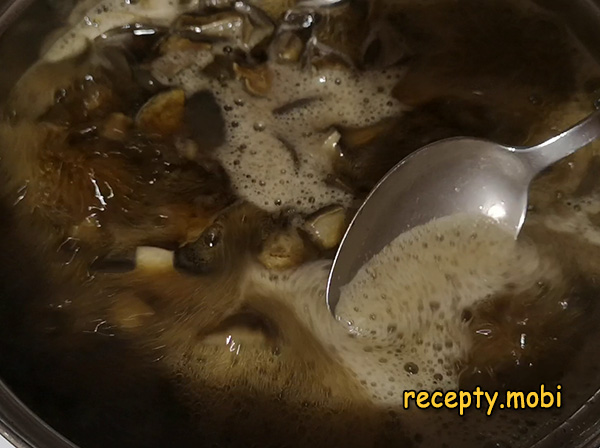
Stirring occasionally, I bring the mushroom mixture to a boil. Once it starts to boil, I cook it for 5 minutes, skimming off the foam that forms – it holds forest debris and ballast substances that spoil the clarity of the marinade.
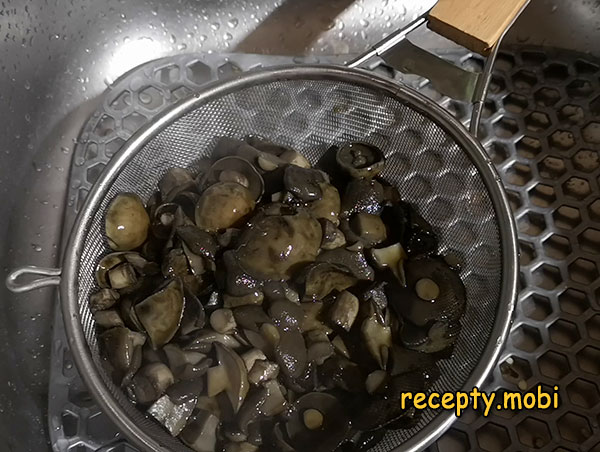
Next I transfer the mushrooms to a colander and rinse them thoroughly under running cold water – rinsing removes the last of the foam and slime from the surface, so the marinade comes out clear in the end.
I return the mushrooms to the pot and add enough water to cover the moss mushrooms by 2 centimetres – this amount of water is enough for the marinade, and the rest goes into the jar too, ensuring a good fill right to the top.
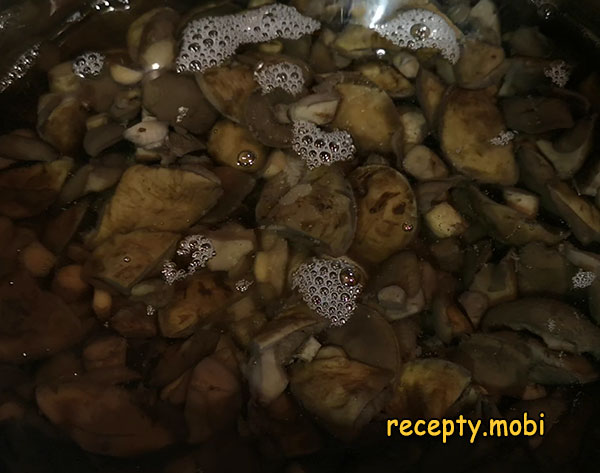
I add the sugar, salt, allspice berries, and clove buds to the mushrooms – right now, before the second boil, so the spices have time to open up fully in the hot liquid and give their essential oils to the marinade.
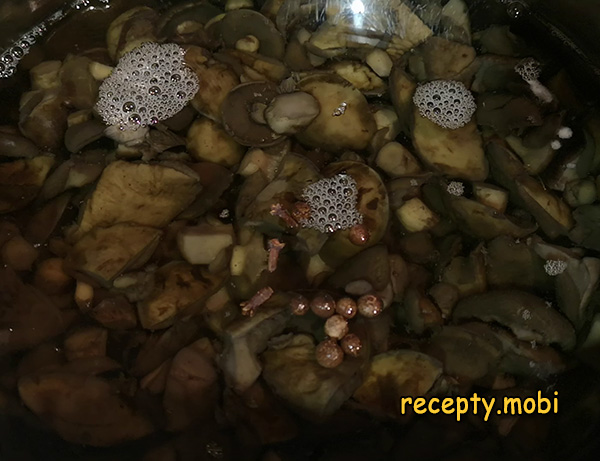
I heat the pot over medium heat. Stirring from time to time, I bring the mushrooms to a boil and gently remove the foam. Once it starts to boil, I cook them for another 25 minutes – this long boil is the key to a safe mushroom preserve and to heating every piece through fully.
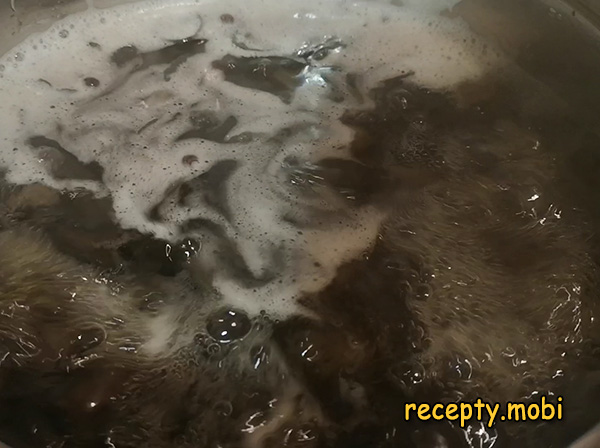
Next I pour in 2 tablespoons of vinegar and stir thoroughly. I cover the pot with a lid and cook for another 5 minutes – the vinegar goes in right at the end so the acid does not boil off during the long cooking and keeps its preserving power.
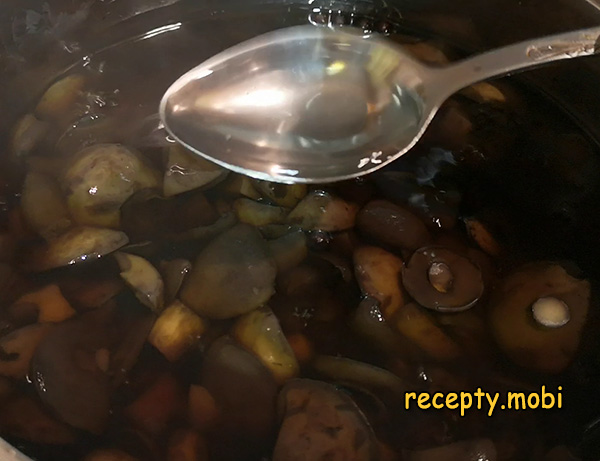
I carefully pack the mushrooms into a pre-sterilised 1-litre jar and then pour in the marinade right to the very top of the jar – the smallest possible air gap means the best keeping quality for the whole winter.
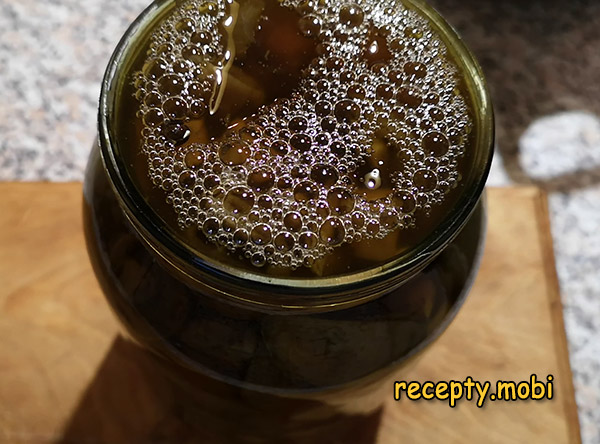
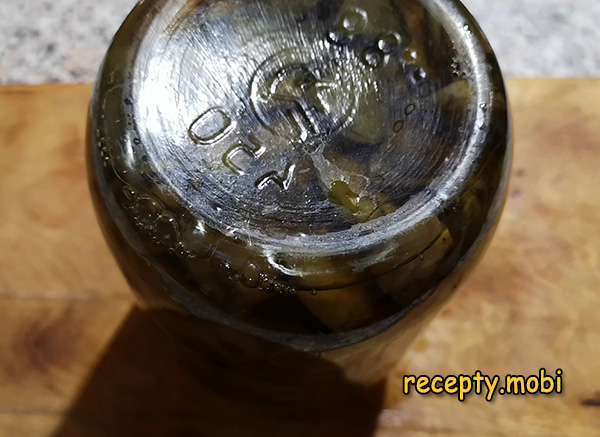
I cover the jar with a sterilised lid and seal it airtight using a canning machine. I turn the jar upside down and let it cool completely – this sterilises the lid and checks the seam for a tight seal.


Tips
- 1
THE DOUBLE BOIL – the "secret" against cloudiness. With a single boil, moss mushrooms leave sediment and cloudiness in the jar, and forest particles and foam stay with the product. A first 5-minute boil + rinse + a second 25-minute boil in fresh water gives a clear marinade with no sediment; the preserve keeps longer and looks more appetising.
- 2
VINEGAR AT THE END – the "secret" to the preservative's strength. Vinegar added to a boiling marinade for 25+ minutes partly evaporates and loses its preserving power. Adding it 5 minutes before the end keeps all the acetic acid intact and working for preservation. The same trick works with marinated aspen mushrooms.
- 3
MOSS MUSHROOMS SEPARATELY FROM OTHER MUSHROOMS – the "secret" to colour. When boiled, moss mushrooms release a dark pigment that tints the marinade brown – this is normal for the variety, but if porcini or aspen mushrooms end up in the same jar, they will darken too. For a light marinade fill, it is best to cook moss mushrooms separately from other mushrooms.
- 4
A CHAMPIGNON ALTERNATIVE – the "secret" to a year-round preserve. If you have no wild mushrooms on hand, you can make marinated champignons with vinegar at home – they are available in shops year-round and give a similar result. Champignons lack the wild-forest aroma, but the classic "mushroom snack" comes out reliably tasty.
Video
FAQ
How do moss mushrooms differ from other mushrooms? +
Moss mushrooms are a group of wild forest mushrooms from the bolete family, which also includes porcini, aspen, and birch boletes. The main difference is the thin, velvety cap with its characteristic yellowish or reddish-brown colour, and a firm, meaty stem of medium thickness. In taste, moss mushrooms are milder than porcini, with a slight sour note and a less intense aroma. When boiled, the flesh darkens a little, so the marinade takes on a brownish tint. This is completely normal and safe.
Can I replace the 9% vinegar with something else? +
Yes, in equivalent proportions. Substitutes: apple cider vinegar 6% (3 tablespoons – milder, with a fruity note), white wine vinegar 6% (3 tablespoons – neutral), vinegar essence 70% (1/4 teaspoon = 2 tablespoons of 9% – compact). Do not use: balsamic (dark, it will change the colour of the mushrooms), rice vinegar 4% (too weak for reliable preservation); fresh lemon juice is also unsuitable – it does not have the acid concentration needed for long storage. For the classic version, use 9% table vinegar.
How long do marinated moss mushrooms keep? +
In a cool pantry at 8–15°C – up to one year without loss of quality. In an ordinary kitchen cupboard at room temperature – up to 8–9 months. After opening the jar – 5–7 days in the fridge under a lid, ideally topped with a layer of vegetable oil for protection from the air. Signs of spoilage: a bulging lid, cloudy marinade with fermentation bubbles, a film on the surface, a sour or rotten smell. Pay particular attention to botulism: at the slightest doubt, I do not open the jar.
What do you serve marinated moss mushrooms with? +
A versatile snack. The classic – with boiled potatoes drizzled with butter and sprinkled with herbs. With sliced onion and vegetable oil – a simple cold appetiser. With meat: with shashlik, with fried pork, braised beef, home-made pelmeni. In salads: vinaigrette, or a "mushroom" salad with egg and green onion. With drinks: vodka, dark beer. For a festive table – on a separate plate with a sprig of dill and a slice of lemon, for a contrast of colours and presentation.
- Comment
or post as a guest
Be the first to comment.
Related recipes