Write a comment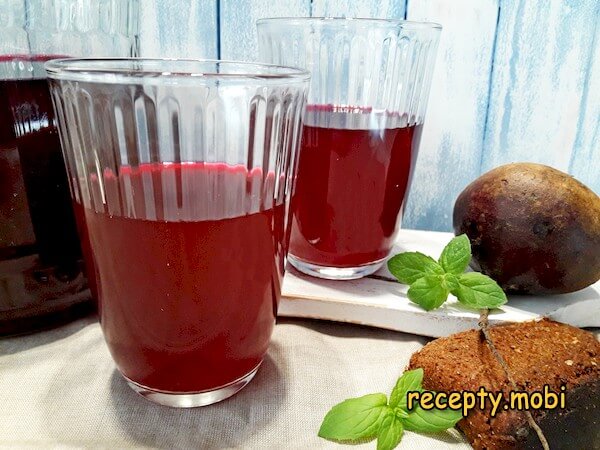
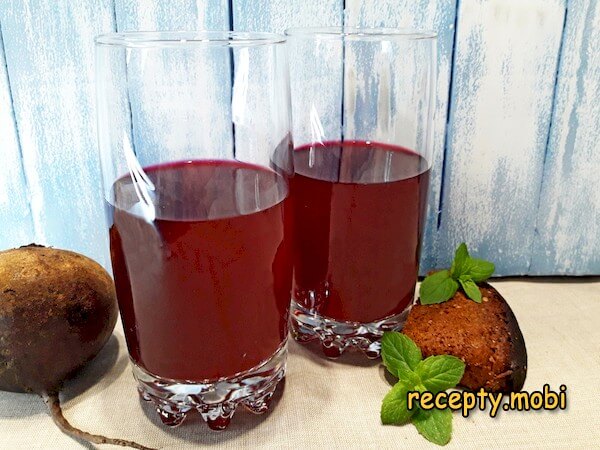
Beet kvass
Healthy and invigorating beet kvass has been traditionally prepared in Russia since ancient times. In the classic recipe, kvass is obtained through lactic acid fermentation, using only two ingredients – beets and water. The difficulty of reproducing this variant lies in the strict temperature regime, deviation from which causes the drink to sour, a black foam to appear on the surface, and the liquid to become viscous and unsuitable for consumption.
An improved variant, no less beneficial but more flexible in temperature range, is the use of a crust of black bread for fermentation. At 20-25 degrees Celsius, fermentation occurs with the release of carbon dioxide bubbles. And in about 2-4 days, beet kvass will be ready. Neither sugar, honey, nor other sweeteners are used in this recipe, as beets already contain a sufficient amount of sucrose.
Yield: 2 liters.
Preparation time: 10 minutes + 2-4 days for the fermentation process.
Caloric content: 5 kcal per 100 grams of the dish.
Ingredients
- purified water – 2.5 l;
- beetroot – 150-170 g;
- crust of rye bread – 1 piece.
Preparation
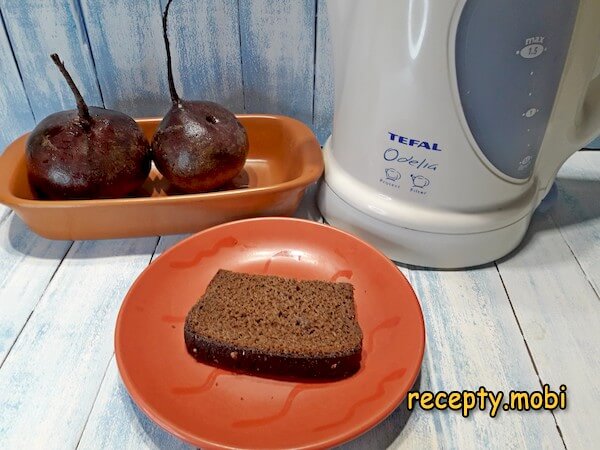
1. Prepare the ingredients for beet kvass. The water should be at room temperature, filtered or boiled and then cooled. Choose sweet varieties of beets, small in size and with a thin tail (these specimens are the tastiest). The root vegetable should have a dark burgundy color. Careful selection of this ingredient is crucial, as it will determine the taste and quality of the drink.
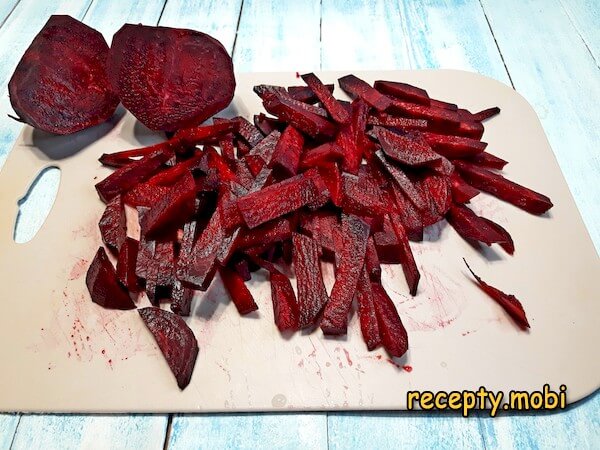
2. Thoroughly wash and peel the beetroot. Cut it into arbitrary strips. There's no need to try to add more of this ingredient – the fermentation process may slow down. The recipe specifies the optimal amount with slight deviations.
3. Pour the cut pieces into a jar with a capacity of 2.5-3 liters.
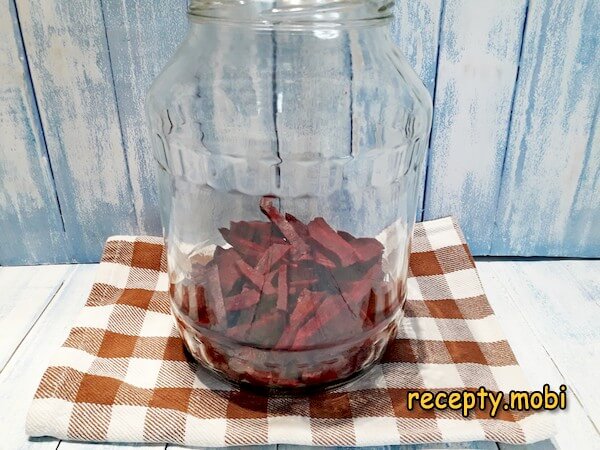
4. Add water (leave a little space at the top of the jar).
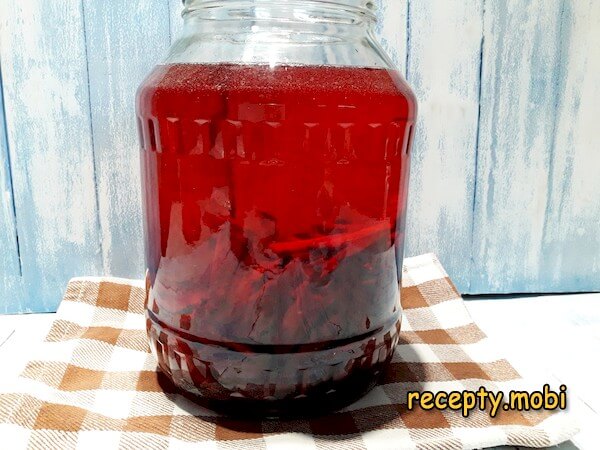
5. Add a piece of bread.
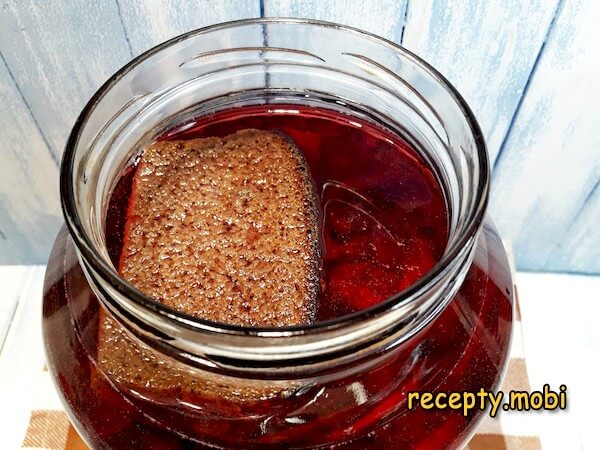
6. Close the neck of the bottle with two layers of cheesecloth and secure it with a rubber band. Place the preparation in a dark and warm place (the best temperature is 20-25 degrees, at lower or higher temperatures the fermentation will be very poor and the drink may spoil). In summer, the best place in a regular apartment is a high shelf in the kitchen cabinet, and in winter – near the radiator.
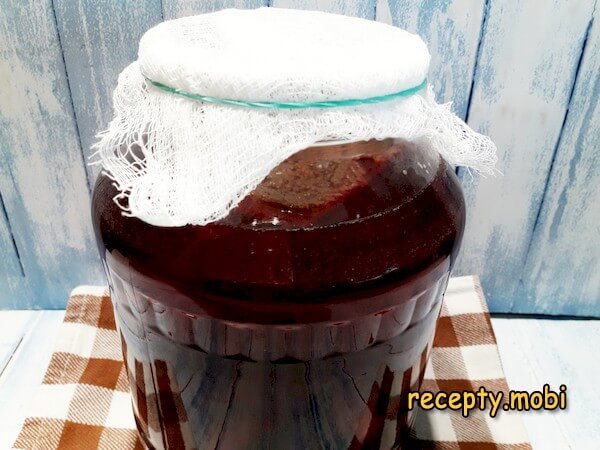
7. About on the third day (depending on the surrounding temperature), a white foam with small bubbles will appear on the surface – this is normal, and it should be so.
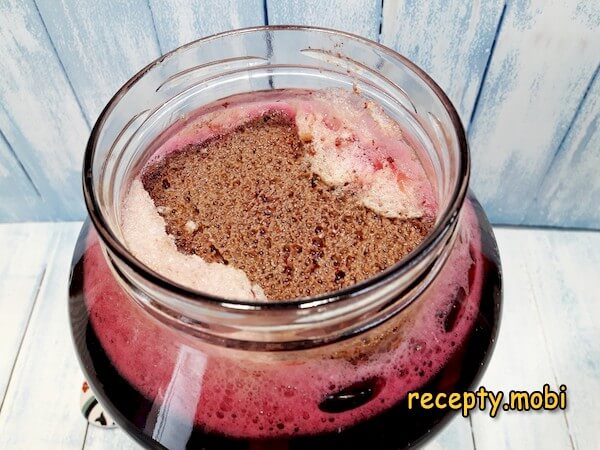
8. All the foam should be collected and discarded.
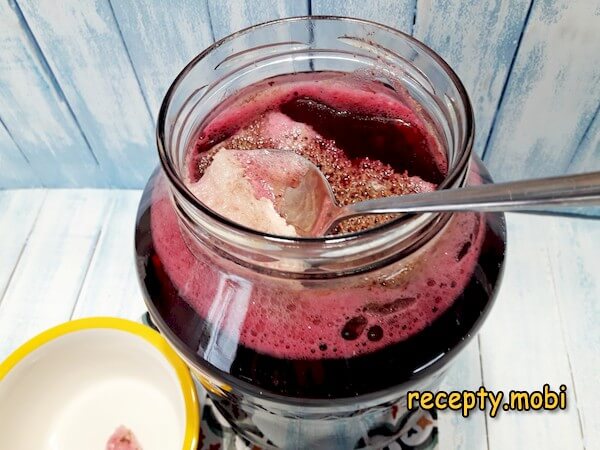
9. Pour the drink into another jar through a fine strainer or cheesecloth and place it in the refrigerator. The jar with the sediment can be reused by adding water again and a fresh piece of bread. The kvass will be less intense, but still tasty and invigorating.
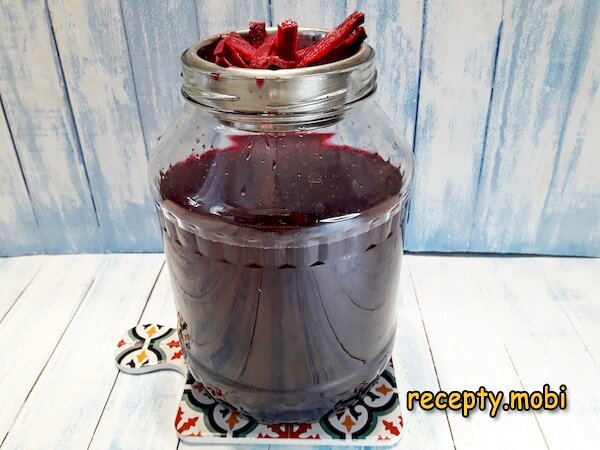
Refreshing, with a slight sourness and natural taste, beet kvass is drunk chilled. It is recommended to consume 100 milliliters of undiluted drink 2-3 times a day. Enjoy your meal.