avg —
Chicken Schnitzel in Breaded Coating 'Milanesa de Pollo'

Instructions
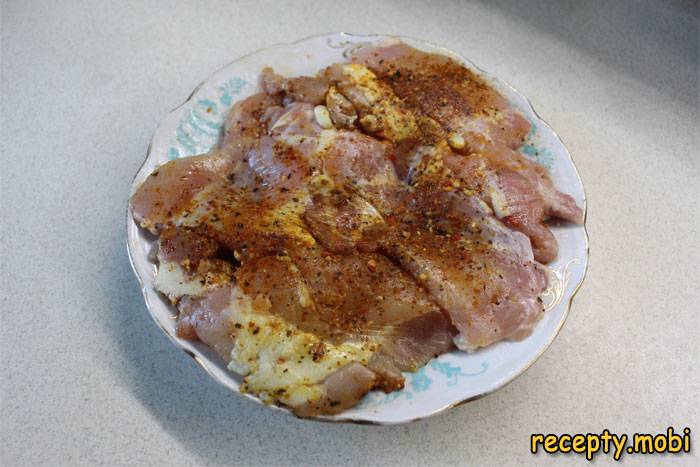
I rinse the chicken thigh fillet thoroughly under cold water and pat it dry with paper towels. I cover the meat with cling film and pound it firmly with a mallet to a thickness of 5–7 mm. I rub the pieces well with aromatic herbs, salt, crushed garlic and pepper. I place the meat on a plate, cover it with film and put it in the refrigerator overnight – at least 12 hours for deep marinating.
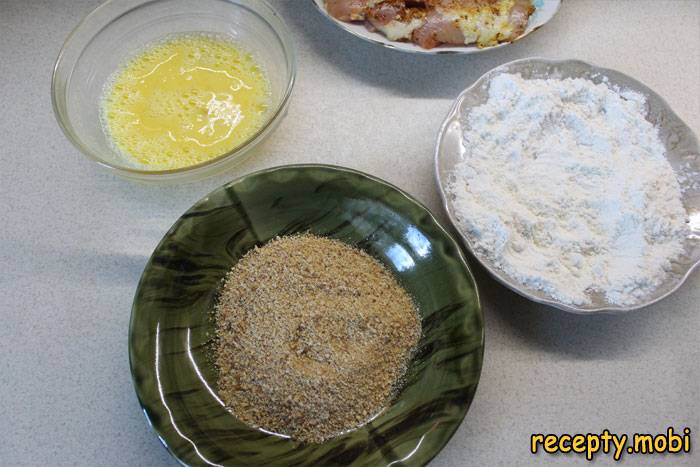
I prepare the ingredients for the triple breading – it is what gives the characteristic crunch and keeps the juices inside the meat. I beat the eggs with a pinch of salt and pepper, and season the breadcrumbs and flour. I first dredge each piece of chicken in flour (it absorbs the surface moisture), then dip it in the egg mixture, and finally coat it thoroughly in breadcrumbs on both sides, pressing for better adhesion.
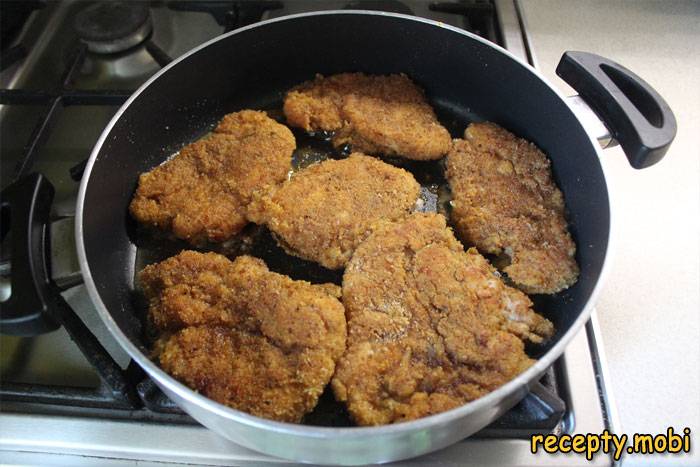
I fry the schnitzels in heated olive oil for 4–5 minutes on each side over low heat. It is best to cook them over low heat so that the meat has time to cook through and the crust turns golden without burning. Over high heat the crust will char while the meat inside stays raw – this is the most common mistake with schnitzels.
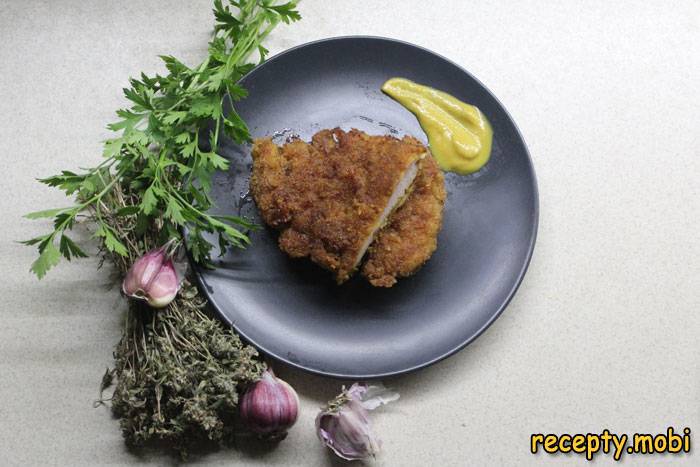
I place the schnitzel on a serving plate lined with paper towels so the excess fat drains off. I serve it with the traditional "Chimichurri" sauce (parsley, garlic, vinegar, olive oil) or with hot mustard. I serve it with a wedge of lemon – the citrus juice brings out the flavour even more.


Tips
- 1
Always pound the meat through cling film – that way you will not damage the fibres and the schnitzel will not tear when you coat it in breadcrumbs.
- 2
Marinate overnight – the meat becomes more tender and aromatic, and the flavour deeper. The minimum marinating time is 2 hours.
- 3
Fry over low heat – this way the crust browns to a golden colour and the meat cooks without drying out. Pork schnitzels are made on a similar principle.
- 4
Serve with "Chimichurri" sauce – it is a classic of Argentine cuisine that perfectly sets off the schnitzel.
FAQ
Can I use chicken breast instead of thigh? +
Yes, chicken breast is also excellent for milanesa. Thigh is a little juicier thanks to its small fat content, while breast is a more dietary and neutral option. A schnitzel made from breast turns out whiter and more tender in texture, but it must be marinated – without that it is easy to overdry. The proportions of the marinade and the cooking time stay the same. In Argentina both thigh and breast are traditionally used – both versions are considered classic.
Do I have to marinate the chicken overnight? +
It is advisable but not critical – you can cut it down to 2–3 hours. The longer it marinates, the more aromatic the schnitzel turns out. Overnight, the herbs and garlic penetrate deep into the meat fibres, and every piece comes out evenly aromatic. In 2 hours the aroma only soaks into the surface. If you have no time at all, marinate for at least 30 minutes – there will already be a noticeable difference from unmarinated meat. Never marinate at room temperature for longer than 1 hour – only in the refrigerator.
What can replace breadcrumbs? +
You can use cornflakes (crushed into crumbs – they give a crunchier crust), crushed crackers or dry crispbreads (a denser crust), semolina (a classic Soviet-cuisine option), or panko (Japanese breadcrumbs – the crunchiest). Crushed stale white bread also works. For a gluten-free version use cornmeal or crushed rice flakes. Each coating gives its own character: fluffy, dense or crispy.
- Comment
or post as a guest
Be the first to comment.