avg —
Chicken Hearts in Orange Sauce on the Skillet

Instructions
First, the chicken hearts need to be marinated. Clean them beforehand and trim away anything excess. Then pour over the hearts a mixture of sugar, orange juice, spices and soy sauce. I leave the hearts to marinate for twenty minutes.

I dice the onion into a small cube. I grate the carrot. I sauté the vegetables in odourless oil.
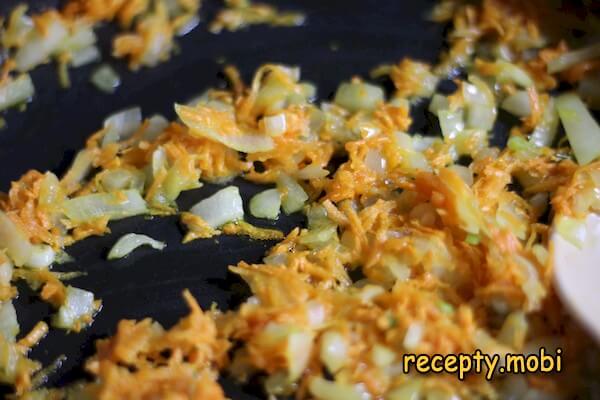
I add the hearts without the sauce and fry them until golden.
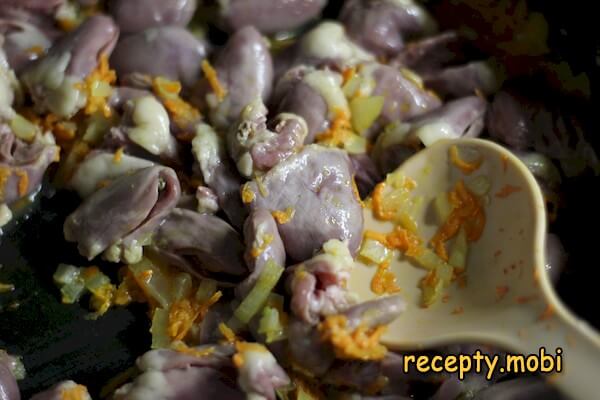
I pour in the sauce. I cook the hearts in the sauce until the offal is tender. I bring the heart stew to a harmonious taste. If you like it spicy, you can add chopped chili or garlic to the hearts. For a milder flavour, it is better to use dried or freeze-dried spices rather than fresh ones.

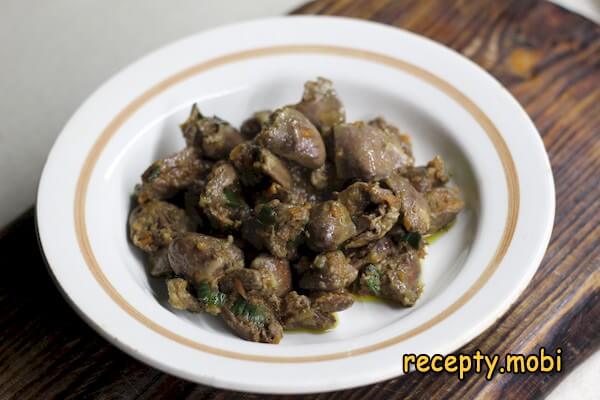
The fragrant chicken hearts in the skillet are ready! It is best to serve the appetiser hot.Such chicken hearts in orange sauce will make an excellent addition to your hearty dinner. They are very tender, moderately spicy and very aromatic. You can cook not only hearts this way, but also chicken gizzards or liver. At the end of cooking, the dish can be finished with chopped herbs or sesame seeds.Bon appétit!


Tips
- 1
The 20-minute marinade is the "secret" to the flavour. The hearts absorb the orange and soy aroma and become more tender. Without marinating, they will be "tough".
- 2
Frying without the sauce is the "secret" to a good crust. Wet offal "boils" rather than fries. First the crust, then the sauce.
- 3
Sugar in the marinade balances the acidity of the orange and the saltiness of the soy sauce. Without it, the dish would taste "sharp".
- 4
Fresh orange juice is the "secret" to the aroma. A shop-bought carton gives a "chemical" taste, while juice freshly squeezed from 2–3 oranges gives a natural flavour. The same principle works for other types of Asian-style offal.
FAQ
How do you clean chicken hearts? +
Rinse the hearts under running water. Remove large blood clots (dark spots) with a knife. Trim off the white sinews and membranes on top – they are "tough" and have a "specific" taste. Cut away excess fat (yellow growths), as it gives an "off taste". If a heart is large, cut it in half lengthwise (it marinates and fries faster). For a more tender texture, soak the cleaned hearts in milk for 30 minutes before marinating. Do not throw away hearts with a greenish tint (unless it is bile, which must be cut off). Fresh hearts are dark red in colour and firm.
What can replace orange juice? +
Alternatives: mandarin juice (sweeter, milder), pineapple juice (a tropical note), grapefruit juice (slightly bitter, for gourmets), apple juice (neutral). For a "premium" version, use juice freshly squeezed from 2–3 oranges. Do not use: tomato juice (it changes the character of the dish), lemon juice (too sour, you would need less). For a "diet" version, use apple or pomegranate juice (50/50 with water). For a "Chinese" style, use soy sauce 50/50 with orange (a "saltier" dish). Fresh juice is more aromatic than shop-bought. For 600 g of hearts, 150 ml of juice is optimal.
How long do the hearts keep in the sauce? +
In the fridge, in a container with a lid, for 2–3 days. Reheat in the microwave for 1–2 minutes under a lid, or in a skillet with 1 tbsp of water under a lid for 3–4 minutes. On the second day the dish "settles" and the flavour becomes richer. In the freezer, I do not recommend it (the texture would "fall apart"). Do not leave it at room temperature for longer than 2 hours, as offal spoils quickly. Freshly made, it is "at its best" in the first 30 minutes. For a "packed lunch", pack it with a side in a container. It is ideal as a "family batch" – a double portion is enough for 2 dinners.
What do you serve the hearts with? +
Side dishes: risotto (as the author suggests), mashed potatoes, basmati rice, udon or soba noodles (Asian style). Vegetables: steamed broccoli, asparagus, green beans. Fresh salad: cucumber + tomato + sesame (Asian style). With black or wholegrain bread. With a glass of red semi-sweet wine or dry white. With light or unfiltered beer. With a cup of green or jasmine tea – a "Chinese" presentation. For a "family lunch", serve with purée and stewed carrot. Finish with sesame and spring onion when serving – a "premium" presentation. A versatile appetiser for both everyday and festive tables.
- Comment
or post as a guest
Be the first to comment.