avg —
Dumplings on Custard Dough (Without Eggs)

Instructions
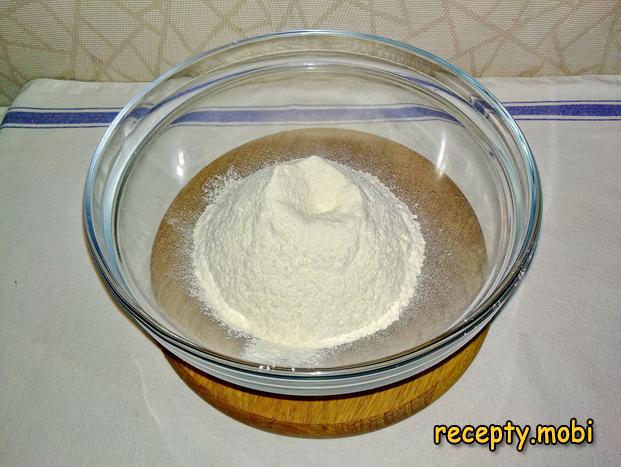
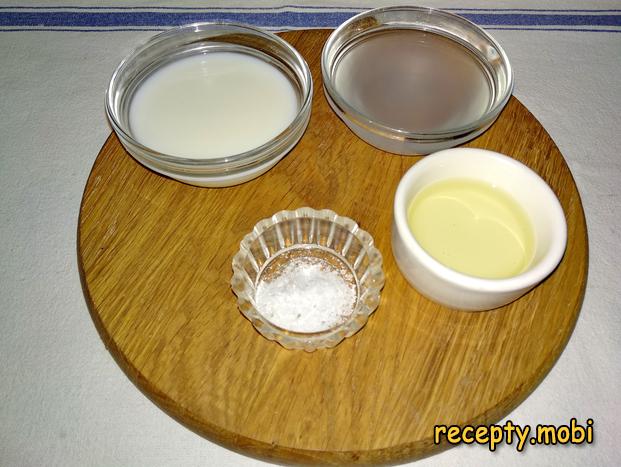
I lay out the ingredients on the work surface. The flour (280 g) must be sifted through a sieve into a large, deep mixing bowl — this enriches it with oxygen and removes any bits. I measure the milk (90 ml) and water (90 ml) into separate cups, as we will combine them in a saucepan for even heating.
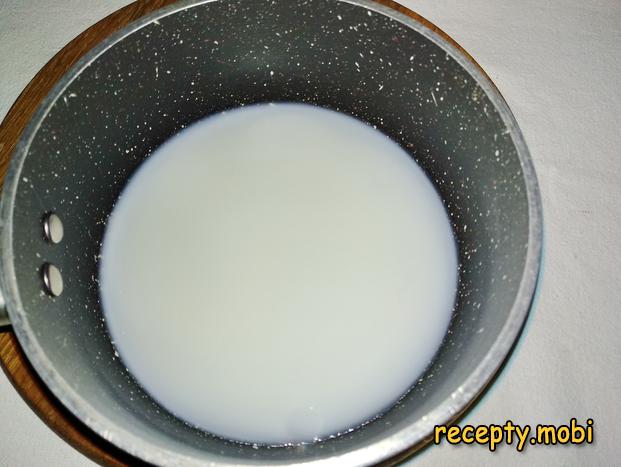
I pour the milk and water in equal amounts (90 ml each) into a heavy-bottomed saucepan. I set it over medium heat and bring it to a BOIL — this is critical! Warm liquid at 70–80°C will NOT scald the flour properly. Only a boiling mix gives that characteristic "choux" structure.
While the liquid heats, I add the salt (½ tsp) to the sifted flour and mix it through thoroughly with a whisk until evenly distributed. It is important to distribute the salt BEFORE adding the liquid ingredients. Alternatively, you can add the salt to the milk and water — it is up to you.
With a silicone spatula, I make a well in the centre of the flour. I pour the vegetable oil (2 tbsp) into the well. I use sunflower, corn or another oil WITHOUT a strong aroma — extra virgin olive oil would give a "bitter" note.
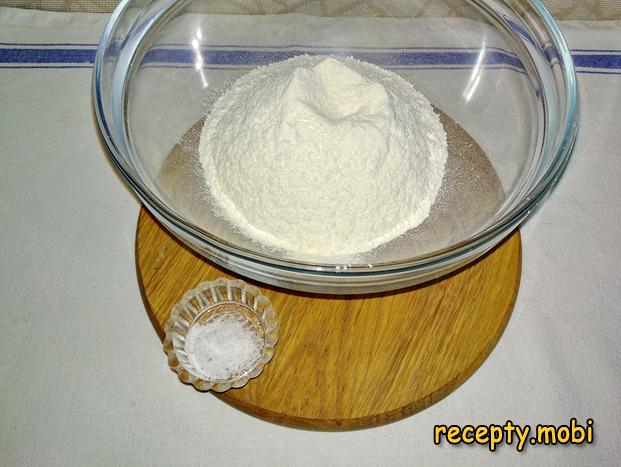
Mix the flour. You can also add the salt to the liquid ingredients instead — it is up to you.
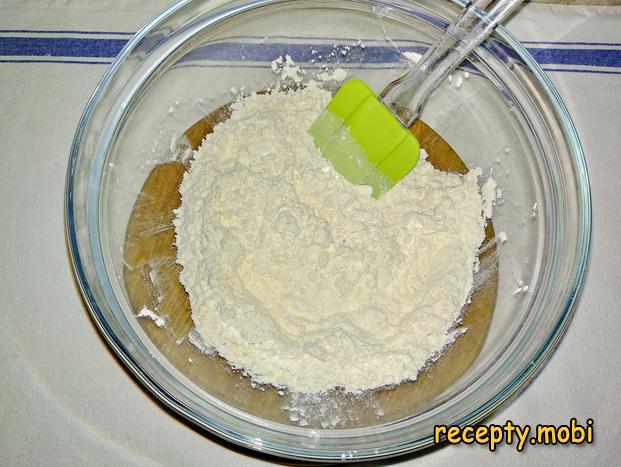
Using a spatula, make a well in the centre of the flour and add the vegetable oil into it.
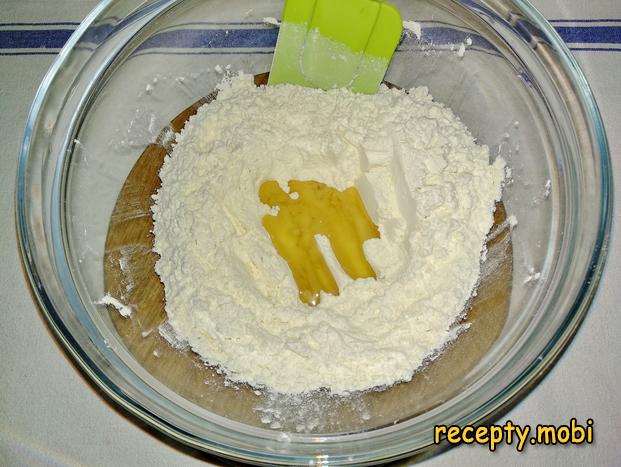
The milk and water have come to a hard boil — properly bubbling. I IMMEDIATELY pour the boiling liquid onto the oil in the well in the flour. Do not delay — the liquid must be as hot as possible for the flour to scald correctly.
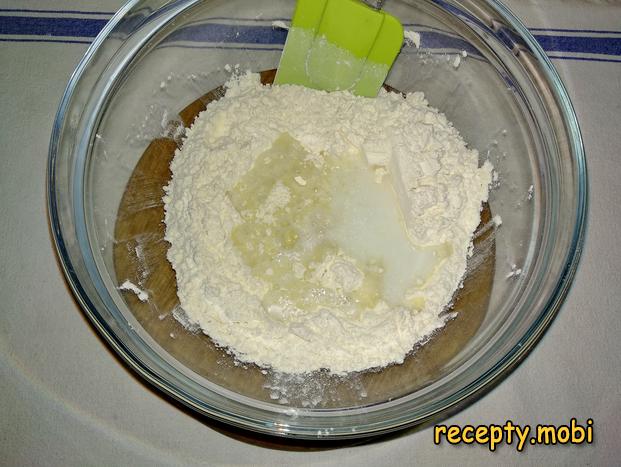
THE CRITICAL STEP: with a wooden spoon or whisk, I IMMEDIATELY start kneading the dough. At first glance it seems the dough is too stiff and there is not enough liquid, but this is normal — keep kneading without adding any liquid. After 1–2 minutes the dough will gather into a mass under the spoon.
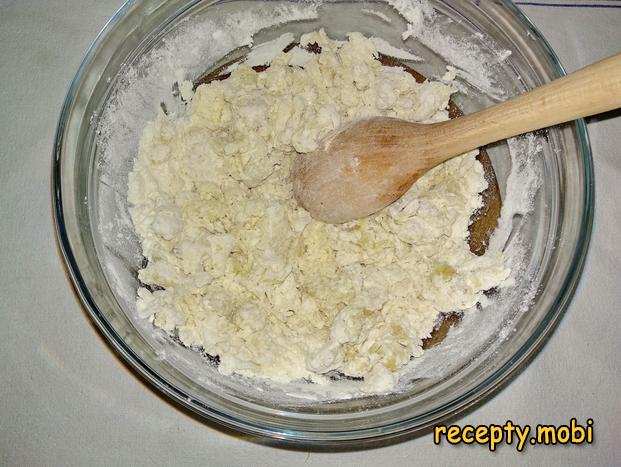
Once the dough has cooled a little (after 1–2 minutes of kneading with the spoon), I move on to kneading by hand in the bowl. CAUTION: the dough is hot, do not plunge your hands straight in — wait until it cools to a warm state (about 60°C). In about a minute I gather the dough by hand into a firm ball.
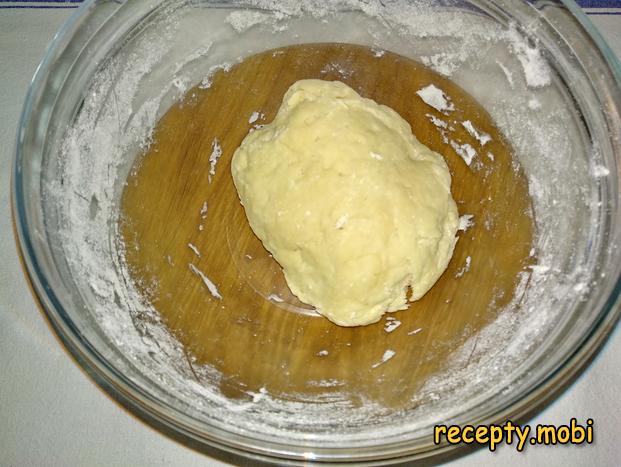
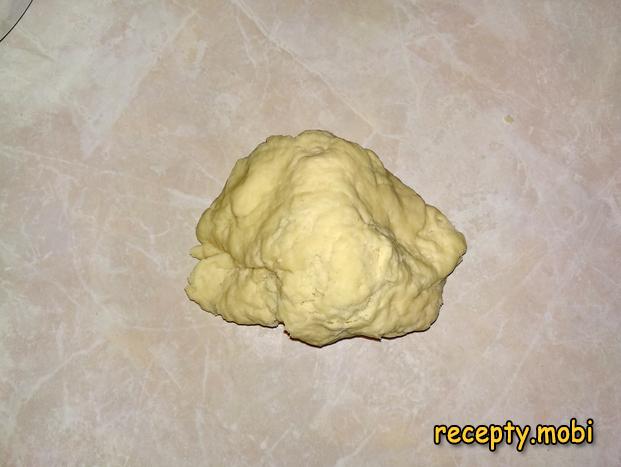
I turn the dough out onto a clean work surface WITHOUT dusting it with flour — choux dough does not stick to the table or hands, and flour would only "clog" the structure. I knead by hand for 5–7 minutes until I have a soft, elastic, smooth dough. Finished dough is glossy and does not stick.
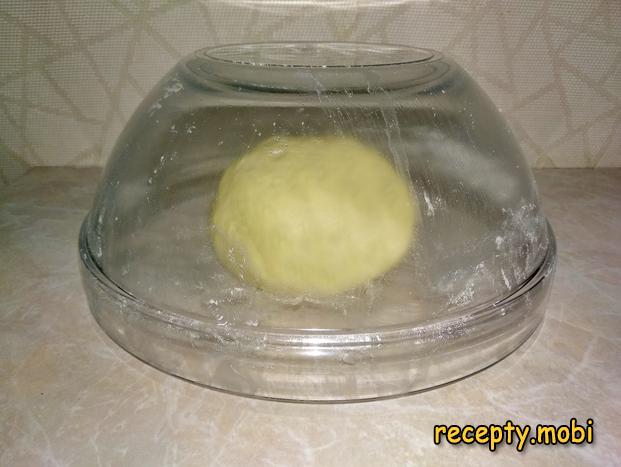
I cover the dough with an upturned bowl and leave it to "rest" on the table for 30 minutes. This step is ESSENTIAL — the gluten relaxes, the dough becomes even more pliable and will not tear when you roll out a thin sheet for the dumplings.
Meanwhile, I prepare the meat filling. I put the pork and beef, 50/50 (600 g in total), through a meat grinder with a COARSE plate (6–8 mm holes) — this gives the characteristic "texture" of homemade dumplings, unlike the paste-like mince in shop-bought ones.
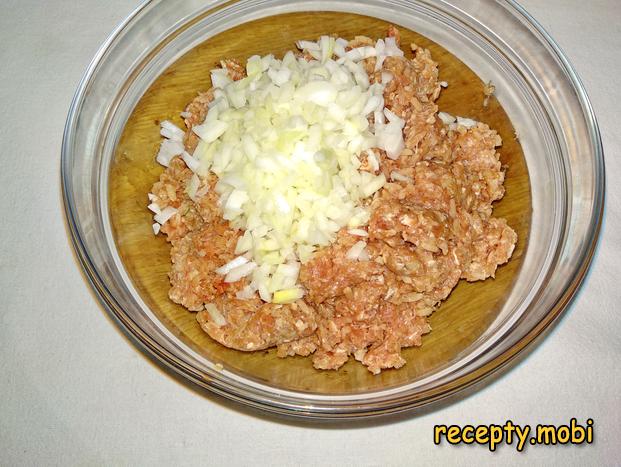
I peel the onion (1 medium) and do NOT put it through the grinder — it would release a lot of liquid and the filling would not hold its shape during shaping. Instead I chop it finely with a knife to a "crumb" of 3–5 mm — the "secret" of a proper dumpling filling.
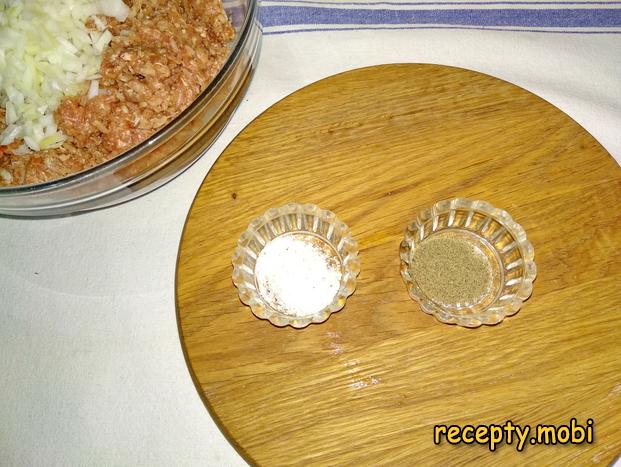
To the filling I add the finely chopped onion, the ground black pepper (½ tsp) and salt to taste (about 1½ tsp per 600 g). I mix it thoroughly by hand for 3–4 minutes until the filling is uniform and pliable. I add 50 ml of cold water for juicy finished dumplings. I cover the bowl with cling film and put it in the fridge for 30 minutes so the filling "stabilises".
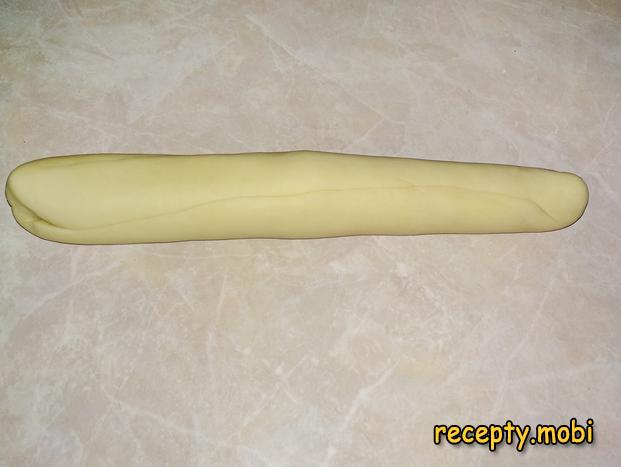
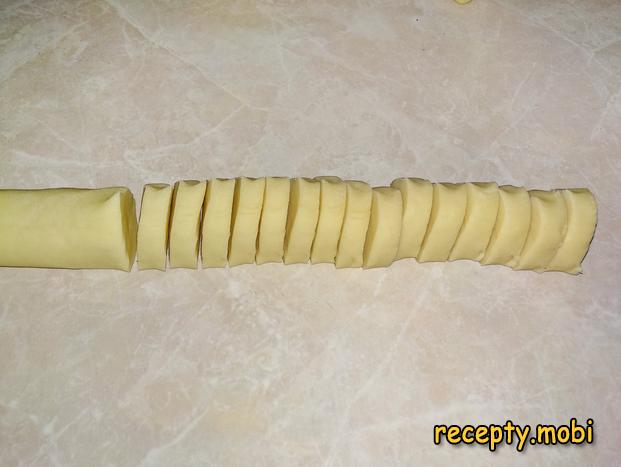
After 30 minutes I take the "rested" dough out from under the bowl. SHAPING THE DUMPLINGS. I roll the dough into a long "sausage" 2–3 cm in diameter. With a sharp knife I cut the "sausage" into rounds 1 cm thick — these are the blanks for the dumplings.
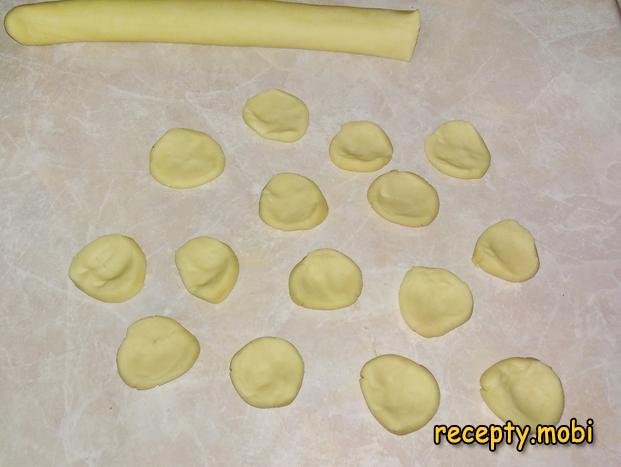
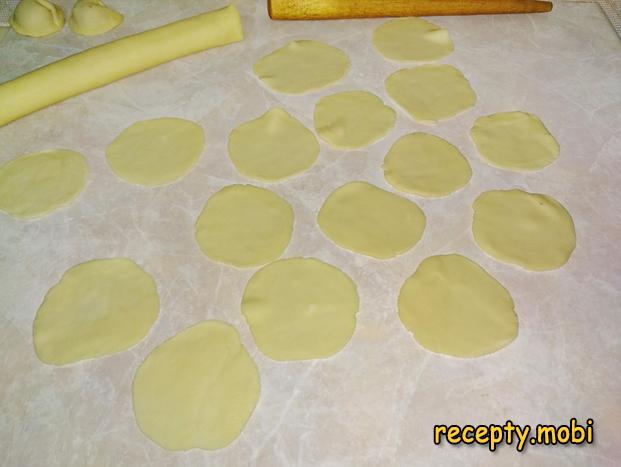
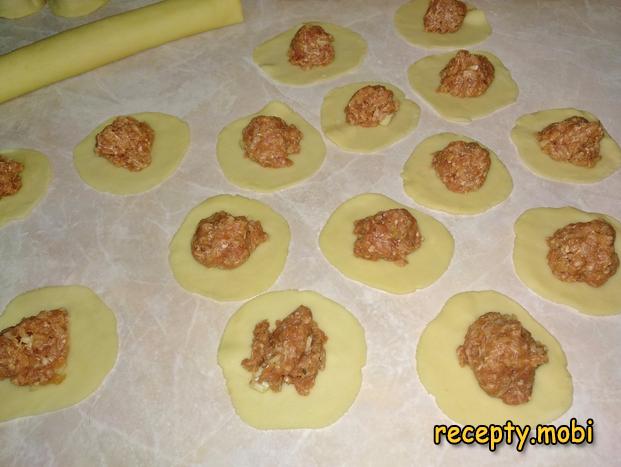
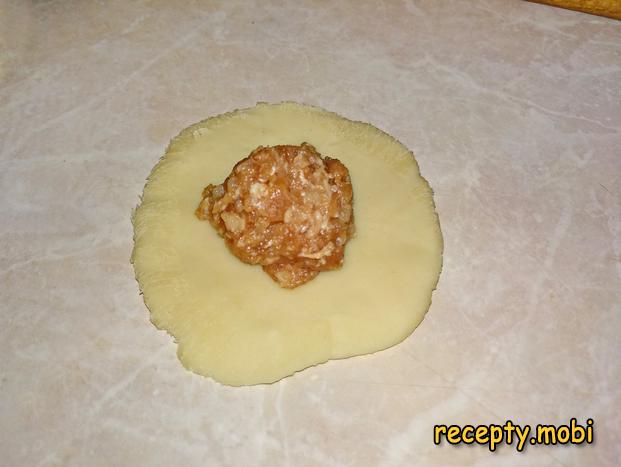
I press each round lightly by hand into a flat disc 4 cm across. Then with a rolling pin I roll it out into a thin round 6–7 cm across and 1–2 mm thick. Choux dough does not stick, so no flour dusting is needed. On each round I place 1 tsp of meat filling (about 10–12 g).
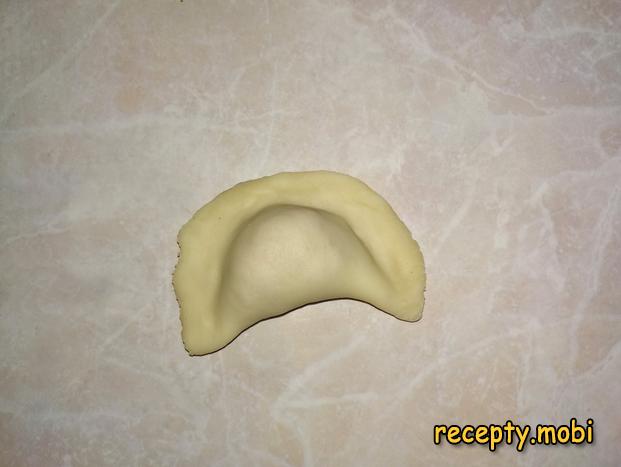
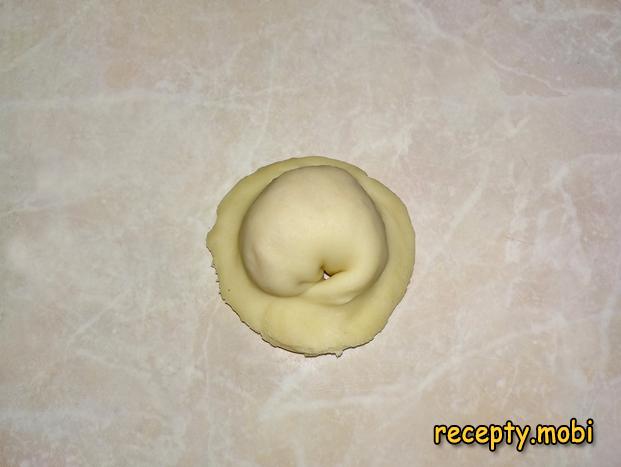
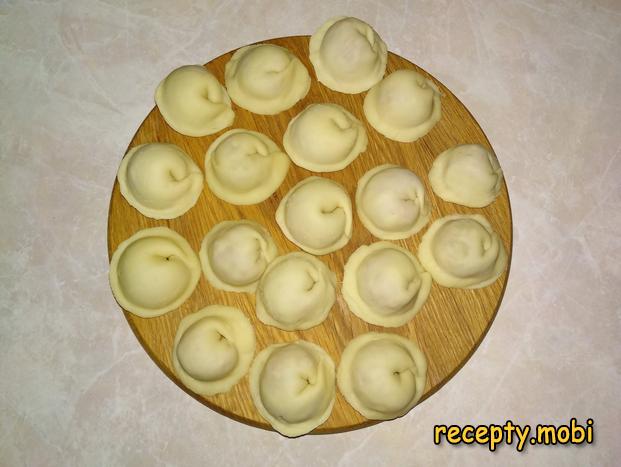
Shaping the dumplings: I fold the round in half with the filling inside and seal the edges firmly from the centre out to the ends, like a varenik. Then I take the two "ears" of the resulting half-circle and join them together, pinching firmly. The result is a classic dumpling with a little "ear". I shape all 50 dumplings this way. I send some to the freezer to freeze on a board lined with baking paper.
Meanwhile, to check the quality of the dough, I put some of the dumplings on to boil.
Into a large pot I pour plenty of water (4–5 l) so the dumplings are not "crowded". I salt the water (1 tsp) and bring it to a rolling boil.
With a spoon I create a "whirlpool" in the water (stirring in a circle) and lower the dumplings in one by one while it is swirling — this way the dumplings will NOT stick together.
I boil the dumplings for 5–7 minutes from the moment they rise to the surface. The finished dumplings swell and "float up". I lift them out with a slotted spoon.
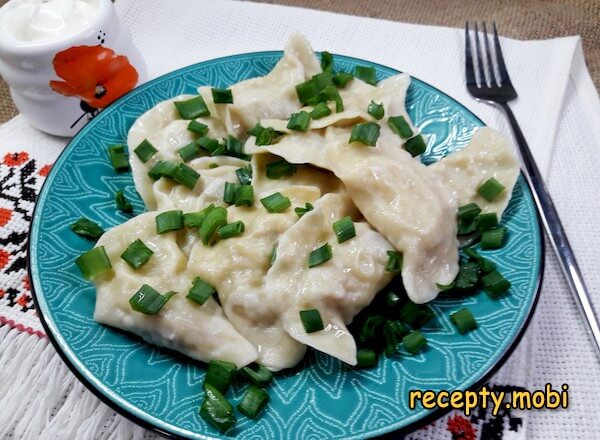
I serve them hot with 20% sour cream and chopped fresh dill and parsley. On the table there must be salt, ground black pepper and 9% table vinegar for those who like things "sharp". The eggless choux-pastry dumplings are ready!A few words on how to properly boil dumplings: fill the pot with plenty of water so the dumplings have room, salt it and bring to a rolling boil, then add the dumplings one by one into the swirling whirlpool so they do not stick, and cook them for a few minutes from the moment they float to the surface.Our dumplings are ready. Serve the homemade choux-pastry dumplings with sour cream and fresh herbs. The table must have salt, pepper and vinegar available.


Tips
- 1
Use only BOILING liquid (milk + water at 100°C) — warm liquid at 70–80°C will not "scald" the flour properly.
- 2
Do NOT dust the work surface with flour — choux dough does not stick, and flour will only "clog" the structure.
- 3
Chop the onion with a knife, NOT through the meat grinder — the grinder releases moisture and the filling will not hold its shape. I use a similar principle for my choux dumpling dough with eggs.
- 4
Lower the dumplings into a "whirlpool" of water — the swirling motion stops them sticking together while they boil.
FAQ
What is the difference between eggless choux dough and ordinary dough with eggs? +
The main differences. Eggless choux dough: suitable for those with allergies and for fasting, softer and more elastic thanks to the milk, needs no flour while shaping, and keeps longer in the freezer (up to 2 months). It is made from 4 ingredients (flour, milk, water, oil). Choux dough with eggs: more springy and dense, richer in flavour, the classic Soviet-era version, and holds its shape better when the dough is rolled thicker. Each dough is "right" in its own way. The eggless version suits a fasting menu (4–7 weeks of the year by the Orthodox calendar) and people with an egg allergy.
Can the milk be replaced with whey or another liquid? +
Yes, options for the liquid base include: plain water, 180 ml (the classic of old Russian cooking, for strict fasting); milk whey (a budget option with a more "Russian" taste); thin 1% kefir diluted with water 50/50 (gives a light tang); buttermilk (if you can find it); a mix of water and sour cream, 100 ml water + 80 g sour cream (a "richer" dough). Milk and water 50/50 is the classic eggless choice for dumplings, with a balance of softness and elasticity. Each substitution gives its own character. The main thing is that the liquid must be BOILING for the flour to scald properly.
How long do the choux-pastry dumplings keep? +
Raw dumplings with filling keep in the freezer for up to 2 months in airtight bags. Before freezing, first "part-freeze" the dumplings on a board lined with baking paper (1–2 hours in the freezer) so they do not stick together. Then transfer them to bags for long-term storage. Boil them straight from frozen, without thawing, increasing the cooking time to 7–10 minutes. Cooked dumplings keep in the fridge for up to 2 days in a tightly sealed container with a little water — reheat in the microwave or a frying pan before serving. A handy homemade dish to have ready "for dinner".
What should I serve the dumplings with? +
The classic Russian way to serve them is with 20% sour cream, chopped fresh herbs (dill, parsley, spring onion) and ground black pepper. For "sharp" additions there is 9% table vinegar (the old Siberian way), mustard, horseradish or adjika. For sauces: soy sauce (for a modern serving), sour cream with garlic, tomato or mushroom sauce. You can also serve them in a broth (meat, chicken or beef) — "dumpling soup" in the Siberian tradition. To drink: black tea (the classic of a Russian table), mors, kvass, light beer or vodka. Perfect for a family lunch or dinner in the cold season.
- Comment
or post as a guest
Be the first to comment.