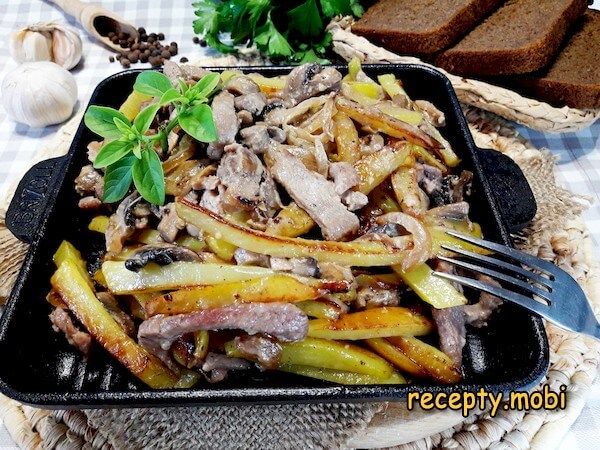
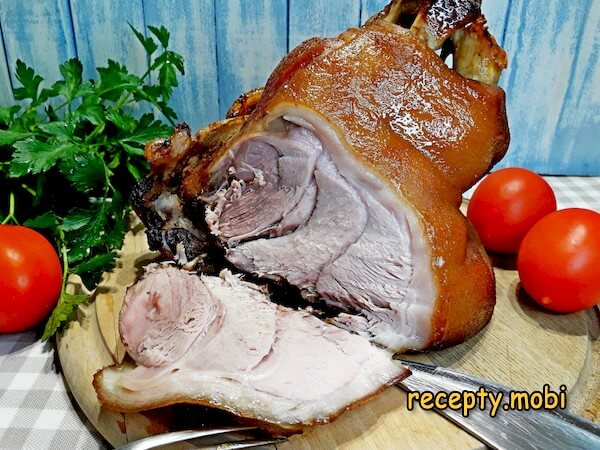
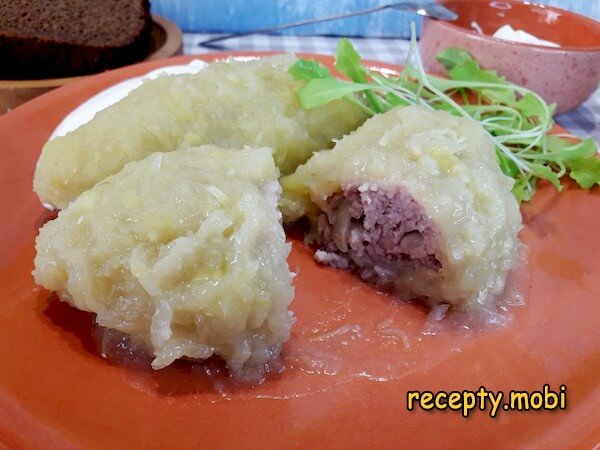
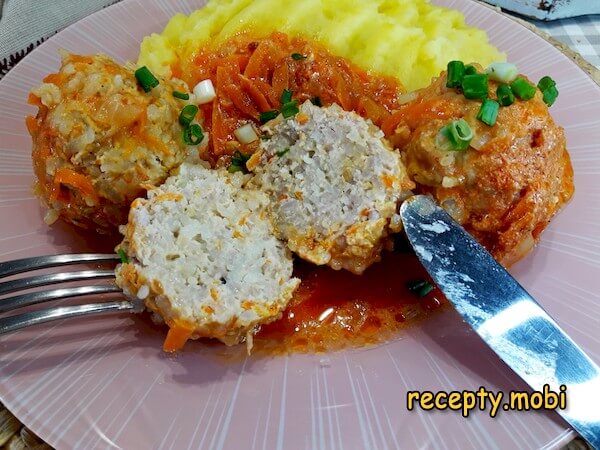
The meat of various animals differs in composition and requires different cooking approaches. For example, pork releases liquid during prolonged heat treatment and becomes dry, while lamb will be softer if simmered for a long time. For the dish above to be delicious, choose a favorite meat recipe from this section and follow its description.
Before cooking, rinse the meat with cold water, remove the membrane, and discard the tendons. Thaw frozen meat at room temperature to minimize juice loss.
Slice meat across the grains. For cutlets, make several incisions along the edges so that they don’t curl during frying.
Cuisines from many countries have recipes for their special meat dishes. In the Philippines, they prepare adobo with chicken or pork; in Austria, the national dish is “Wiener Schnitzel” made of thin slices of veal. It’s hard to find a family in Argentina that doesn’t make asado – grilled meat, typically cooked by men known as “asadores.” In the Caucasus, you'll be treated to lamb kebabs, and in Australia, a meat pie with pea soup will be served.
It’s impossible to list everything that can be made as a meat main course. This section contains various meat dish recipes to help homemakers.
To cook meat deliciously, pay attention to our tips. Even with the simplest cooking methods, the product can be ruined if certain details are not considered.
For this method, juicy small pieces of meat work best. Use a pan with a thick bottom.
Preheat the pan with fat thoroughly. If this is not done, the meat will actively release juice and absorb the fat when heated.
When placing the meat in the pan, it should be at room temperature.
Start frying thick pieces over high heat to create a crust that prevents juice from escaping. Then reduce the heat.
It’s advisable to marinate tough dry meat, especially from older animals, before frying.
For large pieces of meat, pour fat from the pan over the meat while frying.
Baking is one of the healthiest cooking methods for meat, alongside boiling and steaming.
Before loading the meat, preheat the oven to the required temperature.
Occasionally pour the meat being cooked with the juices that have dripped off or other liquids: broth or wine.
If you coat the meat with a small amount of vegetable oil beforehand, a crust will form, and moisture will be better retained.
For tough and dry meat, stewing is the best cooking method. Stew it at moderate temperatures in a closed heavy-bottomed pot on the stove, in the oven, or in a slow cooker. Add a little liquid to the bottom of the pot, and only then place the ingredients inside.
To achieve a dish with a crispy crust, lightly fry the meat in a pan beforehand.
Put the pot with meat directly on moderate heat, and after it begins to boil, reduce the heat to the minimum.
You can place the meat in a cold oven and then heat it. The temperature should not exceed 160°C, but it’s better if it is even lower.
When the dish is ready, leave it covered at room temperature for about 20 minutes. This is enough time for the meat to absorb some of the moisture it lost while stewing.
Boiling is one of the simplest methods. Salt and spices are added to water, brought to a boil, and the meat is submerged in boiling water. The only detail to note is that after boiling, cooking is done on low heat until ready.
For steaming, soft tender pieces of meat are suitable. Bring water to a boil, then reduce the heat. There’s no point in adding spices to the water, as the dense structure of the meat does not absorb steam and its aromas.
To ensure the product cooks more evenly, cover the holes of the steamer with parchment or grape leaves so that the steam does not act directly on the meat.

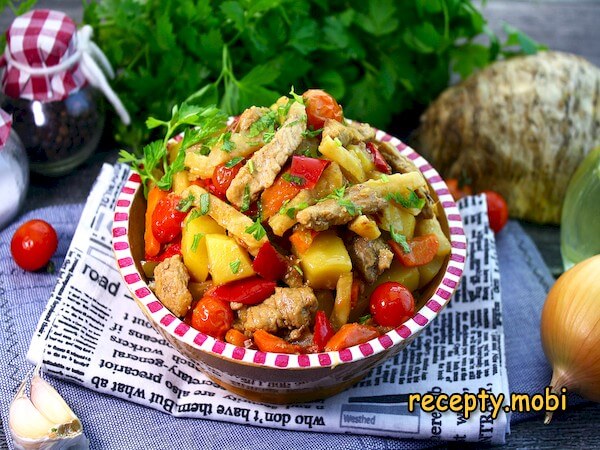
Hearty vegetable stew with pork for every day: tender pork, rich vegetables, a light freshness of ginger, and a herbal note of celery. This is a step-by-step recipe with photos: I show how to cook stew in a pan without excess fat and with a clear technology.
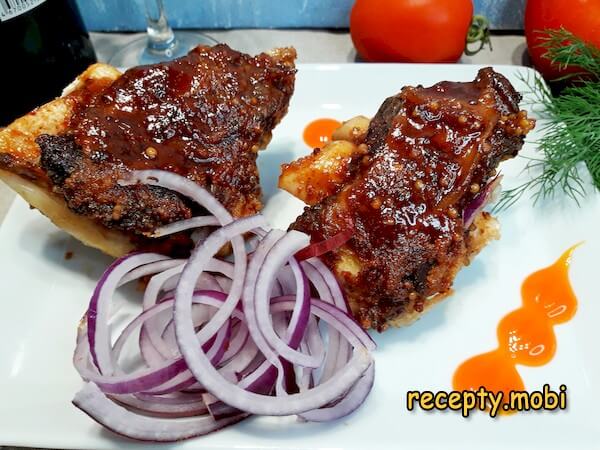
To cook beef ribs in the oven with a glossy sweet and sour crust and a spicy flavor, you first need to coat them with a mixture of aromatic spices.
Tartiflette is a magnificent dish from France that has won the hearts of gourmets around the world. At first glance, it may seem like an ordinary potato-meat casserole, but this is a deceptive impression. In fact, tartiflette is a true masterpiece that combines simplicity and sophistication of taste.
Read more: Tartiflette – a French dish that everyone will love
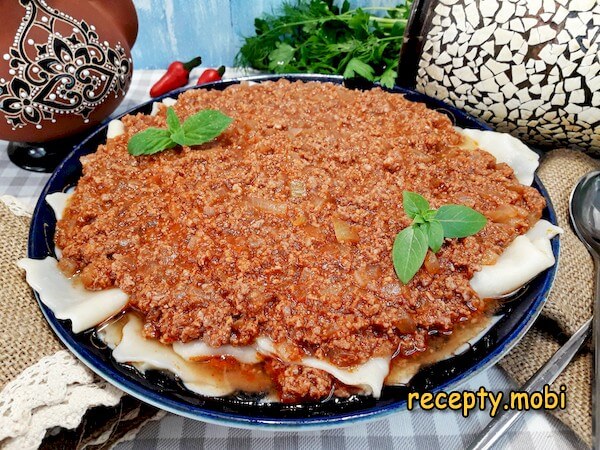
Incredibly delicious and filling Kumyk khinkal consists of thin boiled pieces of dough and meat with sauce. In the classic version of this dish, lamb or beef (veal) is needed.
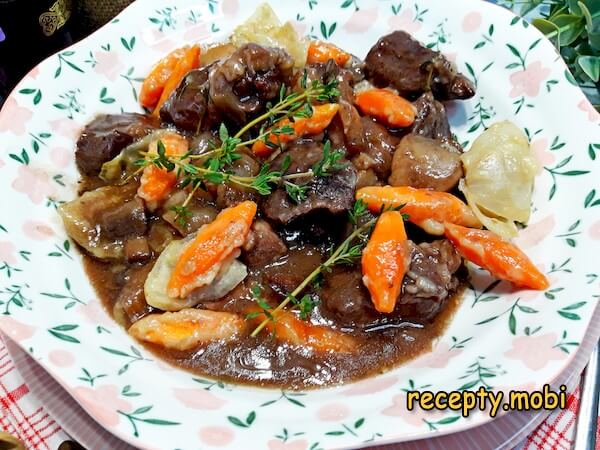
Such simple peasant food as beef bourguignon has gradually transformed in its homeland into a haute cuisine dish. The fact is that France has never experienced a shortage of wine. And with its help, any meat, even the oldest and toughest, becomes tender and soft.
Veal is a dietary product that has only recently been used in Russian cuisine compared to Western Europe, where the meat of young calves has been valued for several centuries and dishes made from it are very diverse. In Belgian cuisine, you will find recipes for main dishes with veal cooked in beer, while the famous Italian ossobuco is made with white wine. French chefs will first respond that one can prepare thin steaks and fried escalopes for a second course with veal.
Compared to beef, veal is more tender and not as dry. It contains significantly less fat than other types of meat, and even less than chicken.
Veal is rich in iron, which improves blood circulation and blood composition, and also contains extractive substances that help produce digestive juices. It is the only type of meat that is allowed to be consumed with atherosclerosis. Veal will help restore energy balance after sports training and physical work.
This section publishes step-by-step recipes for main dishes, as deliciously preparing veal can only be done by considering all the nuances of cooking.
Any method of heat treatment can be applied to veal. The best method is considered to be roasting the fillet with preliminary marinating. For frying and stewing, brisket, shoulder, and hind leg parts of the carcass are well-suited.
The taste qualities of veal are complemented by sweet and sour sauces and ginger. Veal will pair well with dried apricots, cardamom, raisins, bell peppers, prunes, and if you want to surprise your guests with something special, serve the meat with chocolate or strawberry sauce. All citrus fruits pair well with veal.
As a side dish, boiled or baked potatoes, mashed potatoes, cabbage, carrots, and rice can be served.
Once, poultry meat was considered a delicacy, and game was served at noble tables on special occasions. Now, preparing poultry dishes is normal for everyday menus. There are many recipes for second courses made from duck, chicken, turkey, goose, and grouse.
Poultry meat has little intramuscular connective tissue, and there is the least in the breast. Therefore, it is softer and more tender than meat from animals, especially in broiler chicken.
Poultry dishes pair well with any side dish, and they can be prepared in various ways: boiled, fried, stewed, baked, including in foil.
This section contains recipes for main courses with beef. In cooking, beef is widely used and is part of many traditional dishes. It has high nutritional value and is an essential source of amino acids and protein, which is easily digestible. The low fat content of beef is a significant advantage over pork.
Beef cuts can be classified by breed and age of the cattle (immature, adult, or old animals), but more often the grade of the meat is determined by the part of the carcass:
Marbled beef is particularly valued.
The taste quality of any cut also depends on the conditions in which the animals are kept, their feed, and the method of meat storage.
Beef is well-suited for heat treatment, so many dishes can be made with beef as a main course. This can include stews, fried, boiled, or roasted meat, or grilled preparations. Ground beef is used to make dumplings, cutlets, sausages, meatballs, and many other dishes. Ribeye and tenderloin are perfect for medallions, chops, and kebabs.
Check out our recipes for quick and delicious ways to prepare beef.
Spices to consider when cooking beef include pepper, marjoram, bay leaf, dill, and thyme. Serve a mustard sauce or horseradish with the dish at the table.
Despite the fact that in some countries and religious denominations the consumption of pork is prohibited, pork is the most consumed type of meat. Various recipes for main dishes with pork exist in the collections of home cooks and restaurant chefs.
After lamb, pork is considered the most easily digestible meat, and pork fat melts more easily and does not solidify as much as beef and lamb. Another advantage of pork compared to beef and lamb is the content of B vitamins.
All parts of the carcass are used for food, including the head and tail, but the best cuts are considered to be pork belly, loin, ham, and neck. It is less common to serve a whole roasted pig as a separate dish.
Main dishes with pork pair well with vegetables, rice, and buckwheat. The meat can be seasoned with any pepper, marjoram, garlic, rosemary, thyme, nutmeg, and chopped herbs. Dressings such as cheese, mustard, and any sweet and sour sauces, horseradish, and honey will add a spicy flavor.
It is very difficult to list everything that can be prepared as a main dish from pork. In this section, we tried to provide various recipes from simple to complex and step-by-step with photos on how to quickly and deliciously prepare pork. It is important to note that for safe consumption, pork should be cooked thoroughly. While different degrees of doneness can be considered for lamb and beef, pork should be cooked to full readiness.
Page 1 of 8