avg —
Plum Jam without Pits

Instructions
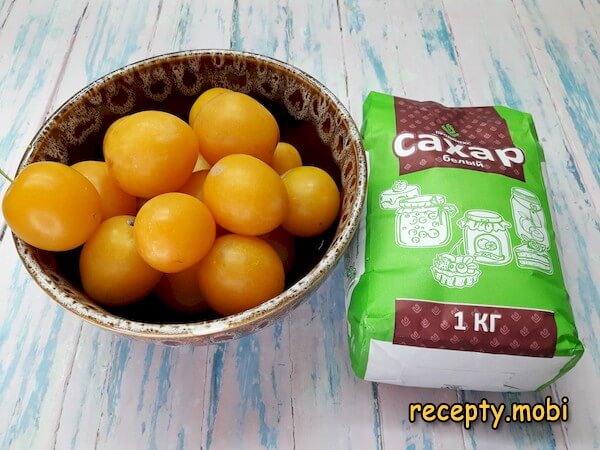
I gather everything I need to make the pitted alycha jam.
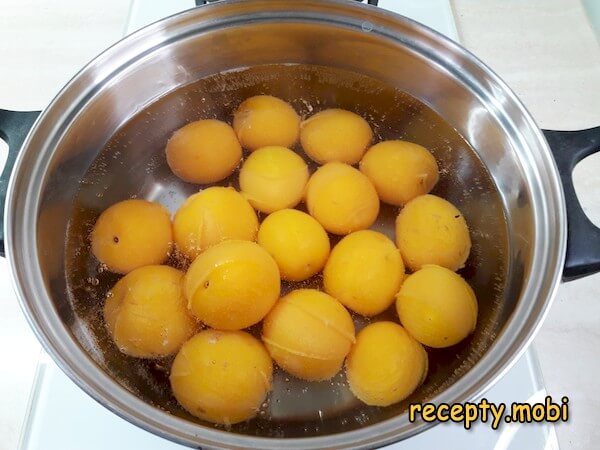
Lower the plums into boiling water in small batches rather than all at once, and hold them there for about 5 minutes.
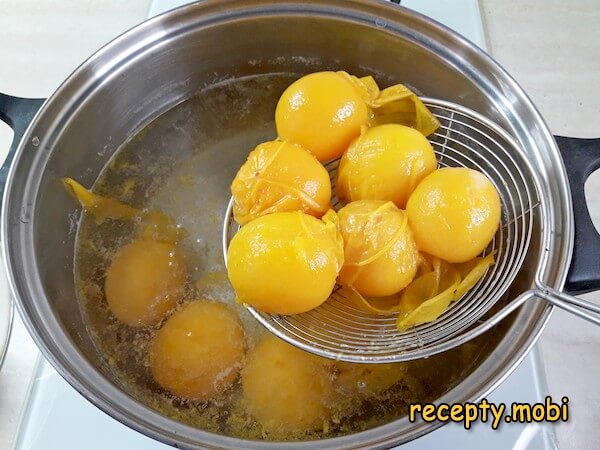
As the fruits begin to float, lift them out with a slotted spoon and set them aside in a separate container. By now the skins start to crack and roll away.
Once the plums have cooled enough to handle comfortably, squeeze out the pits and slip off the skins. The job goes very quickly and easily. The fruit loses its neat shape, but that does not affect the finished result. If the pulp releases a lot of juice, you can pour some off and so control the thickness of the jam.
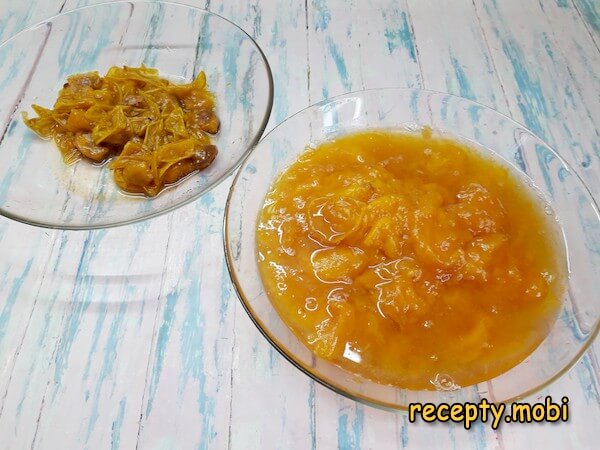
Cover the prepared fruit with the sugar.
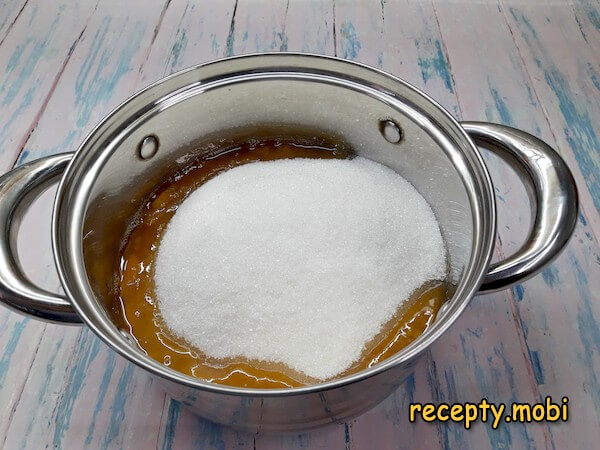
Stir everything together.
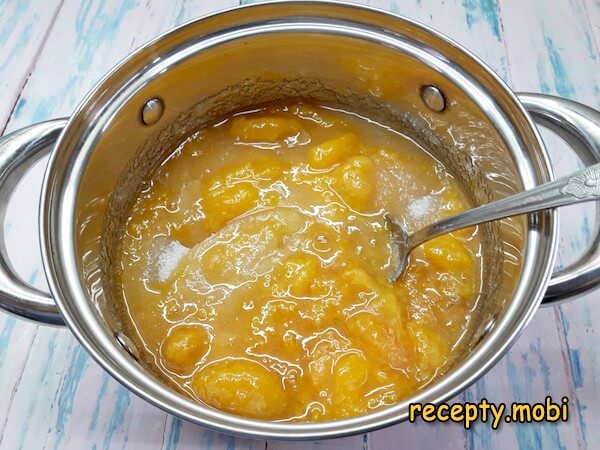
Set the pan over moderate heat and, from the moment it comes to a boil, simmer for 5 minutes. Foam will gradually gather – skim it off.
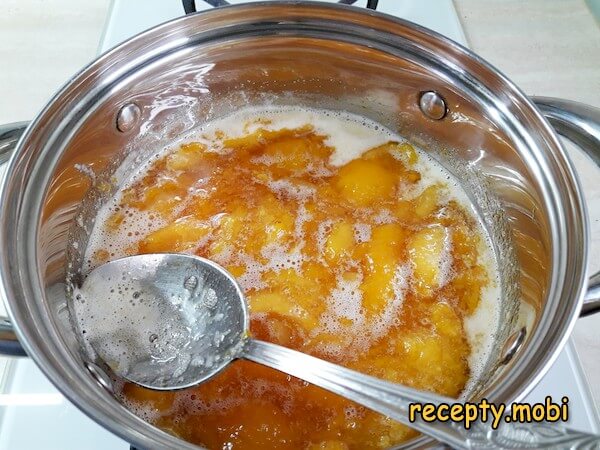
Turn off the heat and leave the jam for 8 hours to soak up the sweet syrup. Sterilize the glass jars together with their metal lids.
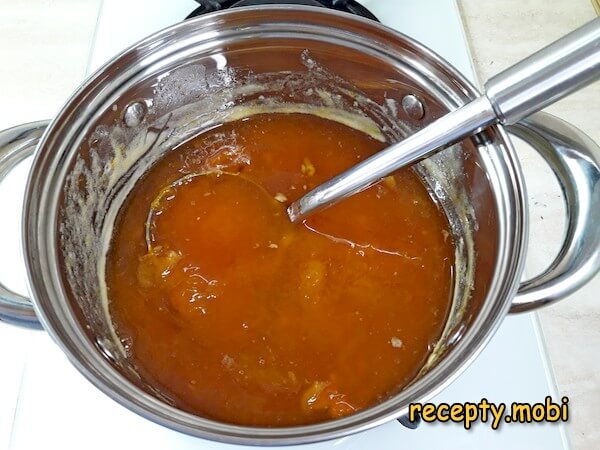
Boil the plums again, this time for 25 minutes. Be sure to skim off the foam that forms.
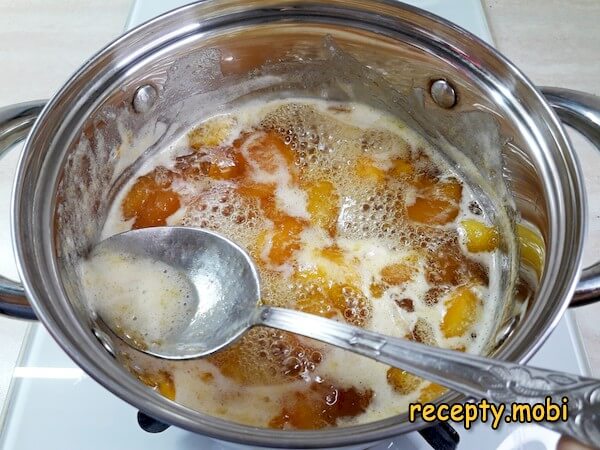
Ladle the boiling-hot plum jam without pits into the jars.
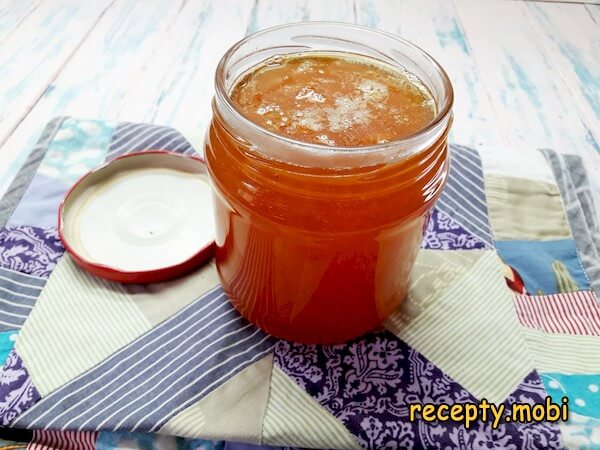
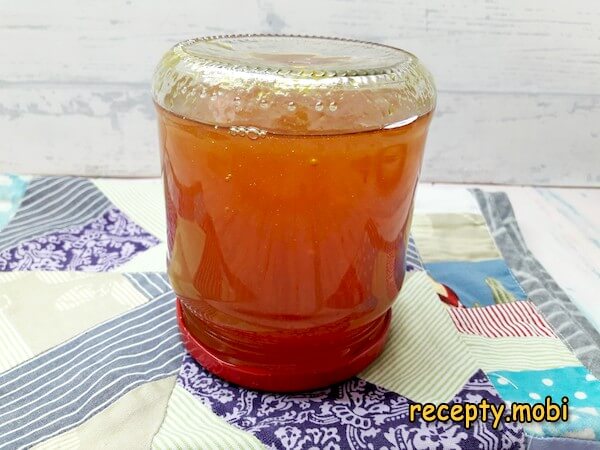
After sealing, turn the jar upside down so the lid gets some extra heat treatment. After 20 minutes, return the jar to its upright position; there is no need to wrap it in a towel.This amber, sunny plum jam without pits has a distinctive smell and taste that you could not mistake for anything else. Even a plain bun is transformed by such a jam, and for a glossy crust on pies the syrupy part of the jam, loosened with a little water, will come in handy.


Tips
- 1
Blanching in boiling water is the "secret" to easy pit removal. After 5 minutes the skin cracks and the pits come out by hand.
- 2
The 8-hour steep is the "secret" to the marmalade texture. In that time the plums soak up the syrup and become firmer.
- 3
Skimming the foam keeps the colour clean. Foam carrying impurities clouds the jam, so remove it as soon as it appears.
- 4
The 1:1 ratio is the "secret" to good keeping. Use sugar equal to the weight of the pitted plums, and the jam keeps for up to a year. The same principle works in other kinds of plum and alycha jam.
FAQ
Which plums should I choose? +
Ideal are yellow ripe varieties (Kubanskaya Kometa, Shatyor, Gek) – brighter in colour and more aromatic. Alternatives: red alycha (Naydyona, Puteshestvennitsa) gives a ruby jam, black (Pramen) a dark amber one. Fresh fruit is firm and glossy, with no dents or spots. A size of 2.5–3 cm is ideal (meaty flesh). Avoid overripe fruit (it falls apart) and underripe fruit (too sour). Frozen plums are a budget option – thaw them and drain the juice. For a premium result, choose farm-grown southern fruit (the Krasnodar region). The seed brands "Gavrish" and "Poisk" are reliable. The pits come out easily after blanching.
What can replace alycha? +
Alternatives: yellow plum (600 g – softer and sweeter), red "Vengerka" plum (600 g – darker), mirabelle (600 g – the French version), sour green plum (600 g – unusual). Do not use dried prunes (they change the flavour) or canned plums (they throw off the sweetness). Fresh alycha is the premium choice. Frozen will do – thaw it and drain the juice. For a classic version, use only yellow alycha. For a premium one, mix yellow and red for an interesting colour. For a spicier version, add a pinch of ground ginger.
How long does the jam keep? +
In sterile sealed jars at room temperature, up to 1 year. In a cool cellar, up to 1.5 years. Once opened, in the fridge, 3–4 weeks. Mark the canning date on the jars. If mould or fermentation appears, do not open the jar – throw it out. Do not store it in the sun, or the colour will fade. It is best used within the first 8–10 months. Can it in small 0.5 L jars – they are easier to open. If it crystallizes, warm it in a water bath for 10 minutes. Pitted alycha keeps longer than fruit with the pits left in.
What do you serve the jam with? +
A classic with tea: with toast, blini, oladyi (thick pancakes) and syrniki. With cottage cheese or a cottage-cheese bake. With vanilla ice cream or yogurt. As a filling for shortcrust pies. As a layer in a sponge cake. With cheeses (brie, camembert, goat's) for a French-style serving. With oat or semolina porridge. With hot waffles and croissants. On open sandwiches with butter and cottage cheese. For a pie glaze, thin the syrupy part with water. With a cup of green or black tea. With coffee and milk. A versatile, sunny jam for cosy tea times.
- Comment
or post as a guest
Be the first to comment.