avg —
Fluffy Kefir Pancakes with Baking Soda and Eggs

Instructions
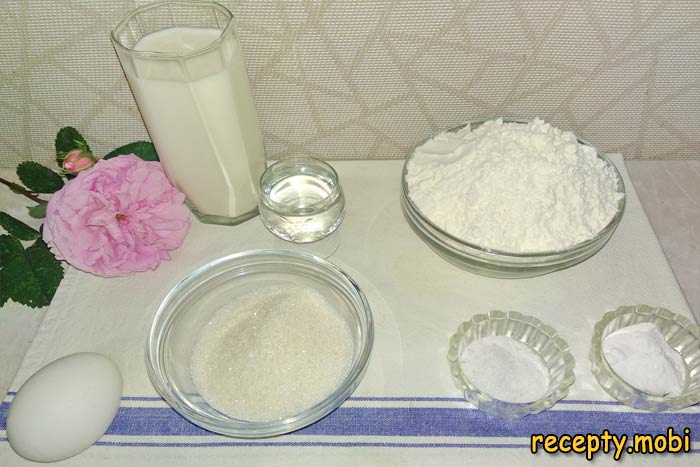
Prepare all the ingredients on your work surface. Sift the flour (250 g) through a sieve – this removes any small bits and aerates it, which makes the pancakes lighter.
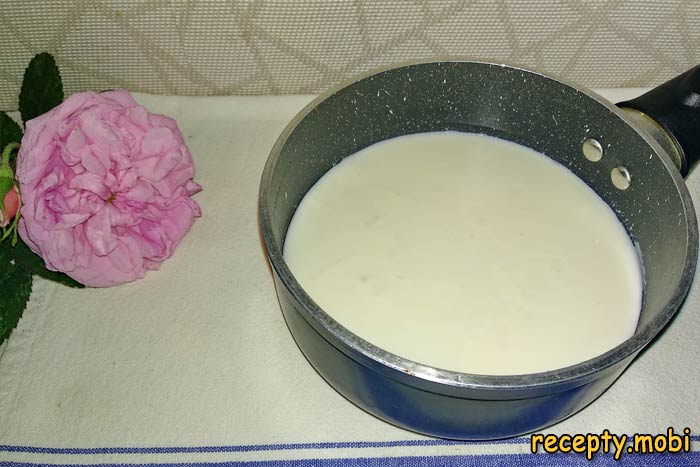
Pour the kefir (200 ml) and water (40 ml) into a small saucepan with a thick base and stir with a whisk. The water thins the thick kefir and adjusts the batter consistency – without it the batter turns out too dense.
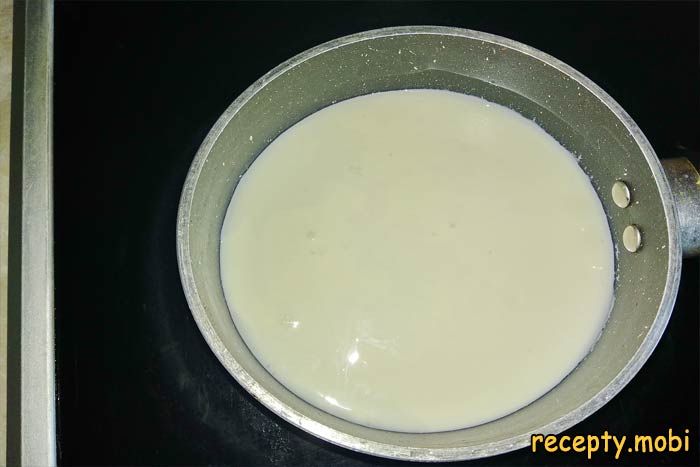
Place the saucepan over the lowest heat and warm the kefir until it is just warm, about 30–35°C – it should feel body-warm to the touch and not burn your finger. It is critical not to overheat it above 40°C, or the kefir will curdle into lumps and the pancakes will not work. This is secret number one: warm kefir reacts more actively with the soda.
Meanwhile, crack the egg (1 pc) into a large bowl and add the sugar (3 tbsp) and salt (½ tsp). You can take a little more sugar for sweeter pancakes or a little less for savoury ones to go with soup. The salt is essential – it rounds out and enhances the flavour; without it the pancakes taste flat.
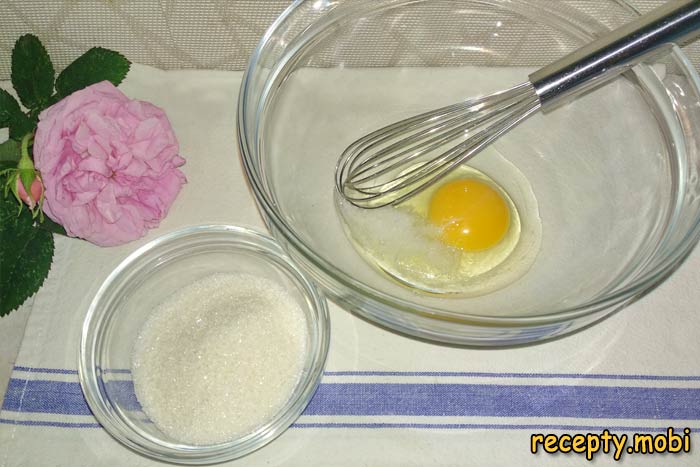
Whisk the egg with the sugar and salt until smooth, about 1–2 minutes – there is no need for a fluffy foam, just dissolve the sugar crystals. An electric mixer is not required; an ordinary whisk will do the job in a couple of minutes.
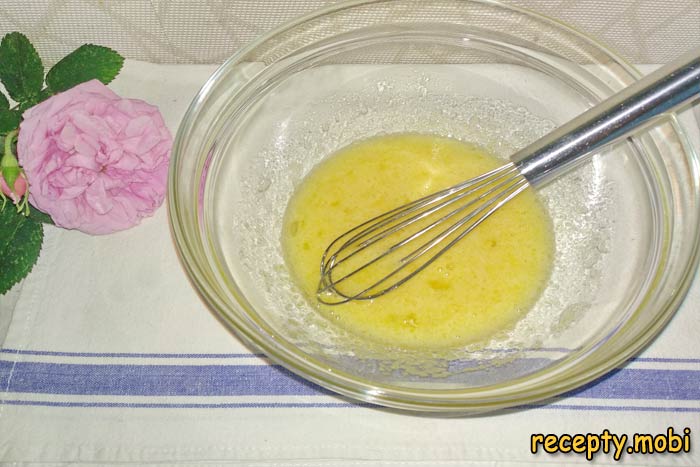
Take the warmed kefir off the heat and pour it into the egg mixture in a thin stream, whisking constantly. The warm kefir and egg mixture form a light foam on the surface – the right base for the pancakes. Whisk thoroughly for about a minute until completely smooth.
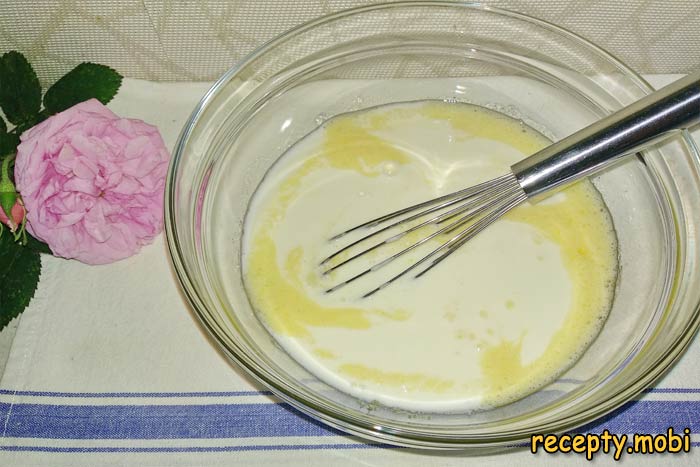
Whisk the mixture until it is smooth and a light foam forms on top. This takes only about a minute.
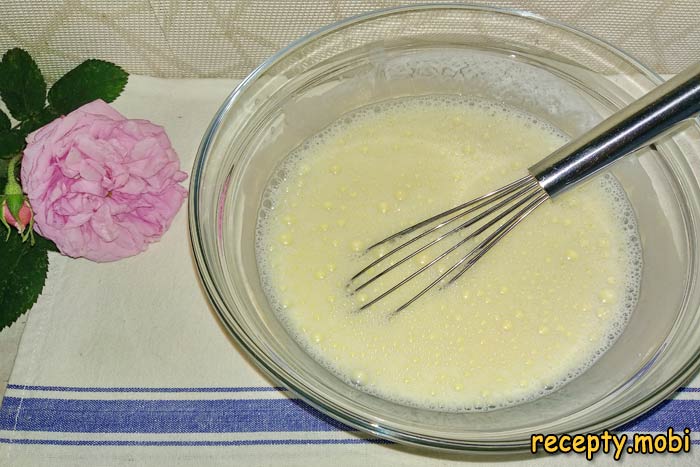
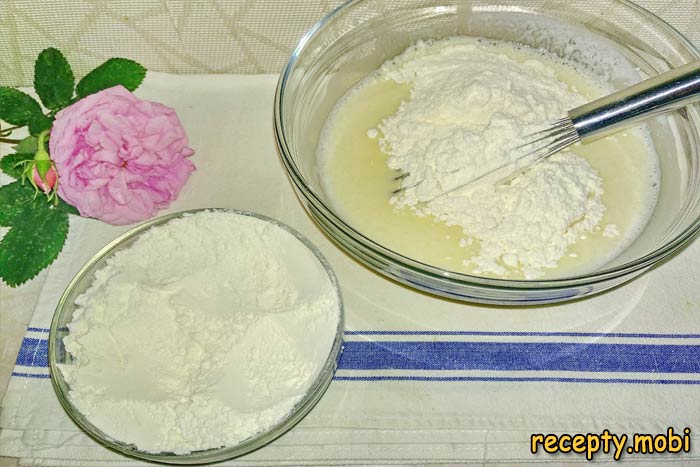
Add the sifted flour in 2–3 stages, mixing it in thoroughly with the whisk each time. Adding the flour gradually helps you avoid lumps – tipping it all in at once makes the dry and wet ingredients clump together.
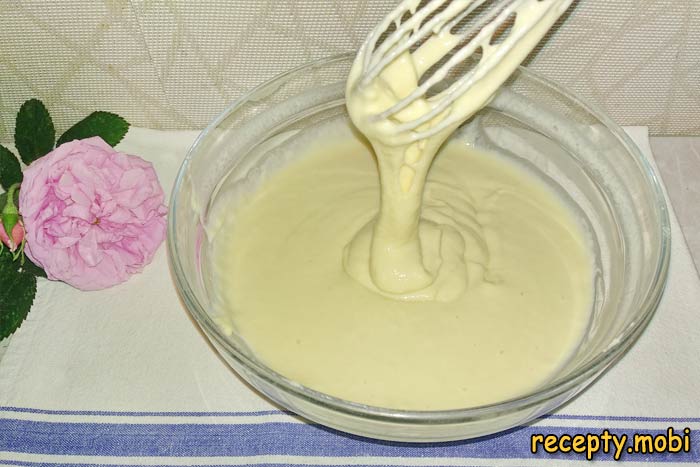
Break up any lumps with the whisk until the batter is completely smooth. It should be thick enough – this is secret number two! The right consistency: the batter slides off the whisk in a ribbon after 2–3 seconds rather than pouring in a stream. If it is too thin, add more flour 1 tbsp at a time and stir again. A thin batter gives you thin little crêpes, not fluffy pancakes.
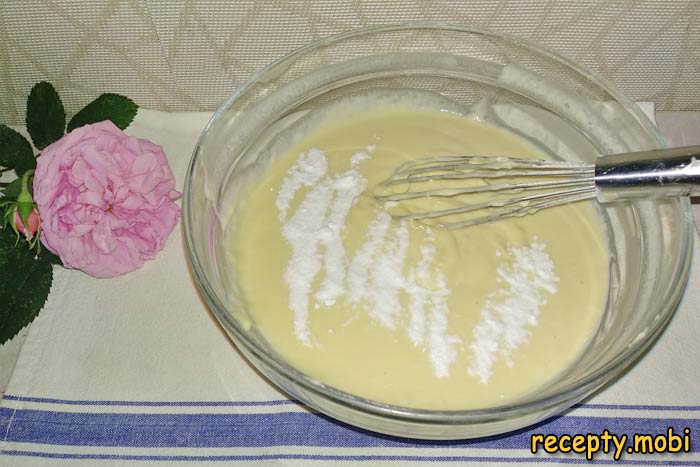
Add the baking soda (½ tsp) as the very LAST ingredient – this is secret number three. Add it at exactly this stage, not earlier. If you add it sooner with the other dry ingredients, the reaction starts too early and the pancakes will deflate by the time you fry them. Stir it in gently with the whisk for about 30 seconds until fully dissolved.
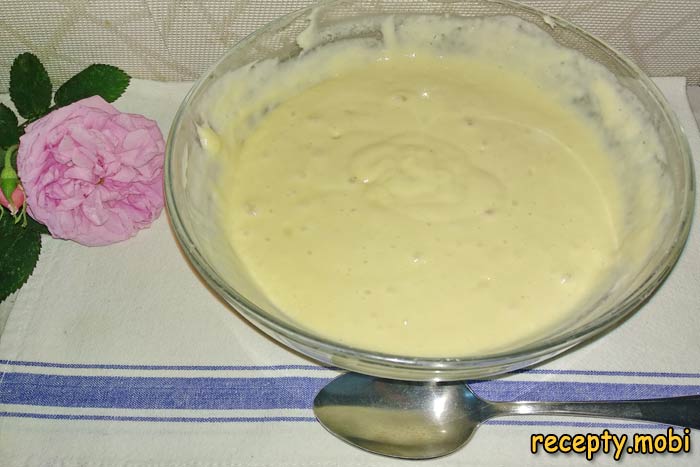
Within a minute the batter will start to work and bubble on the surface – the soda reacting with the acidity of the kefir releases carbon dioxide, which gives the finished pancakes their fluffiness. Do not wait longer than about 5 minutes; move straight on to frying so that as much gas as possible stays in the batter.
Heat a frying pan (24–26 cm with a non-stick coating) over medium heat with vegetable oil (2 tbsp). Adjust the heat so that the pancakes cook evenly in 2–3 minutes per side without burning. Too high a heat and they will burn on the outside while staying raw inside. Spoon the batter onto the pan in small mounds about 8–9 cm across, spaced 2–3 cm apart.
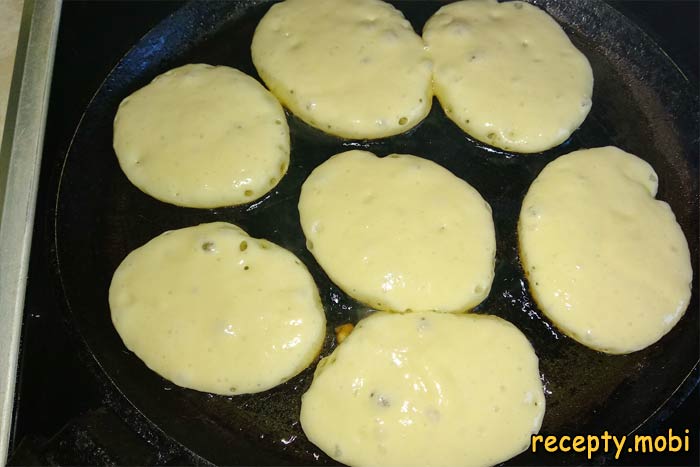
Fry the pancakes for 2–3 minutes until golden underneath, then turn them with a silicone spatula and fry the other side for about 2 minutes more until done. The key here is the third rule: do not stir the batter remaining in the bowl. Stirring lets the carbon dioxide escape and the pancakes turn out flat. Scoop only from the edge of the bowl, leaving the centre untouched.
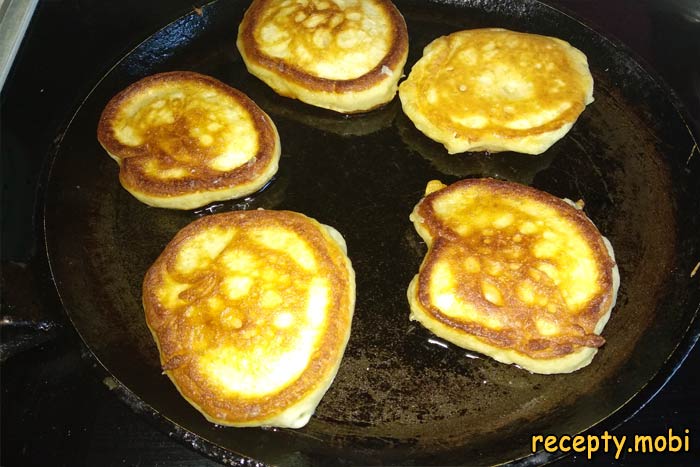
Transfer the finished pancakes to a plate lined with paper towel – it soaks up the excess oil so the pancakes are not greasy.
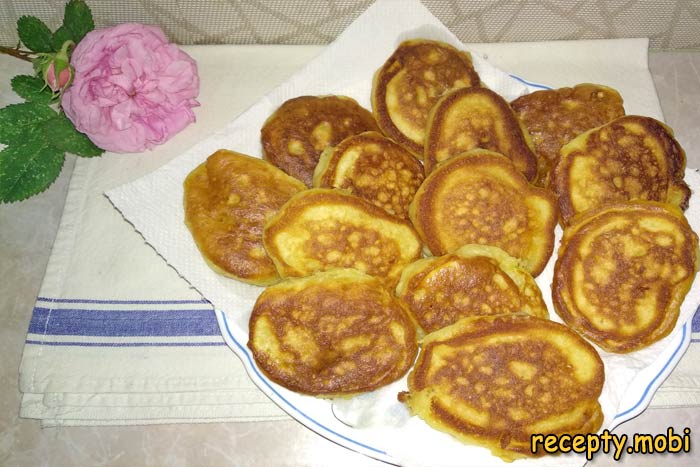
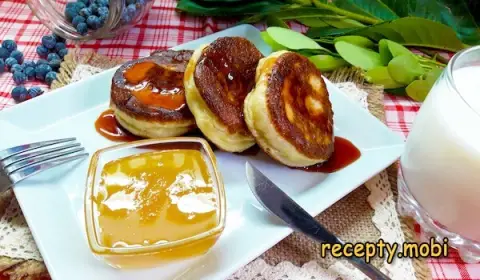
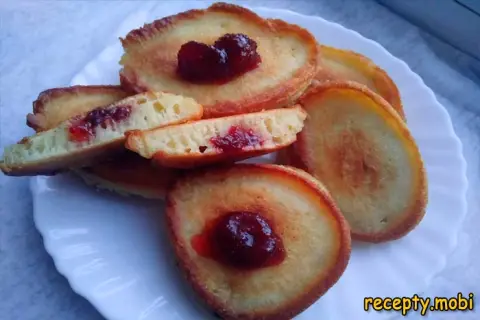
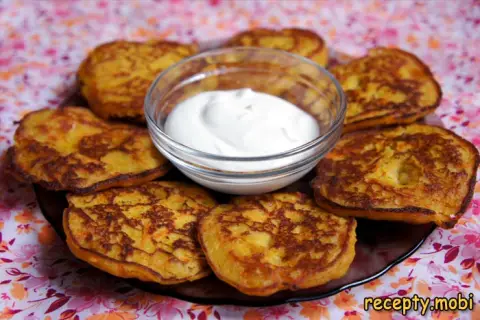
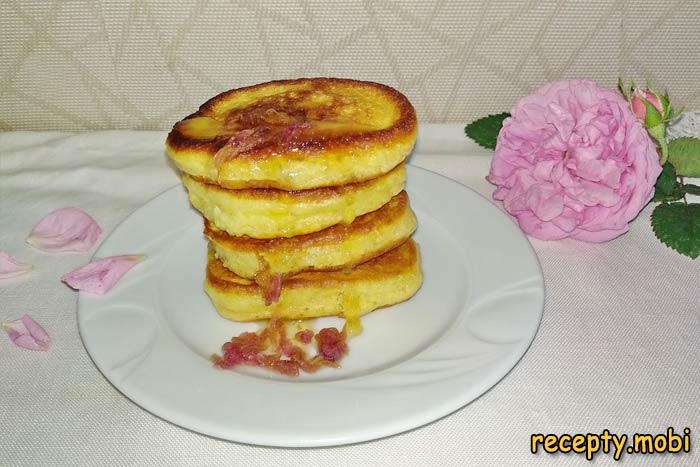
The fluffy kefir pancakes with baking soda and eggs are ready! Serve them hot with 20% sour cream and any jam (strawberry, raspberry or apricot), honey, chocolate syrup, maple syrup or condensed milk. For a savoury version, serve them with red caviar, lightly salted salmon or sour cream with herbs.


Tips
- 1
Warm the kefir to 30–35°C – warm kefir reacts more actively with the soda. It is critical not to overheat it above 40°C, otherwise it will curdle.
- 2
The batter should slide off the whisk in a ribbon, not pour in a stream. A thin batter gives thin little crêpes, not fluffy pancakes.
- 3
Add the baking soda LAST – not earlier! Otherwise the reaction starts too soon and the pancakes deflate.
- 4
Do not stir the batter left in the bowl – stirring lets the carbon dioxide escape. Scoop only from the edge of the bowl.
FAQ
What can I use instead of kefir? +
Any soured-milk product will work: soured milk (the classic swap with the same flavour), 10–15% sour cream (richer pancakes), ayran (a lighter option), buttermilk (if you can find it), plain natural yoghurt with no additives (more curd-like pancakes) or whey (a lighter, dietary version). For a dairy-free version, use soy or almond milk with 1 tbsp of lemon juice (to mimic kefir). The main condition is that the product must be acidic so it reacts with the soda. Each substitute gives the pancakes its own character.
Can I replace the soda with baking powder? +
Yes, but the proportion is different: use 1 tsp of baking powder instead of ½ tsp of soda (baking powder is about half as strong). With baking powder the pancakes rise a little less actively but still come out fluffy. The advantage of baking powder is that it does not leave a soda aftertaste if you misjudge the amount; the drawback is that it produces less gas, so the pancakes are slightly less airy. You can also use a combination of ½ tsp soda and ½ tsp baking powder for maximum fluffiness and as insurance against a soda taste. Always let the soda react with the acidity of the kefir, not with vinegar.
How long do the pancakes keep? +
Cooked pancakes keep in the fridge for up to 2 days in a tightly sealed container – any longer and they lose their fluffiness and go stale. On the second day the flavour barely changes, but the texture becomes denser. Before serving, reheat them in the microwave for 15–20 seconds under a cover (this creates steam, so the pancakes stay soft) or in a dry frying pan under a lid for 1–2 minutes per side. You can also freeze them in portions for up to 1 month in airtight bags – reheat them in the microwave or oven before eating. They make a handy ready-made base for a quick breakfast.
Why do the pancakes turn out flat and rubbery? +
The main reasons are: 1) the kefir was cold (the soda was not activated); 2) the kefir was overheated (and curdled into lumps); 3) the batter was too thin (not enough flour); 4) the soda was added at the start with the dry ingredients (the reaction began too early); 5) the batter was stirred after the first batch (the carbon dioxide escaped); 6) the heat was too high (burnt outside, raw inside); 7) the soda was old and past its date (and no longer works). For a guaranteed result, follow all four secrets: warm kefir, a thick batter, soda added last, and no stirring of what is left in the bowl.
- Comment
or post as a guest
Be the first to comment.