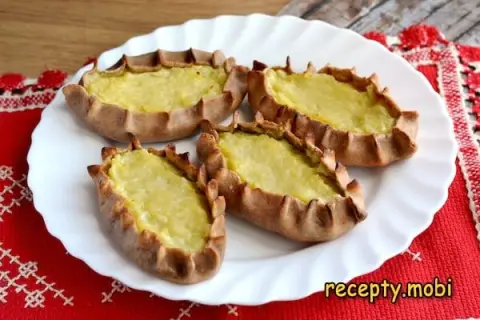
avg 5.0
Ossetian Pie Recipe with Cheese and Potatoes

Instructions
Measure the dough ingredients. Warm the milk and water until lukewarm, about 36-38°C/97-100°F, not hot. Reserve some water: flour absorption varies, and you may not need all 200 ml. Cold liquid slows yeast activity rather than killing the yeast.
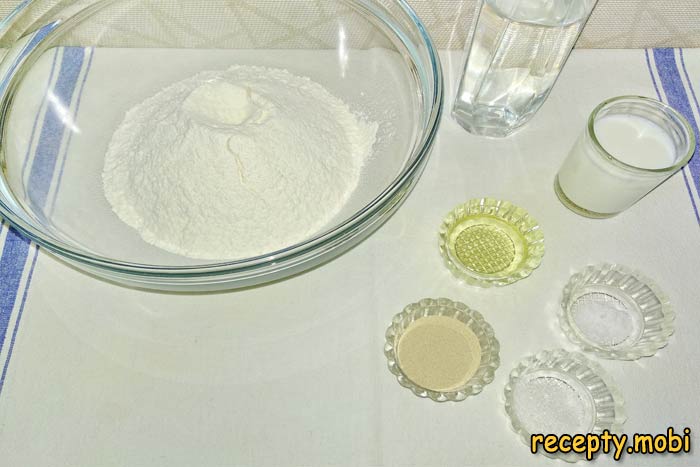
Mix the flour, instant dry yeast, sugar and a pinch of salt in a large bowl. If your yeast packet calls for activation first, follow its instructions using part of the measured recipe liquid, not extra liquid.
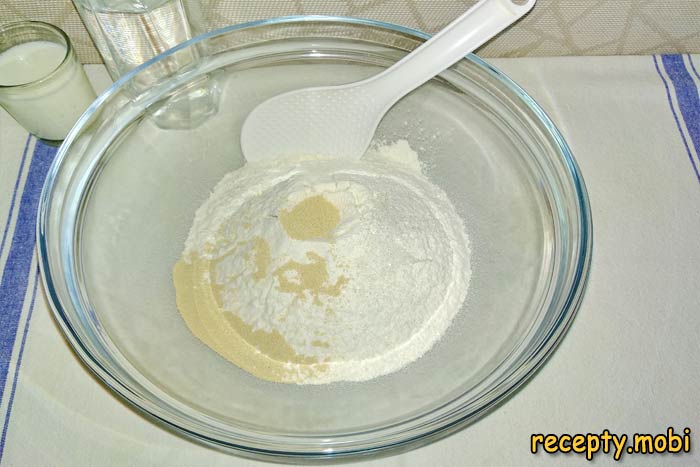
Make a well in the flour. Add the 70 ml milk and start with 100-150 ml of the measured water. Mix with a spoon until the flour is moistened, then add more water a little at a time only if the mixture is too firm.
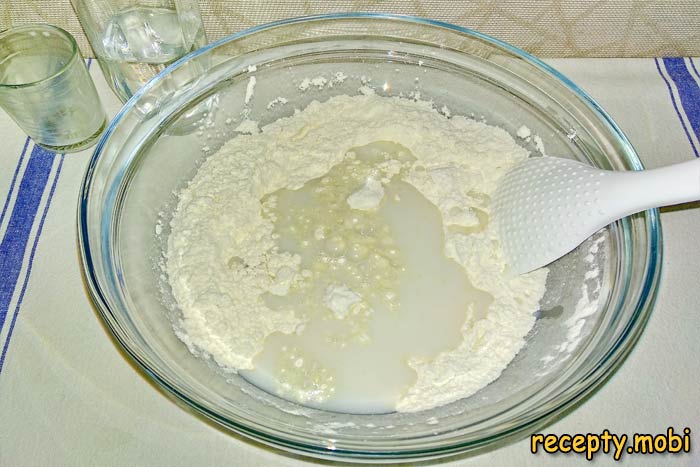
Mix in the vegetable oil. Aim for very soft, sticky dough that can be gathered together, not a pourable batter. Hold back the remaining water once you have this consistency. Do not add it simply to empty the measuring jug.
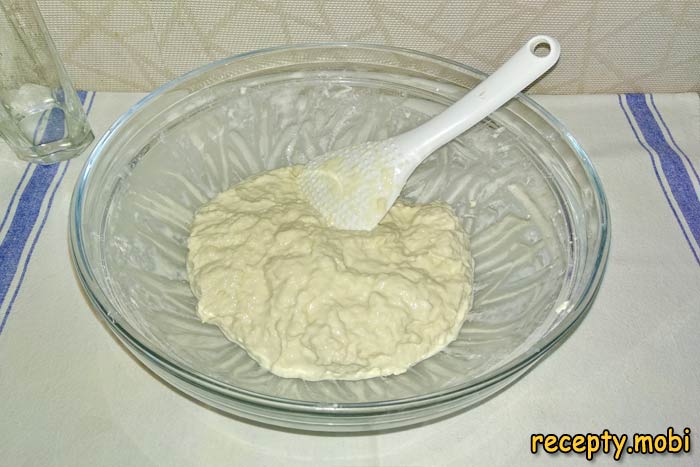
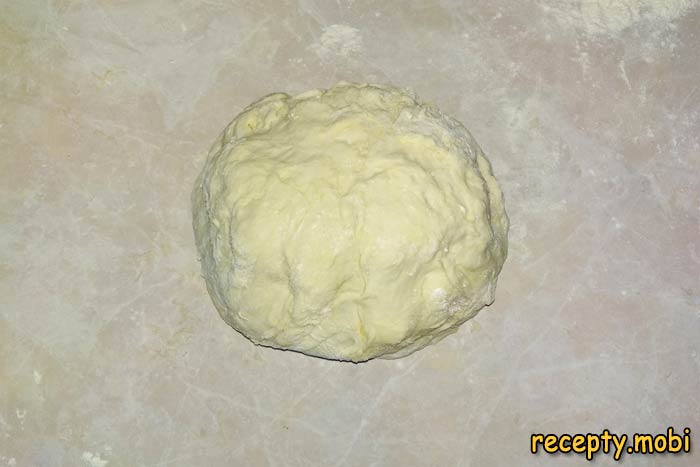
Lightly oil your hands and work surface. Knead the dough for 7-10 minutes, folding and stretching it until it becomes more elastic. It can remain tacky. Avoid adding large amounts of flour to make it dry, as this will make the finished crust thicker and firmer.
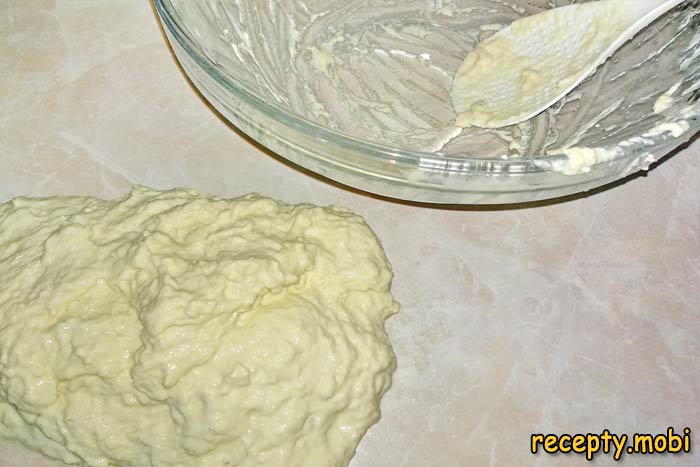
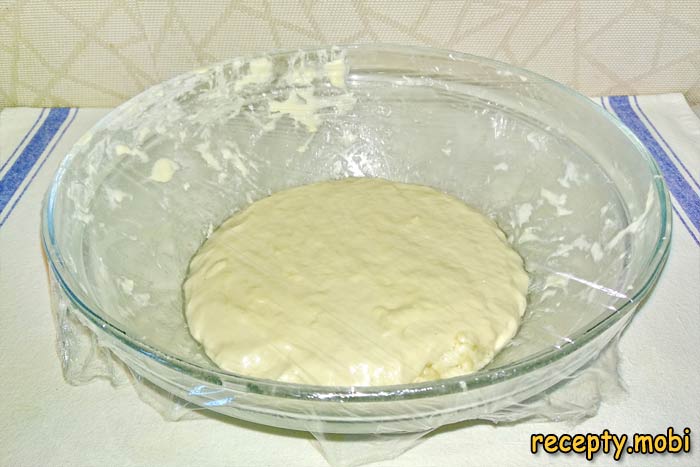
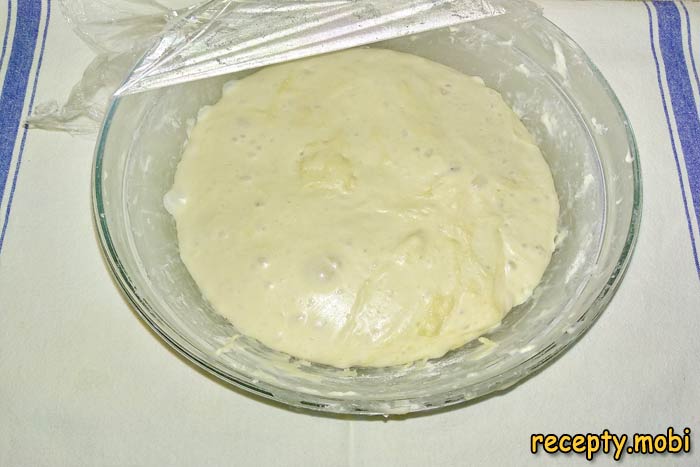
Place the dough in a lightly oiled bowl, cover and leave in a warm, draught-free spot for about 1 hour. It should become visibly puffy. A switched-off oven is suitable if it is not hot. Never run an empty microwave to warm it for dough.
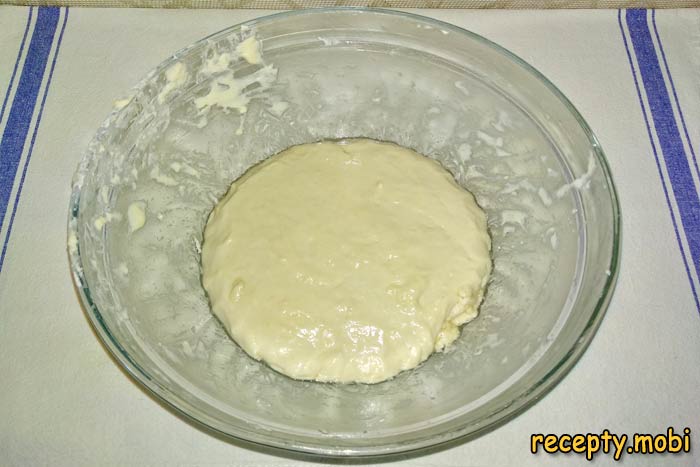
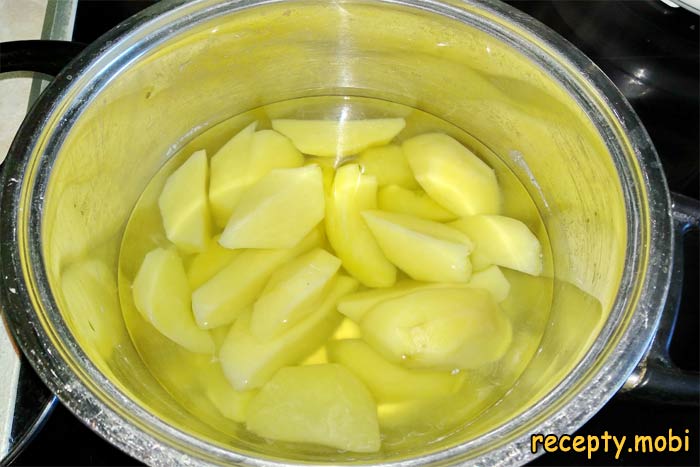
After about 30-40 minutes, gently press the dough down, cover and let it finish rising. Meanwhile, peel and cut the potatoes into evenly sized chunks. Boil in lightly salted water for about 15-20 minutes, until easily pierced with a fork.
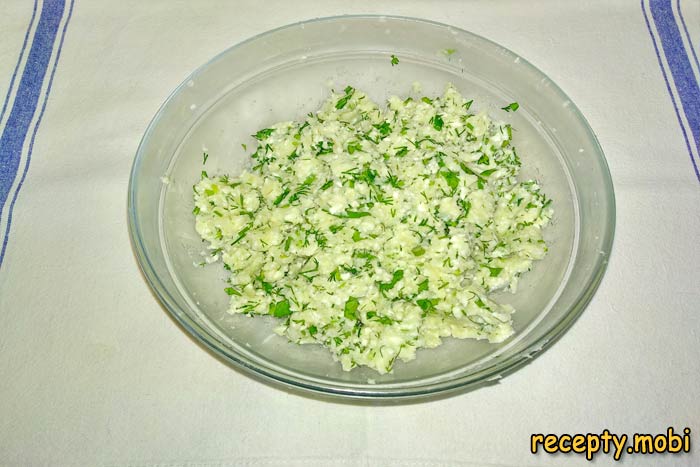
Drain the potatoes thoroughly, let excess steam escape and mash without adding extra milk or water. Let the mash cool until just warm. Finely chop the washed, dried herbs and coarsely grate or crumble the cheese, as shown in the photos.
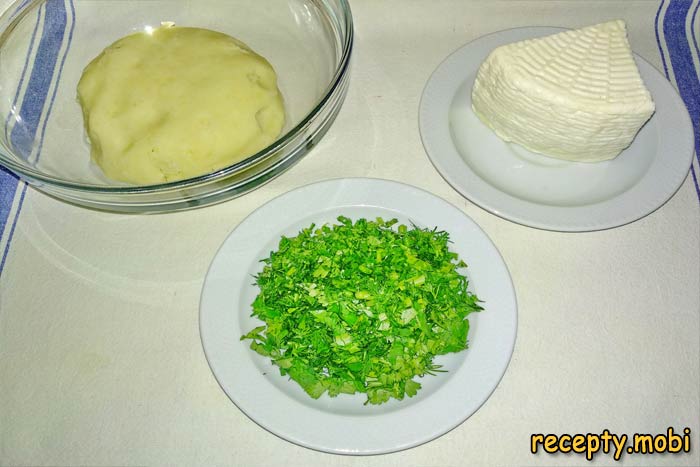
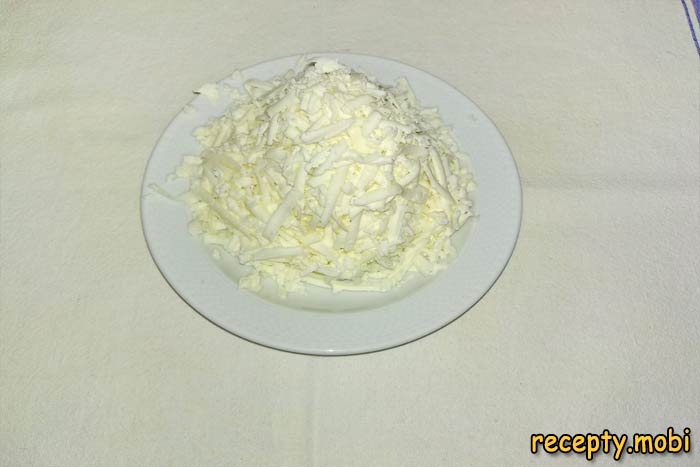
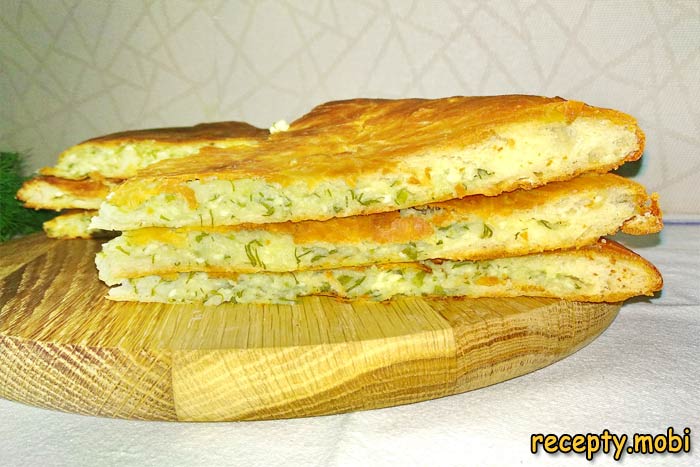
Combine the mashed potatoes, cheese and herbs. Taste before adding salt, since cheeses differ in saltiness. The filling should hold together when gathered into a ball. Use the prepared filling for this pie; there is no need to force an exact 400 g dough-to-filling ratio.
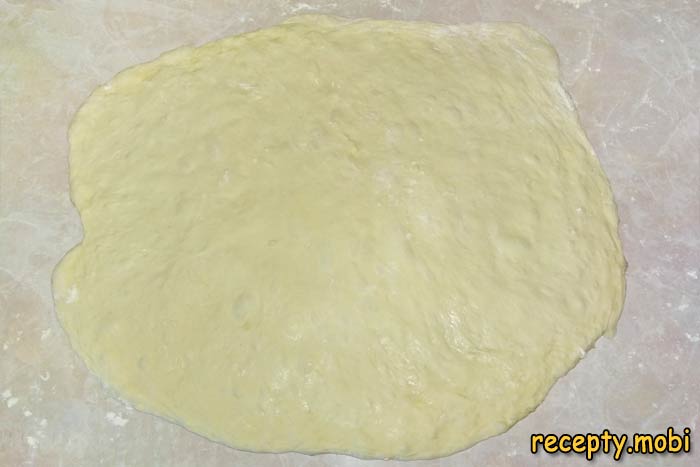
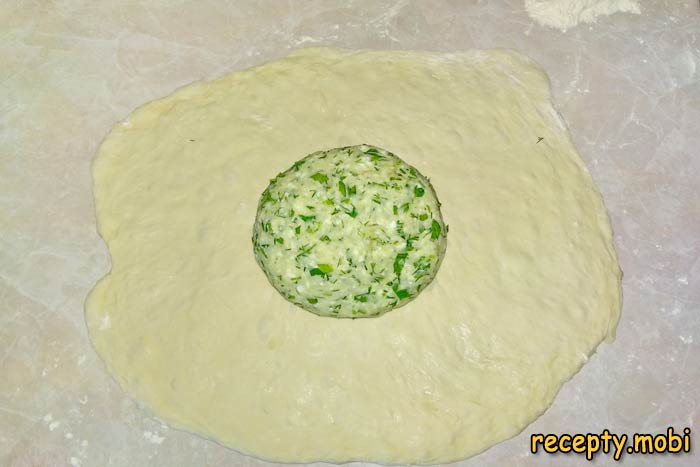
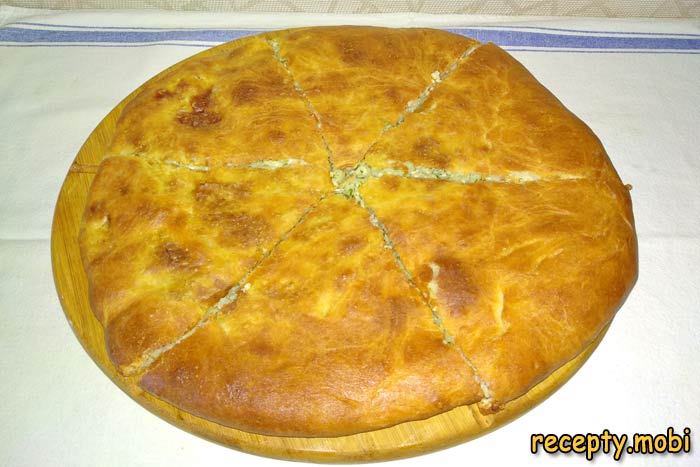
Place the risen dough on a lightly oiled surface and stretch into a round, keeping the middle a little thicker than the edges. Put the filling in the centre, gather the edges over it and pinch them closed. Transfer carefully to baking parchment and flatten gently with your palms into a broad, even round that fits your tray. Stop if the dough is becoming too thin. Make a small opening in the centre for steam.
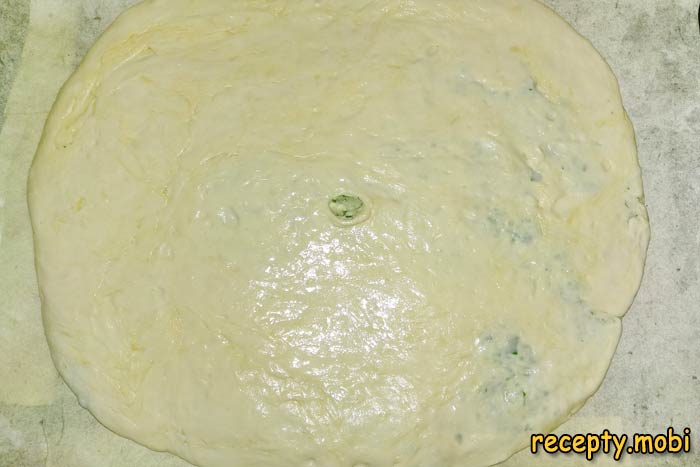
Bake in a fully preheated conventional oven at 220°C/425°F, above the middle shelf, for approximately 15-20 minutes. Check that the top and underside are golden and the dough around the opening is baked through; a thicker pie may need longer. Transfer to a board and brush the hot crust with the 30 g butter.
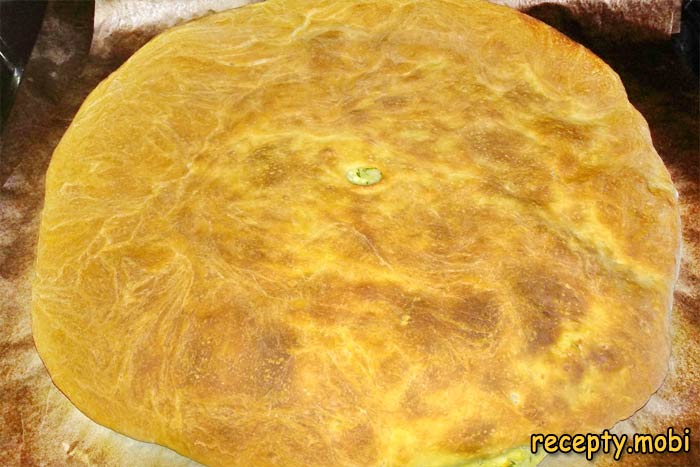
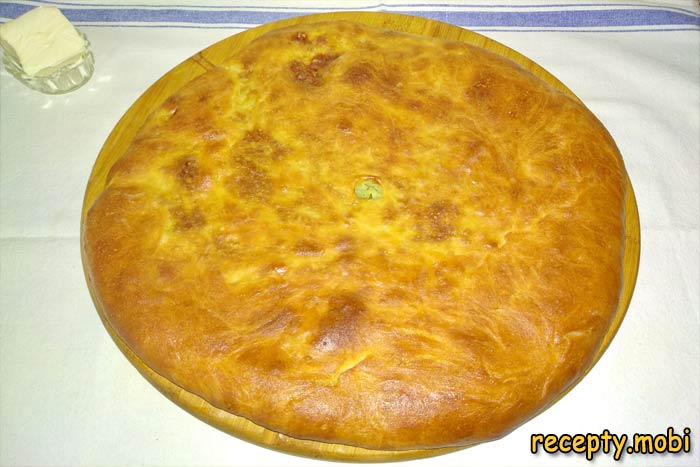
Let the pie settle briefly, then cut into 6 slices and serve warm. The filling should be soft and the crust tender. Adyghe cheese will not stretch like mozzarella, so long cheese strands are not a test of success.


Dough consistency and water quantity
The ingredient list allows up to 200 ml water, but adding it all at once can make the dough too wet. Start with part of it, knead, then judge the texture. The dough needs to be soft enough to stretch but strong enough to enclose the filling. If it resists shaping, cover it and rest it briefly before trying again. If it tears, pinch the tear closed and avoid stretching that area further.
Cheese and potato filling
Adyghe cheese gives a mild, crumbly filling. If unavailable, a mixture of drained mozzarella and crumbled feta offers a practical alternative: mozzarella adds softness, while feta adds saltiness. Keep the total cheese weight at 300 g and taste before salting. Drain the potatoes and cheese well, and cool the filling before enclosing it so it does not weaken the dough.
One pie or several?
The quantities here are for one large filled pie, divided into 6 slices. To make two smaller pies instead, divide both the dough and filling into two equal portions and check them earlier during baking. This does not double the ingredients or total amount of food. For a larger batch, scale both dough and filling together.
Serving, storage and reheating
Serve warm with a salad, soup or plain yoghurt. Refrigerate leftovers within 2 hours in a covered container and use within 3 days. Reheat in the oven until hot throughout; cover loosely if the crust is browning before the centre is hot. You can freeze cooled slices separately for easier reheating.
For another filled cheese bread, see Imeretian khachapuri. Its cheese filling is different from the potato-and-cheese filling used here.
FAQ
What is an Ossetian pie? +
It is a round filled bread from Ossetia, made in a variety of savoury and sweet versions. This recipe is the potato-and-cheese version, often called kartofdzhin, with dill and cilantro added to the filling.
Can I make this as an Ossetian meat pie? +
Not by swapping the filling without changing the method. This recipe uses cooked potatoes and cheese. A meat-filled pie needs its own filling preparation and doneness checks, so follow a dedicated meat-pie recipe.
Why does the dough tear when I flatten it? +
A hot or wet filling, dough that has not relaxed, or stretching too thin can cause tears. Let the filling cool, drain it well and press gently from the centre outwards. Give tight dough a short rest before continuing.
Do I need a rolling pin? +
No. Gently flattening with your palms makes it easier to feel thick and thin areas and avoid pushing the filling through the dough. Keep the pie evenly shaped and leave a steam opening in the centre.
- Comment
or post as a guest
Be the first to comment.