avg —
Invert Syrup

Instructions
Prepare the ingredients for making the invert syrup.
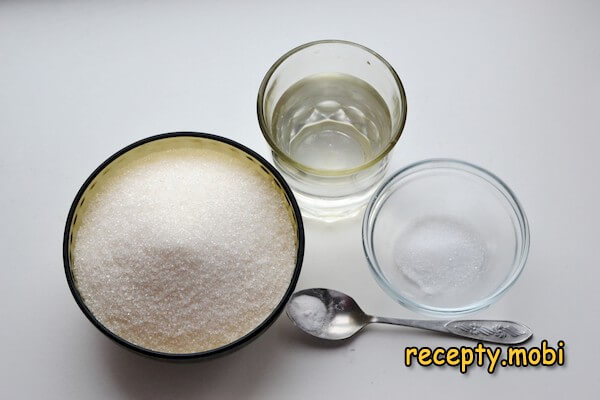
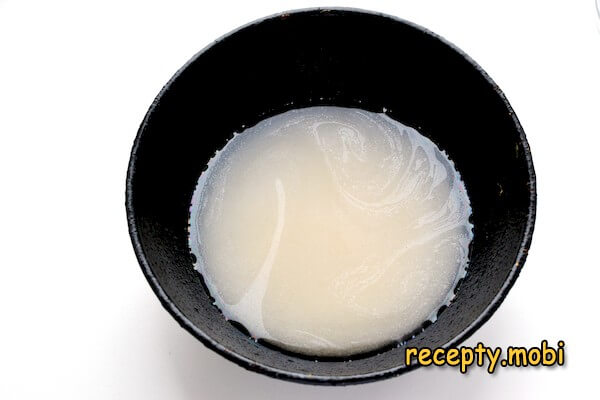
Measure out the sugar and pour it into the heavy-bottomed pot you will cook the syrup in. Add 155 ml of hot water and set the pot on the stove. Stirring, bring it to a boil.
Measure out the citric acid.
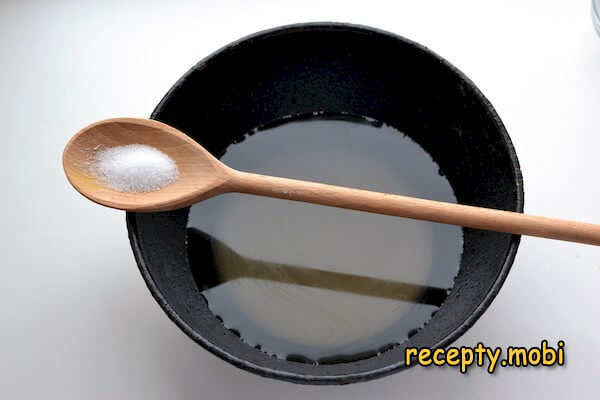
Add the citric acid to the boiling sugar syrup and stir it in well. Cover the pot with a lid and reduce the heat to its lowest setting – this is very important, so that the syrup does not boil hard and the liquid only just bubbles. A transparent lid is handy for watching the process. Tip: set a flame diffuser under the pot on a gas burner for even, minimal heat. As a result the syrup will be light and clear. Cook the syrup, without stirring, for 25–30 minutes.
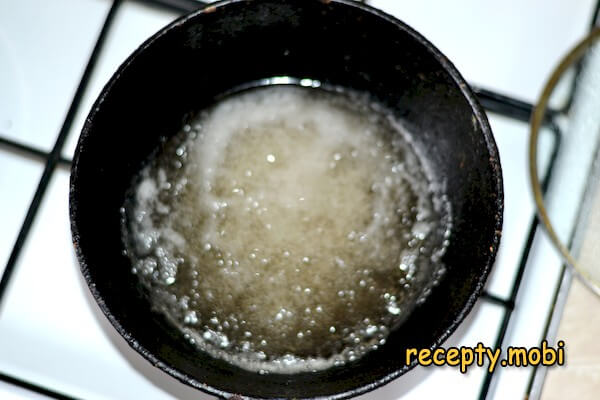
Take the syrup off the heat and let it cool slightly for 5 minutes. Into the hot syrup (80–90 degrees) add a pinch (¼ tsp) of baking soda.
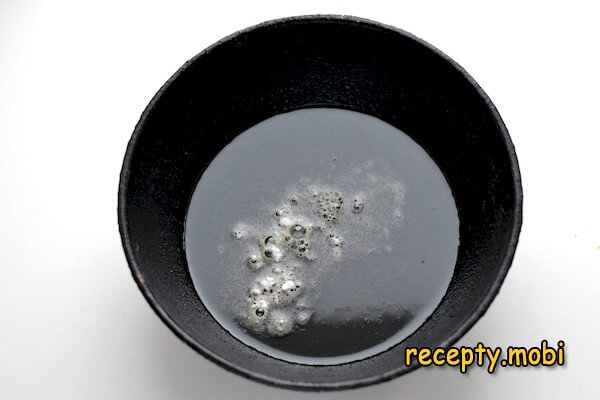
Stir the soda into the syrup and a thick, foamy cap forms on the surface at once. After 10 minutes the foam subsides and dissolves completely.
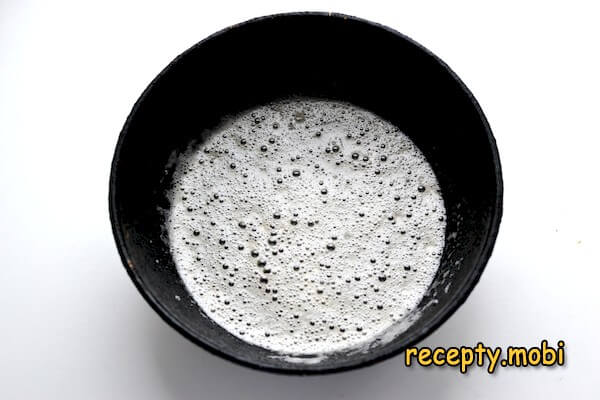
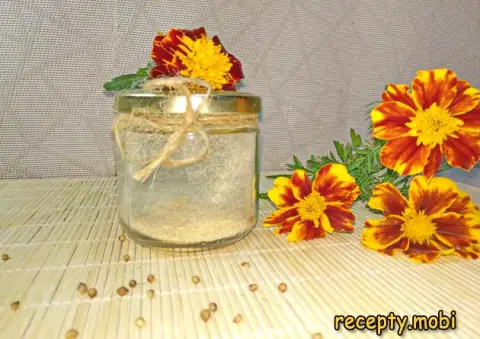
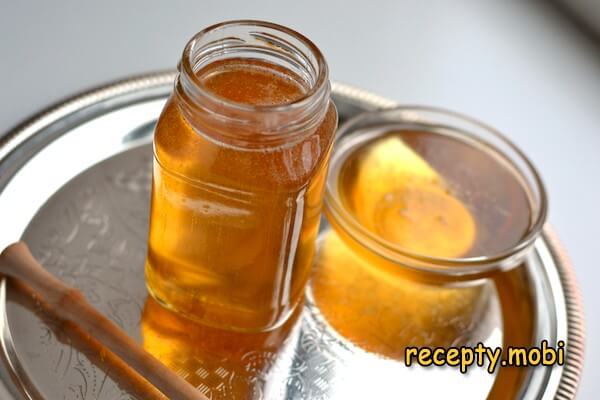
The invert syrup is ready. Pour it into a glass jar for storage. Cover with a lid and store at room temperature (15–20 degrees) in a dark place. The syrup will keep for a month or more.


Tips
- 1
A MINIMAL BOIL is the key to a clear syrup. A vigorous boil will cause caramelisation and a dark colour.
- 2
DO NOT STIR DURING COOKING – the sugar can "stick" to the sides and crystallise. Just watch through the lid.
- 3
ADD THE SODA TO THE HOT (80–90 °C) syrup – it neutralises the citric acid, and the foam will "carry off" the excess sour taste.
- 4
A FLAME DIFFUSER is the "secret" to even heating. The same principle works in other kinds of sweet preparations.
FAQ
Where can invert syrup be used? +
It is a universal replacement for honey: spice cakes, honey cakes, muffins, gingerbread biscuits. In confectionery: marshmallows, sweets, meringues, mousses, nougat, fondant, marshmallow. In baking it gives softness and keeps things fresh for a long time (bread, buns). For glazing confectionery it gives a glossy crust. With tea it works on its own as a "homemade honey". In cocktails it is a sweetener for drinks. For "Prague" and "Medovik" cakes it is an authentic replacement for honey. The shelf life is 1–2 months in the dark at room temperature, so it is handy to keep in reserve.
What can replace the citric acid? +
Alternatives: fresh lemon juice (3 tbsp for this volume, but strain out the pulp), apple cider vinegar (½ tsp – an unusual accent). Cream of tartar is a professional alternative, 1 tsp. Crystalline citric acid is the "classic" of Soviet-era recipes. Without acid the syrup will not "invert" – it will not turn from ordinary sugar syrup into true invert syrup. The acid is needed to break sucrose down into fructose and glucose.
How long does the syrup keep? +
In a glass jar at room temperature in a dark place – a month or more. In the fridge – up to 3 months, but it thickens considerably. Signs of spoilage: mould on the surface, a change of colour to dark brown, a sour smell. Before using it you can warm it in a water bath – it will return to a liquid consistency. Do not warm it in the microwave – it heats unevenly. A large batch (made with 1 kg of sugar) is a handy reserve for a baker. Write the date it was made on the jar.
What can the syrup be mixed with? +
In baking: a 1:1 replacement for honey in any recipe. In dough: 50–100 g per 500 g of flour – it gives softness. For cake glazes: mix it with cocoa and butter. For gingerbread: 100–150 g for a standard recipe. With tea or yoghurt – instead of sugar. In cocktails – the "grandmother's recipe" for simple syrup. For a homemade "medovik" it will replace up to 200 g of honey. With ginger and cinnamon – a "winter" syrup for drinks. For marshmallows and pastila it is a required ingredient by GOST. A universal base for sweet recipes, especially for those allergic to honey.
- Comment
or post as a guest
Be the first to comment.