avg —
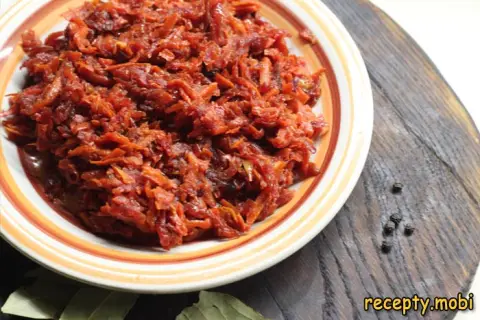
Beet Salad with Prunes and Walnuts

Instructions
Lay out the products on the work surface. The main ingredients are one large beetroot or 3 small roots (small ones cook faster), a large juicy carrot, soft pitted prunes, peeled walnuts, processed cheese, a clove of garlic and full-fat mayonnaise. With ready-boiled beetroot to hand, the salad comes together in about 10 minutes.
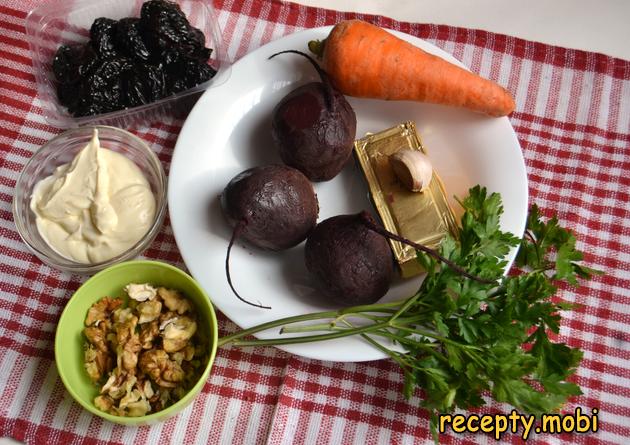
Prepare the beetroot. To shorten the boiling time, use small roots – they cook in 30–40 minutes instead of the 1.5–2 hours needed for large ones. Scrub the beetroot thoroughly with a brush, leaving the skin on. Cover with clean cold water and bring to the boil.
Boil the beetroot until completely done over a low heat, 30–40 minutes for small roots or about 1.5 hours for large ones. Check the doneness with a knife – if the knife goes freely into the root, the vegetable is ready. Cool the beetroot completely in cold water for 30 minutes – hot beetroot is awkward to peel and will fall apart when grated.
At the same time, boil the carrot until soft – 20–25 minutes in lightly salted water, also in its skin. Cool it completely in cold water. Peel the beetroot and carrot – with cold vegetables the skin comes away in a single stroke of the knife.
Once the beetroot is completely cool, grate it on a grater with LARGE holes – this gives the finished salad its characteristic texture. A fine grater would turn the beetroot into a paste with no interesting texture.
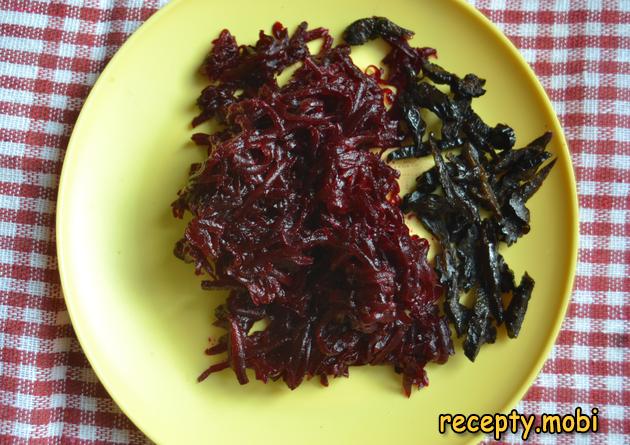
Meanwhile, prepare the prunes. Rinse them under running water and pat dry with paper towel. If the prunes are hard, soak them in hot water for 10 minutes to soften. Cut the soft prunes into fine strips, 3–5 mm, to add texture to the beetroot layer.
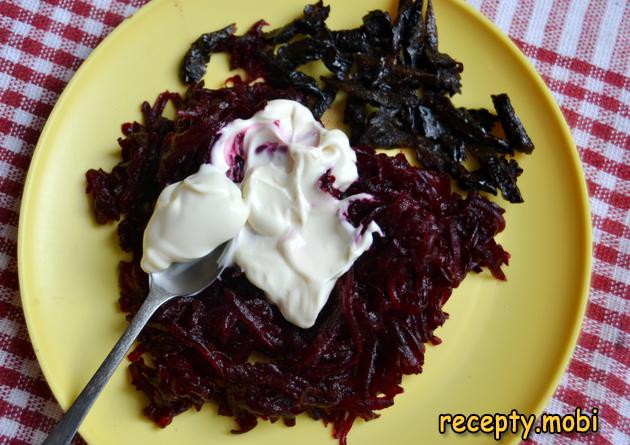
Combine the grated beetroot with the chopped prunes in a separate bowl. Dress with 2 tablespoons of mayonnaise (from the total 100 g). Mix thoroughly with a silicone spatula – the beetroot will take on a delicate pink tint from the mayonnaise. The layer is ready; set it aside.
From the pointed tip of the peeled carrot, cut off a small 1 cm piece – it will come in handy for a pretty garnish. Grate the rest of the carrot on a grater with FINE holes – the carrot layer will be more delicate than the coarsely grated beetroot.
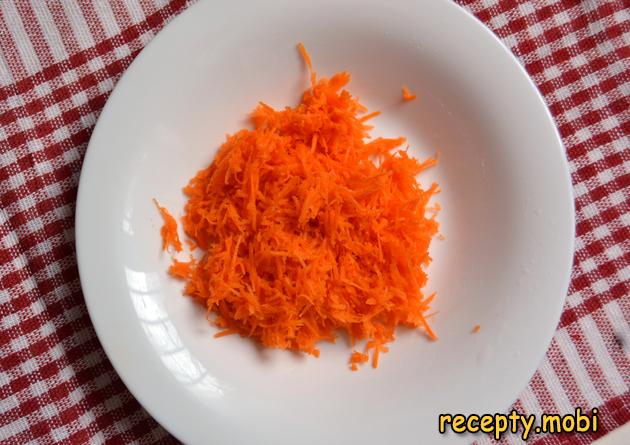
Pick over the walnuts (1 handful = 50 g) to remove any membranes and toast them lightly in a dry frying pan for 2–3 minutes until they smell pleasantly nutty – don't brown them. Chop the cooled nuts in a blender or finely with a knife to a crumb.
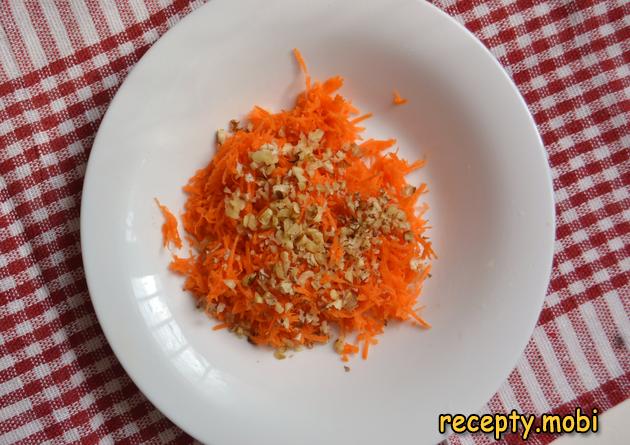
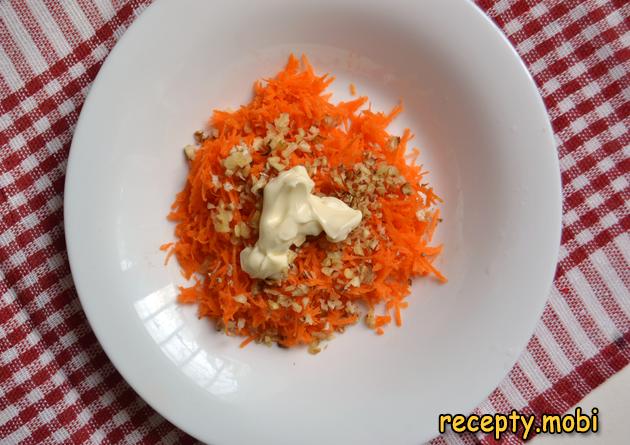
Add the chopped toasted walnuts to the bowl with the finely grated carrot. Dress with 2 tablespoons of mayonnaise from the total amount. Mix thoroughly with a silicone spatula – the nuts and carrot should come together evenly into one fragrant mixture. The carrot-and-nut layer is ready; set it aside.
Now make the cheese layer – the salad's "secret" flavour accent. Take a good-quality full-fat processed cheese (about 100 g). To make it grate more easily on a fine grater, CHILL it in the fridge for 30 minutes or in the freezer for 5 minutes (but not frozen rock-hard).
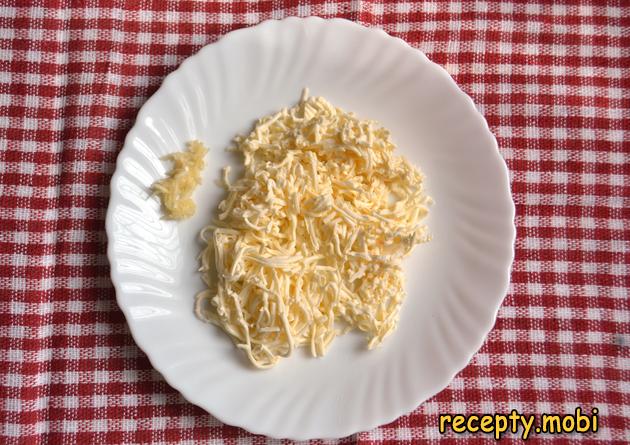
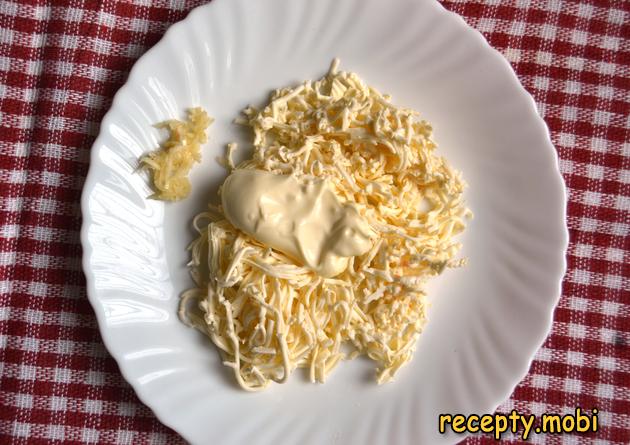
Grate the chilled cheese on a grater with FINE holes into a separate bowl. Straight after the cheese, grate the peeled garlic clove (1 pc) on the same grater – it gives the cheese layer its characteristic aroma and a little kick.
Add mayonnaise (3 tablespoons) to the grated processed cheese with garlic in the separate bowl. Mix thoroughly with a silicone spatula to a smooth, delicate creamy mass – the mayonnaise will smooth out the lumps of cheese and garlic. The cheese layer is ready; set it aside until assembly.
Assemble the layered salad. On a nice serving plate, lay out a "dome" shape (or use a 16–18 cm springform ring) with the carrot-and-nut mixture as the FIRST layer. Spread it into an even layer with a silicone spatula.
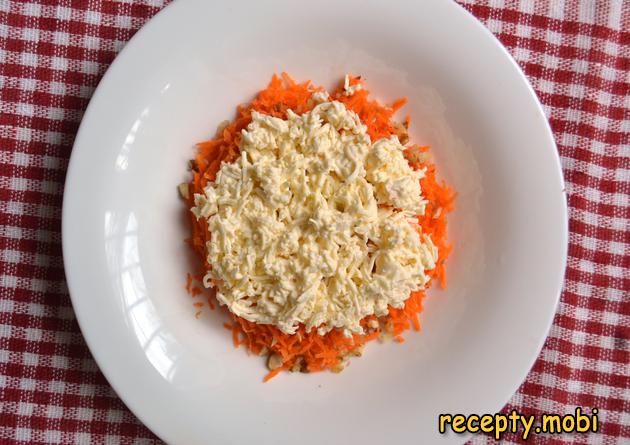
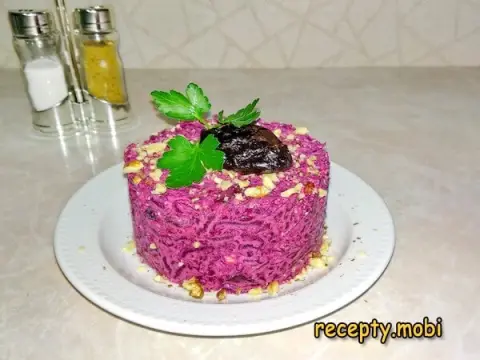
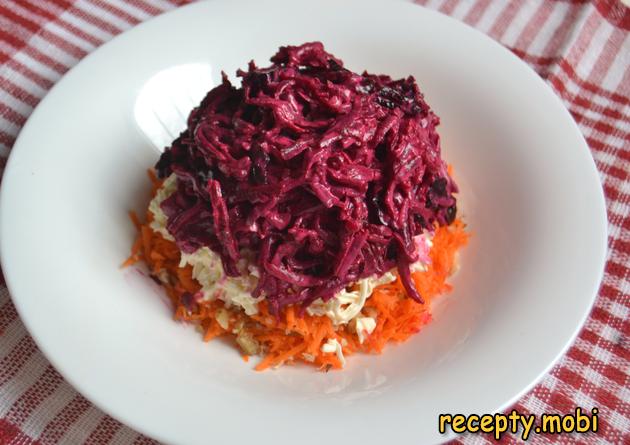
As the SECOND layer, on top of the carrot, add the cheese-and-garlic mixture. Spread it evenly with the spatula too. As the THIRD (top) layer, add the beetroot-and-prune mixture. Spread it carefully, shaping a "dome" for an impressive presentation.
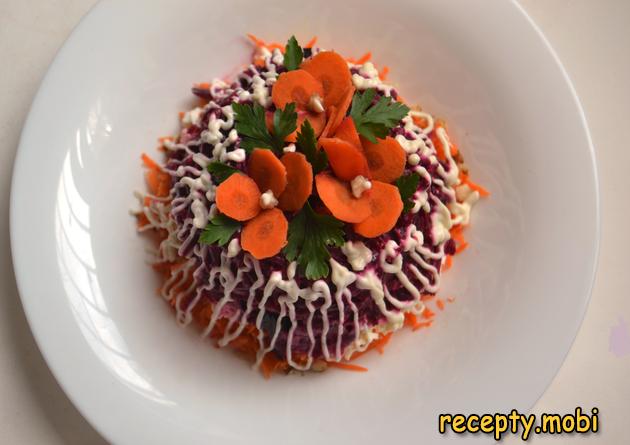
From the reserved carrot tip, cut thin 2 mm rounds – they will be the "petals" of flowers to decorate the top of the salad. Arrange the flowers from the carrot rounds on top, with pretty fresh parsley leaves alongside. Decorate the sides of the layered salad with thin "stripes" of mayonnaise from a piping bag fitted with a 3 mm nozzle, or simply with a teaspoon.
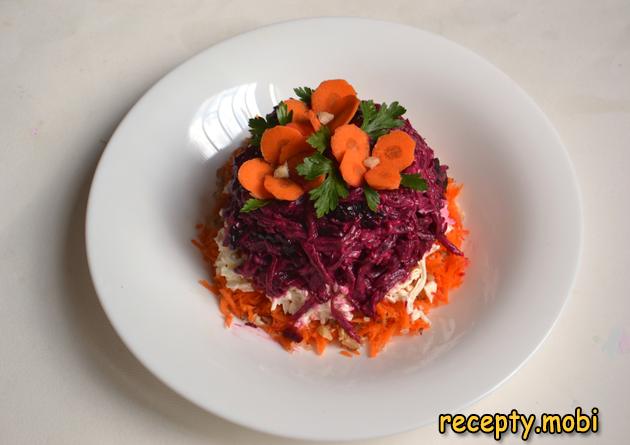
If you like, for a smart presentation, scatter tinned green peas (30 g) over the top of the salad for a contrasting colour. Cover the salad with cling film and chill it in the fridge for 30 minutes to set – the flavours will come together and the presentation will firm up. The beet salad with prunes and walnuts is ready!


Tips
- 1
Chill the processed cheese in the freezer for 5 minutes before grating – the "secret" to grating it easily on a fine grater without it sticking.
- 2
Use soft, juicy pitted prunes – hard, dry ones won't give the salad its characteristic tenderness.
- 3
Grate the beetroot on a coarse grater and the carrot on a fine one – the "secret" to the right texture in the different layers. I use the same principle for herring under a fur coat.
- 4
Let the salad rest for 30 minutes in the fridge before serving – the flavours will come together and the presentation will firm up.
FAQ
What can replace the prunes in the salad? +
Good options are: soft dried apricots (for an orange tint and an apricot flavour), dark raisins (for a "wine" note), dried cranberries (for a wintry serving with a light tartness), dried figs (for a gourmet, Eastern variation), pitted dried cherries (for a berry note), or a 50/50 mix of dried fruit (prunes plus dried apricots). Each substitute gives its own character. Prunes are the "classic" of the Soviet beetroot salad thanks to their ideal pairing with beetroot and their tender texture. You can also make a "gourmet" version with prunes soaked in cognac or rum for 30 minutes for a grown-up note.
Can I replace the mayonnaise with a lighter dressing? +
Yes, options include: homemade mayonnaise (made with olive oil, a more wholesome choice), 20% sour cream (a lighter "Russian" version with a slight tartness), thick 10% Greek yoghurt (a diet-friendly option), sour cream with mustard and a drop of lemon juice (an egg-free mayonnaise imitation), a 50/50 mix of sour cream and mayonnaise (a compromise), or Philadelphia-style cream cheese (a more "European" option). Mayonnaise 67% is the "classic" of Soviet celebration salads because of its thickness and characteristic rich flavour. Each substitute gives its own character – lighter and less rich.
How long does the finished salad keep? +
The finished salad keeps in the fridge for up to 24 hours in a tightly closed container – any longer and the layers will spread and the salad will lose its shape. On the second day the flavour is even richer, but the presentation is worse. It is best served on the day it is made, after 30 minutes of resting. For longer storage, keep the layers separately in different containers and assemble the salad 1 hour before serving. Don't leave it at room temperature for more than 2 hours – mayonnaise spoils quickly. Don't freeze it – all the layers will fall apart when defrosted. Make it in portions for the table with none left over.
What to serve the layered salad with? +
It is ideal as a festive starter for the table – serve it alongside cold meat platters (cured pork, ham, smoked chicken), marinated mushrooms or a fish platter (salmon, mackerel). It goes well with hot dishes – roast chicken, pork or beef. For a "Russian" serving, offer it with dark Borodinsky bread and butter. For drinks – dry white wine (Riesling, Chardonnay), semi-sweet wine (for those who like it), dry vermouth, or vodka for a Russian table. It suits Women's Day on 8 March, birthdays, the New Year table and corporate events. It is perfect for a "grandmother's" celebration menu together with herring under a fur coat and Olivier salad.
- Comment
or post as a guest
Be the first to comment.