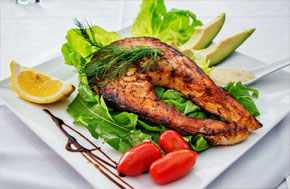
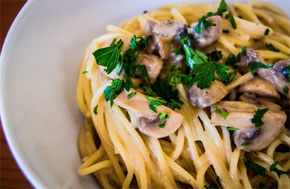
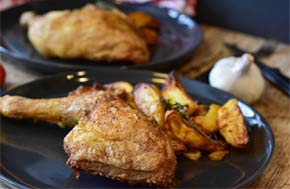
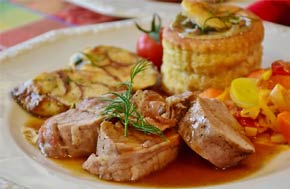
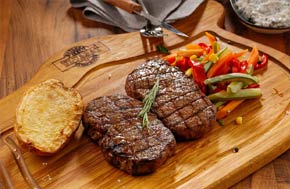
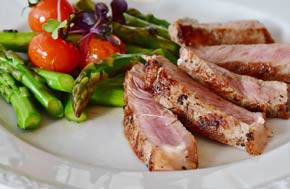
This section presents simple and delicious step-by-step recipes for main dishes with photos, which any beginner cook can prepare.
Main dishes are also referred to as main or primary dishes. Their main ingredients typically include fish or meat, while vegetarian cuisine often features legumes and mushrooms. They are accompanied by various side dishes and sauces. Many dishes made from grains, vegetables, and dairy products can also be classified as main dishes.
The recipes for main dishes are so diverse that it's impossible to give a definitive answer about what can be made from a particular product. Many of them can be augmented and combined to taste, and even a single dish can take on a different flavor with various sauces.
The entire lunch menu is composed based on the main dish. It is to this dish that side dishes, soups, beverages, and desserts are matched.
On our website recepty.mobi, you can find simple step-by-step recipes for main dishes for every day with photos. Preparing them doesn't always require a lot of time and effort. Each recipe includes the required time, guiding you to successfully prepare a delicious lunch for serving.
 Write a comment
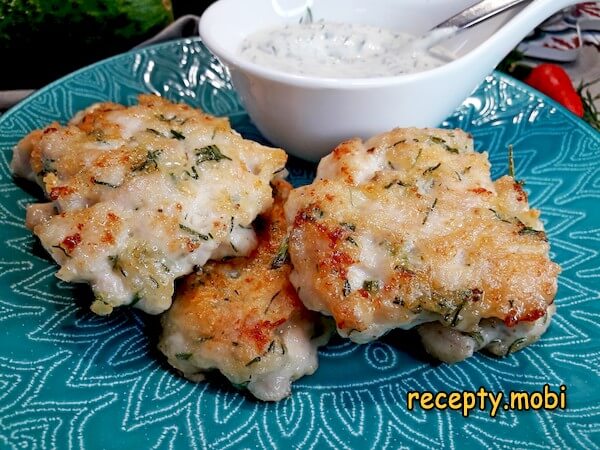
To properly prepare Albanian chicken cutlets, the flesh of the chicken breast must not be minced in a meat grinder – it should be chopped by hand into small cubes.
 Write a comment
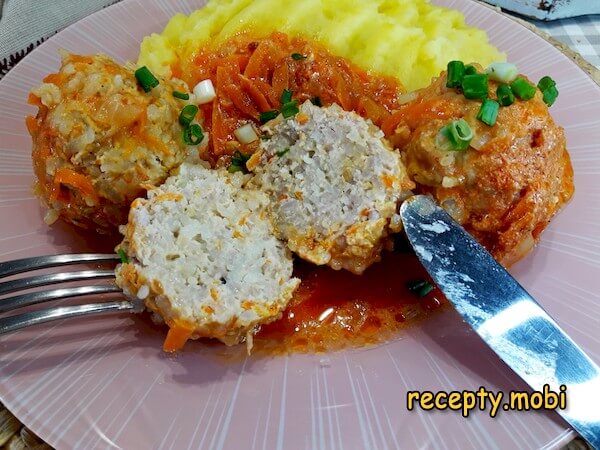
In the times of the Soviet Union, meatballs or hedgehogs in tomato sauce were often present on the menus of school canteens and kindergartens. Even today, this dish is very popular, especially if prepared at home.
 Write a comment
Homemade sausage, Tutyurma Tatar, is made from lamb, beef, or chicken offal with the addition of rice. Pork intestines are loosely stuffed with minced meat (actually, "Tutyurma" translates as "stuffed," "filled") and cooked to readiness in non-boiling water (approximate temperature 85-87 degrees).
 Write a comment
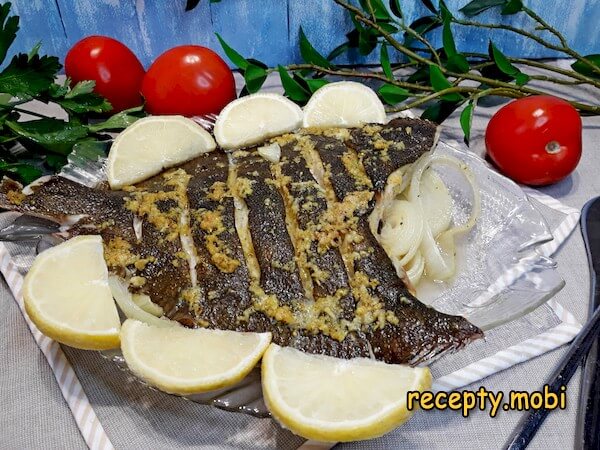
Seafood lovers (and not only them) will surely enjoy the delicious flounder baked in foil. This fish is thoroughly infused with fat, which makes its meat always not only tender but also juicy, plus, it has no small bones.
 Write a comment
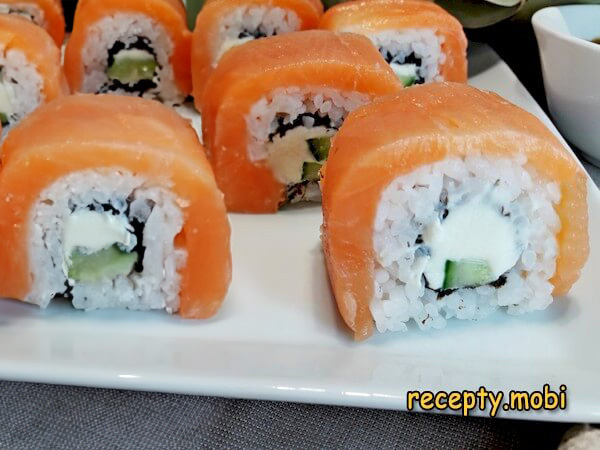
Cooking Philadelphia rolls at home by yourself is actually possible. You just need to make this exotic dish more often to develop your skill in rolling tight rolls.
The recipes for vareniki are so diverse that even the most sophisticated gourmets can choose at least a couple of suitable options for themselves. Close "relatives" to vareniki include: ravioli, Belarusian-Lithuanian potato pancakes, dumplings, and manty, khinkali. However, it is vareniki that are distinguished by a wide selection of fillings – we offer recipes with photos for your choice. Sweet lovers will enjoy steamed cherry vareniki and lazy cottage cheese vareniki, while those who prefer plain food will enjoy vareniki with potatoes and cabbage. The dough in the recipes can also vary. Kneaded with milk or water, it is rolled out thinly, while dough made with kefir becomes fluffier.
The meat of various animals differs in composition and requires different cooking approaches. For example, pork releases liquid during prolonged heat treatment and becomes dry, while lamb will be softer if simmered for a long time. For the dish above to be delicious, choose a favorite meat recipe from this section and follow its description.
Before cooking, rinse the meat with cold water, remove the membrane, and discard the tendons. Thaw frozen meat at room temperature to minimize juice loss.
Slice meat across the grains. For cutlets, make several incisions along the edges so that they don’t curl during frying.
Cuisines from many countries have recipes for their special meat dishes. In the Philippines, they prepare adobo with chicken or pork; in Austria, the national dish is “Wiener Schnitzel” made of thin slices of veal. It’s hard to find a family in Argentina that doesn’t make asado – grilled meat, typically cooked by men known as “asadores.” In the Caucasus, you'll be treated to lamb kebabs, and in Australia, a meat pie with pea soup will be served.
It’s impossible to list everything that can be made as a meat main course. This section contains various meat dish recipes to help homemakers.
To cook meat deliciously, pay attention to our tips. Even with the simplest cooking methods, the product can be ruined if certain details are not considered.
For this method, juicy small pieces of meat work best. Use a pan with a thick bottom.
Preheat the pan with fat thoroughly. If this is not done, the meat will actively release juice and absorb the fat when heated.
When placing the meat in the pan, it should be at room temperature.
Start frying thick pieces over high heat to create a crust that prevents juice from escaping. Then reduce the heat.
It’s advisable to marinate tough dry meat, especially from older animals, before frying.
For large pieces of meat, pour fat from the pan over the meat while frying.
Baking is one of the healthiest cooking methods for meat, alongside boiling and steaming.
Before loading the meat, preheat the oven to the required temperature.
Occasionally pour the meat being cooked with the juices that have dripped off or other liquids: broth or wine.
If you coat the meat with a small amount of vegetable oil beforehand, a crust will form, and moisture will be better retained.
For tough and dry meat, stewing is the best cooking method. Stew it at moderate temperatures in a closed heavy-bottomed pot on the stove, in the oven, or in a slow cooker. Add a little liquid to the bottom of the pot, and only then place the ingredients inside.
To achieve a dish with a crispy crust, lightly fry the meat in a pan beforehand.
Put the pot with meat directly on moderate heat, and after it begins to boil, reduce the heat to the minimum.
You can place the meat in a cold oven and then heat it. The temperature should not exceed 160°C, but it’s better if it is even lower.
When the dish is ready, leave it covered at room temperature for about 20 minutes. This is enough time for the meat to absorb some of the moisture it lost while stewing.
Boiling is one of the simplest methods. Salt and spices are added to water, brought to a boil, and the meat is submerged in boiling water. The only detail to note is that after boiling, cooking is done on low heat until ready.
For steaming, soft tender pieces of meat are suitable. Bring water to a boil, then reduce the heat. There’s no point in adding spices to the water, as the dense structure of the meat does not absorb steam and its aromas.
To ensure the product cooks more evenly, cover the holes of the steamer with parchment or grape leaves so that the steam does not act directly on the meat.
Page 2 of 14
Select your language