
 Write a comment
Boiling: principles, rules, and techniques
Thermal processing of products is the main culinary technique through which the lion's share of dishes is prepared. Through thermal processing, food is softened and disinfected, making it well absorbed by the body and not harmful. Incompetent thermal processing leads to a deterioration in taste, the formation of carcinogenic substances in products, and the destruction of vitamins. To prevent this from happening, it is necessary to know how to properly process products with heat.
One of the main methods of thermal processing is boiling. Boiling is the preparation of a product in liquid over a "fire" with the participation of steam. The liquids used include plain water, milk, vegetable juices, and broths. Several types of boiling are known, each of which has its own characteristics and affects the consistency, taste, and aroma of the dish in its own way.
At first glance, it seems that boiling is the simplest method of thermal processing, but in reality, it turns out to be more complex than, for example, frying or baking. Boiling is used to prepare porridges, soups, compotes, and to boil meat, fish, vegetables, and fruits. The process of canning also cannot do without boiling.
First courses occupy a special place in the human diet. Vegetarian soups allow maintaining weight at the desired level and stimulate metabolism. The use of liquids creates a feeling of fullness without the sensation of a bloated stomach and heaviness. First courses should be included in the diet of every person, as they are necessary for the prevention of gastrointestinal disorders, and they also help maintain optimal water balance.
From history
Boiling is the third method invented by humans for cooking food after baking in ash and cooking over an open fire. For a long time, it was believed that boiling appeared after the invention of ceramic dishes, that is, about two to three thousand years before our era. However, modern research suggests that boiling is an older method, appearing ten to fifteen thousand years before the advent of our era. In those times, boiling was done in wooden containers or without any containers at all.
The carcass of the killed animal was filled with ice, sewn up, and a fire was made on it. Wooden containers were used for boiling, into which liquid was poured and heated stones were placed. After the appearance of ceramic dishes, boiling became more varied, and with the advent of metal dishes, boiling was considered the main method of cooking food.
Features of traditional boiling
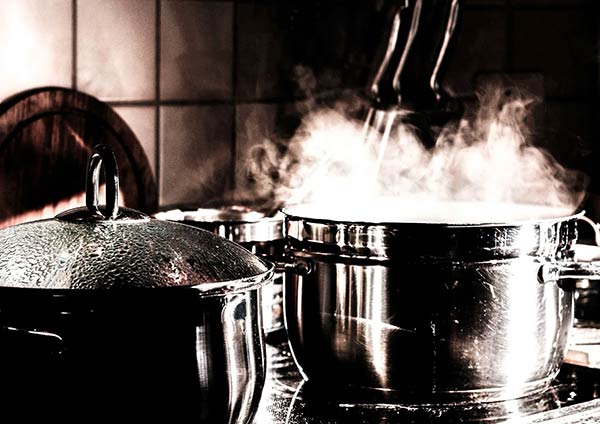
Traditional boiling involves heating the product in a liquid that completely covers it. The liquids used include water, broth, milk, syrup, infusions, and vegetable juices. When boiling certain products, much more liquid is required than usual. As a result of boiling, a significant amount of nutrients present in the product is transferred to the liquid. At home, products are boiled in special dishes, most often in a pot, using gas, electric, or induction stoves. In camping conditions, boiling is performed in cauldrons over an open fire.
Products are heated by coming into contact with the hot liquid. The boiling temperature is approximately one hundred degrees. The process of traditional boiling proceeds as follows:
- First, the products are placed in cold or hot liquid.
- Strong heat is turned on, and the cooking process is continued on high heat under a closed lid until boiling.
- After the liquid boils, the heat is reduced, and the dish is continued to be cooked on low heat with a moderate boiling process until fully cooked.
- The heat must be reduced during the boiling process. Neglecting this rule will lead to rapid evaporation of the liquid, clouding of the broth, the destruction of the product's shape, and the evaporation of aromatic substances.
One of the disadvantages of traditional boiling is that during the boiling process, all the flavor of the product along with the nutrients passes into the broth, resulting in the product itself becoming bland. However, this disadvantage of the cooking method turns into an advantage if there are doubts about the environmental purity of the product, as it gets rid of harmful substances during boiling.
Types of boiling
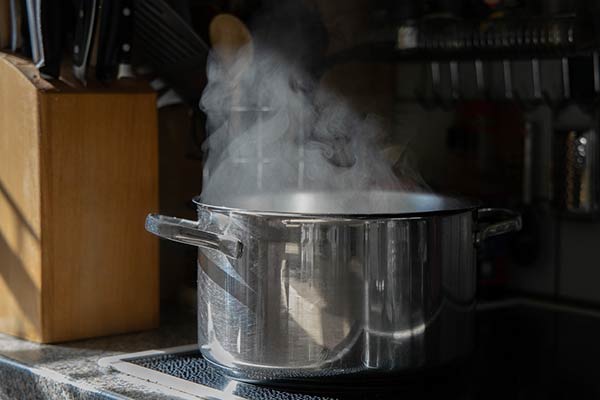
In modern cooking, several types of boiling are known, which differ from each other in the intensity of heating, boiling, and the use of open or closed cookware.
Stewing
Stewing is the boiling of products in a small amount of liquid or in their own juice. This method is most often used for cooking products rich in moisture. The product is placed in a container with liquid that covers only one third of it, and it is boiled until ready under a closed lid. The upper part of the product, not submerged in the liquid, is cooked by the action of steam. A dish prepared using stewing has a more pronounced flavor since fewer nutrients pass into the liquid compared to traditional boiling. Juicy vegetables can be stewed without adding liquid, using only the juice contained in them.
Steaming
Steaming is the dominant method of cooking dishes in dietary and therapeutic diets that require gentle treatment of the gastrointestinal tract. Steaming is carried out in special steam pots or steam cabinets. Water is poured into the pot, then a special lattice insert is placed on which the products are laid. The pot is tightly closed with a lid and placed on the heat. During boiling, the pot fills with steam, which cooks the products. As a result, they turn out juicy, with a tender consistency, their shape is maximally preserved, and there is a lesser loss of nutrients.
You can steam even when there is no special steam pot. You need to take an ordinary pot, fill it halfway with water, and tie a linen napkin in such a way that a sort of hammock is created inside. The products are placed on the napkin, then it is covered with an upside-down plate, and the pot is placed on the heat.
Contactless boiling
Contactless boiling is a less common method of cooking compared to others. It is also known as cooking in a "water or steam bath". The main principle is that the product is brought to readiness without direct contact with either the fire or the liquid in which it is located.
How is contactless boiling carried out? A large pot is filled with water and placed on the heat. Products are placed in another pot, whose diameter is smaller than that of the pot on the heat. The smaller pot is placed into the larger one. This is how the cooking process in a "water bath" takes place. If the large pot is covered with a lid, then the process turns into cooking in a "steam bath", during which the food is cooked by steam. Contactless boiling is more energy and time-consuming, however, as a result, the products acquire an unusual taste.
How to properly boil meat?
Meat is boiled in plain water or vegetable broth. It is placed in boiling water to prevent nutrients from the meat from passing into the liquid due to the quick coagulation of the upper proteins. If the meat is placed in cold water, most of the nutrients will pass into the broth. During boiling, a so-called "foam" forms on the surface of the meat, which is a result of protein coagulation. Housewives are used to the idea that the foam must be removed, however, specialists do not recommend doing this, as the foam has nutritional value.
The taste and quality of the finished meat depend on the ratio of the product to the liquid. During the boiling process, liquid from the meat passes into the broth, so its volume increases. For this reason, at the beginning of boiling, it is advisable not to pour in enough liquid to completely cover the meat. The meat is boiled under a tightly closed lid at the lowest boiling intensity. This boiling prevents the oxidation of fat and the occurrence of an unpleasant taste of lard in the broth.
The washed and cleaned meat is immersed in boiling water, which slightly covers it. First, turn on the high heat to bring the liquid to a boil, then reduce it to the minimum and cook the meat until done over low heat with a lid on. Adding water during cooking is not allowed, as it significantly worsens the taste. It is necessary to accurately calculate the amount of liquid from the very beginning. After the meat is cooked, it should be allowed to rest under a closed lid for ten minutes.
How to properly cook fish?
Small fish are immersed in boiling water to retain the maximum amount of protein. Large fish are placed in cold water, and water is added as it cooks. The head can be left on, just remove the eyes and gills. For cooking, it is recommended to use a shallow enamel pot. Do not pour in too much water, as excess liquid spoils the taste of the fish. Fish should only be boiled over low heat, as vigorous boiling also significantly worsens the taste qualities of the finished product.
Some types of fish have a specific smell that is better to get rid of before cooking. River fish may smell of mud. The smell can be eliminated by soaking the fish in water with vinegar (two tablespoons per liter of water) beforehand. The smell of cod, flounder, and halibut can be removed by adding half a glass of cucumber brine for each liter of water during cooking. The fishy smell can also be eliminated with milk – just pour it into the pot.
Fish will retain its shape if cross-cuts are made on the skin. The recommended boiling temperature is a few degrees below the boiling point. The fish will be juicy, preserving its taste and nutrients. During the boiling of sea fish, herbs and spices can be added – then it will maintain its shape and not overcook as much.
Small fish cook for five to ten minutes, medium fish and their pieces are usually ready fifteen to twenty minutes after cooking begins, and large fish require thirty to forty minutes. Fish is considered ready if the meat easily separates from the spine. Before serving, boiled fish should be kept in the broth to prevent it from drying out.
How to properly cook pasta?
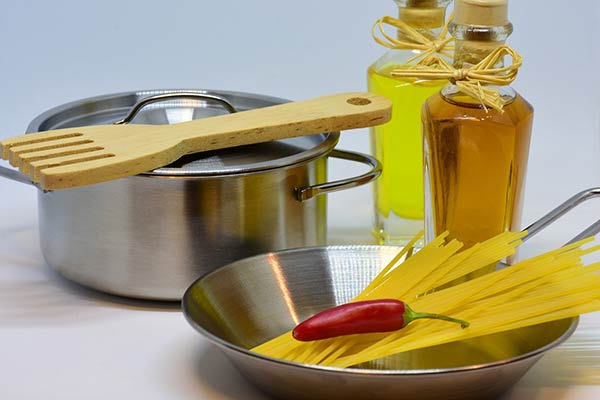
Pasta is boiled in a large amount of water, which significantly exceeds the volume of the product, with added salt. The pasta is dropped into boiling water, stirred, and continues to cook over medium heat. It is not recommended to cover the pot with a lid – otherwise, the foam that forms during boiling will overflow onto the stove. The specific cooking time depends on the quality of the pasta and the flour they are made from. Usually, the cooking time is indicated on the package. It is best to choose pasta made from durum wheat. If the recommended cooking time is followed, they will not turn into "mushy goo."
How to properly cook vegetables?
Boiled vegetables can be used as a side dish or as ingredients for salads. In both cases, they need to be cooked properly to preserve a pleasant taste and maximum nutrients.
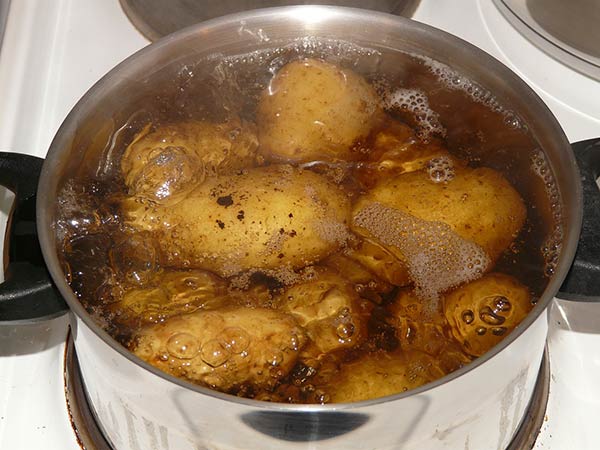
Vegetables are immersed in boiling water – this way they cook faster, meaning more nutrients are retained. The water should completely cover the vegetables so that no part of the product is left exposed to the air. It is recommended to pour in a little more water, as some will evaporate during cooking and expose parts of the vegetables. The water should be slightly salted. The cooking time for each vegetable is individual:
- whole potatoes – thirty minutes;
- potatoes, cut into pieces – twelve to fifteen minutes;
- tomatoes – twenty minutes;
- cauliflower – eight minutes;
- parsley – twenty minutes;
- carrots – thirty minutes;
- beets – forty to sixty minutes;
- cabbage – ten minutes;
- eggplants – thirty minutes;
- zucchini – fifteen minutes.
How to properly cook soup?
The ingredients for the soup should be fresh and thoroughly processed, that is, peeled and washed. The shape of the pieces when cutting the product is of great importance, as a certain shape influences the taste in its own way. For one soup, the product is added whole, for others – it is cut into cubes or straws. To people who are not well acquainted with culinary secrets, it seems that this is necessary for aesthetics; however, the shape of the ingredients directly influences the flavor quality of the finished soup.
The ingredients are added to the soup gradually, keeping in mind the time needed for each specific ingredient to cook. Meat or vegetables must not be overcooked, as this leads to a deterioration in taste and loss of shape. The soup should not boil for too long; it should be ready when all the ingredients are cooked and not overcooked.
The soup is salted at the end, when the main vegetables are already cooked but not overcooked. It is at this point that they are able to absorb the salt. If the soup is salted too early, the cooking time will increase, and as a result, it may turn out to be oversalted, since solid ingredients do not absorb the salt, and it will remain in the broth. If salt is added late, the mixture will be tasteless.
The most responsible moment in cooking comes a few minutes before it is ready, when the soup is already salted. At this point, the most ordinary soup can be transformed into a masterpiece by adding various spices and seasonings. The finished soup should not be served immediately; it should steep. To do this, the pot must be covered with a lid and left for about twenty minutes for the soup to "finish cooking".

